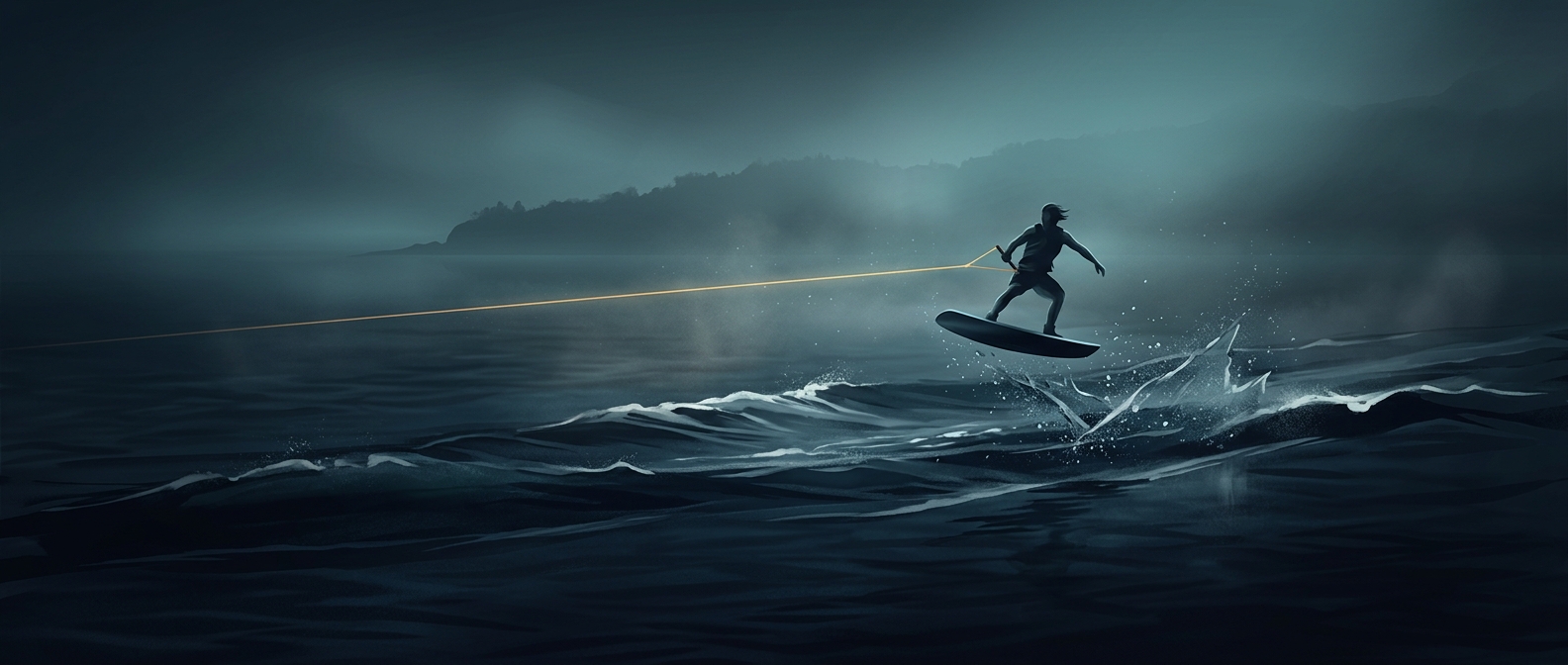
How a Wakeboard Rises to the Surface
A wakeboard does not hang from the rope. The rope pulls the rider forward; as the board gains speed, water flowing beneath its broad underside creates upward pressure. This is hydrodynamic lift, the same basic planing effect that lets a fast boat ride higher on the water instead of pushing through it.
The board’s shape and the rider’s angle help direct water downward, producing an upward reaction on the board. The board still touches—and displaces—water, but at speed it rides mostly at the surface rather than sinking deeply.
Why the Rope Still Matters
The rope provides the forward pull needed to build and maintain that speed. It also helps the rider stay balanced against water resistance, especially while accelerating out of a deep-water start. Without enough forward motion, the lift falls away and the board settles lower in the water.
Once moving, the rider can shift weight and edge the board—tilt one side into the water—to steer and cut across the wake. That changes how water presses against the board, while the tow continues to supply the pull. The useful distinction is simple: the rope creates motion; the moving board turns that motion into lift.