Why newborn scorpions climb onto their mother
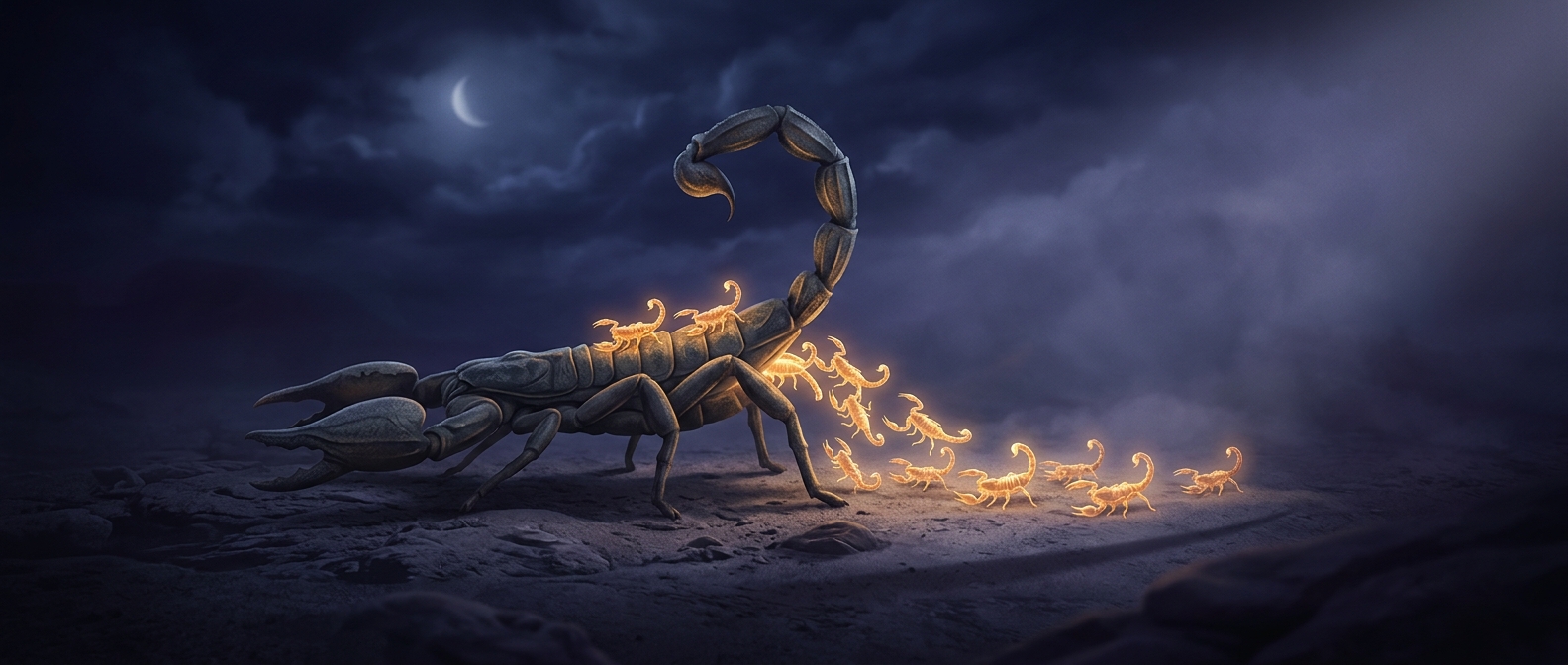
A scorpion’s young hatch from eggs inside the mother’s body and are born live, unlike the young of insects that lay eggs outside. At birth, the tiny scorpions have not yet formed the hardened outer covering that protects adults. Their soft bodies are especially exposed to drying out and injury, so they climb onto the mother and gather on her back.
The first molt changes their defenses
A scorpion’s outer skeleton, or exoskeleton, cannot expand as the animal grows. To get bigger, it must shed that rigid covering in a process called molting. The newborns remain on their mother until their first molt, when they leave the old, delicate covering behind and a new one hardens around them.
The mother’s back is not armor of its own, and the ride does not make the young invulnerable. It does, however, keep them together and close to the adult while they pass through a particularly vulnerable stage. Once their first exoskeleton has hardened, they can disperse with better protection than they had at birth.
A nursery that moves with the mother
This brief period of carrying is a striking form of parental care among scorpions: the mother transports her young rather than leaving them in a nest. For the newborns, the key change is not simply getting older. It is completing the molt that turns a soft-bodied passenger into a small scorpion equipped with a tougher outer shell.