From wood fibers to workable pulp
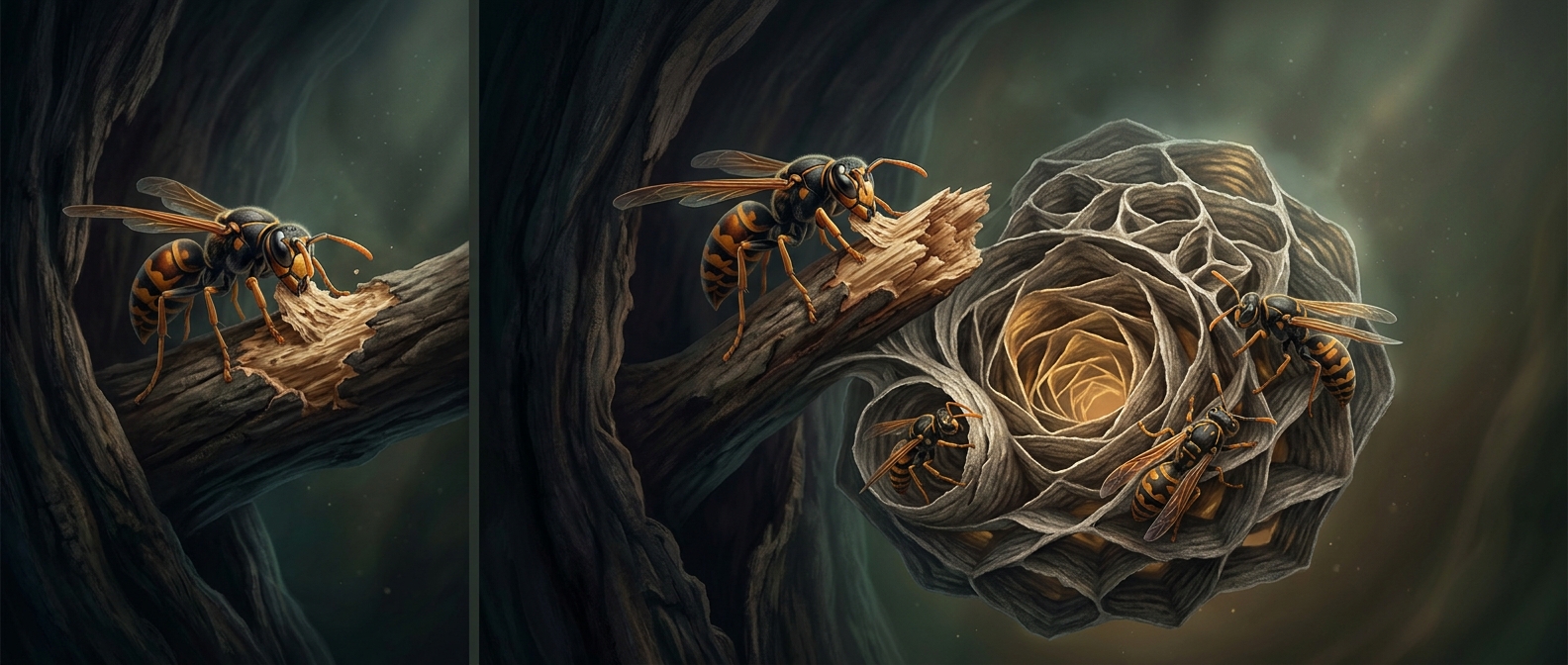
A wasp making a paper nest is both gathering raw material and preparing it for construction. It scrapes a surface such as weathered wood or a fence with its jaws, loosening small fibers. Then it works the fibers with saliva into a damp, pliable pulp—something like a tiny wad of papier-mâché.
The saliva helps the fibers cling together while they are wet. As the pulp loses moisture, the fibers form a light, firm layer. The wasp can press successive mouthfuls into place, so the nest grows through many small applications rather than from one molded piece.
Building walls and honeycomb
The same pulp serves different structural jobs. Wasps spread it into thin outer layers that protect the nest, and shape it into the cells of the inner comb. Those cells provide separate spaces for developing young. Layering lets the insect build a large structure from small amounts of material, while leaving the walls light enough for the nest to hang from its attachment point.
The result is not quite like human paper, which is usually made into sheets and then assembled. A wasp deposits its fibers directly where they are needed, shaping and joining the material as it builds.
A portable building material
Wood is useful because it supplies loose fibers, but the wasp does not need to nest in the piece it scrapes. It can collect material from one spot and carry the pulp to another, turning scattered scraps into a construction supply. That simple separation—gathering here, building there—is what makes the nest seem less like a hollow in a tree and more like a structure made from carried-in paper.