A body built to disappear among branches
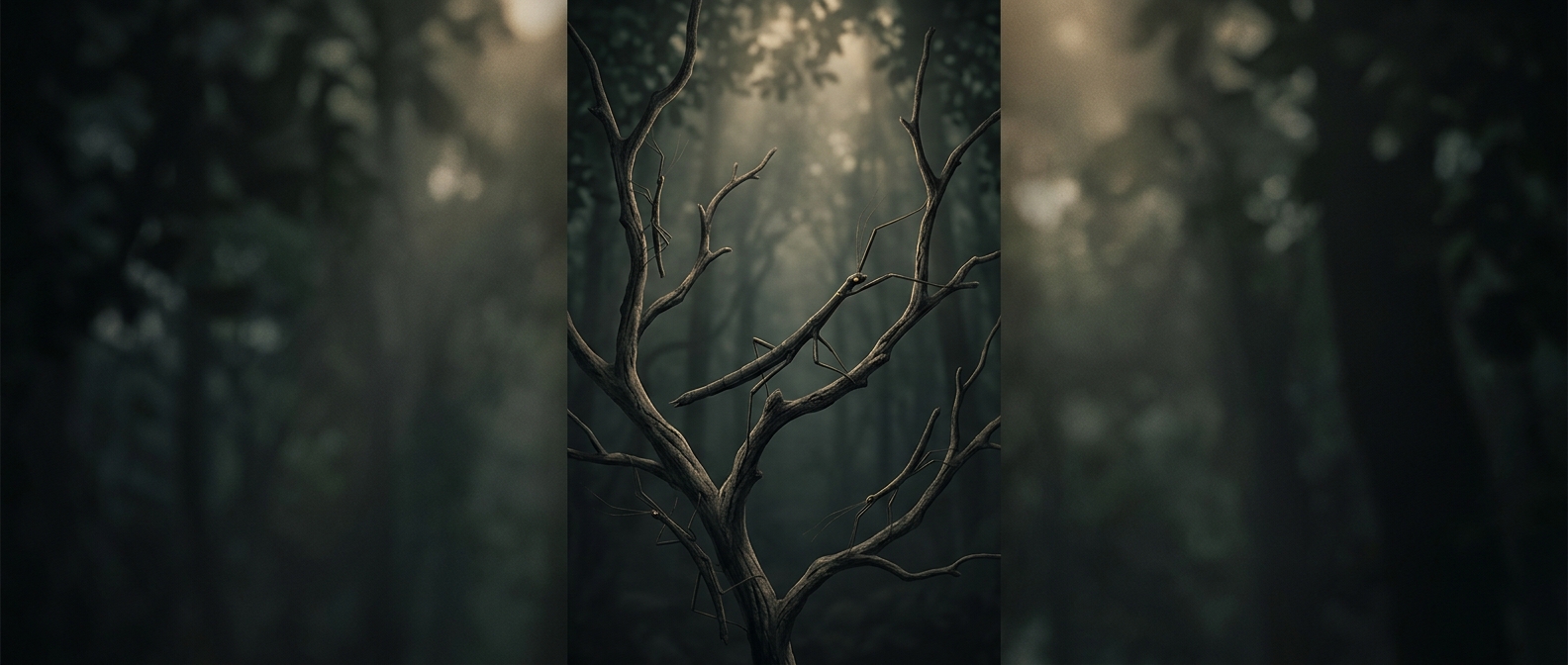
For a predator scanning a shrub, a stick insect’s best defense is often to avoid being recognized as an animal at all. Its narrow body and long, jointed legs break up the familiar outline of an insect, while muted greens or browns help it blend with stems and bark. The match need not be exact: if the insect’s edges are difficult to separate from the surrounding plant, a searching bird or lizard may pass it by.
This kind of concealment is called camouflage. It works by changing what a predator can detect—not by making the insect invisible. Background, lighting, and viewing angle all matter, so an insect that vanishes against one branch may stand out against another.
When staying still is not enough
Movement can reveal an otherwise well-hidden animal. A sudden twitch is a useful clue for predators because branches do not usually move on their own. Some stick insects counter that clue with a slow rocking motion, resembling a twig shifting in the wind rather than prey trying to escape. The pace matters: gradual movement is less likely to draw attention than a quick, sharp change.
The insect’s appearance and behavior therefore work together. Its shape helps it pass as part of a plant, and its movement can preserve that impression when it needs to move.
How the disguise took shape
Stick insects did not plan their resemblance to vegetation. Over many generations, individuals that were harder for predators to spot were more likely to survive and reproduce. Small differences in body shape, color, or behavior could then become more common in a population. The result is a defense refined by repeated encounters between predator and prey.
That defense turns a predator’s own habits against it: when a branch-like outline blends into a shrub, even a careful search may leave the insect exactly where it was.