How ants turn aphids into a managed food supply
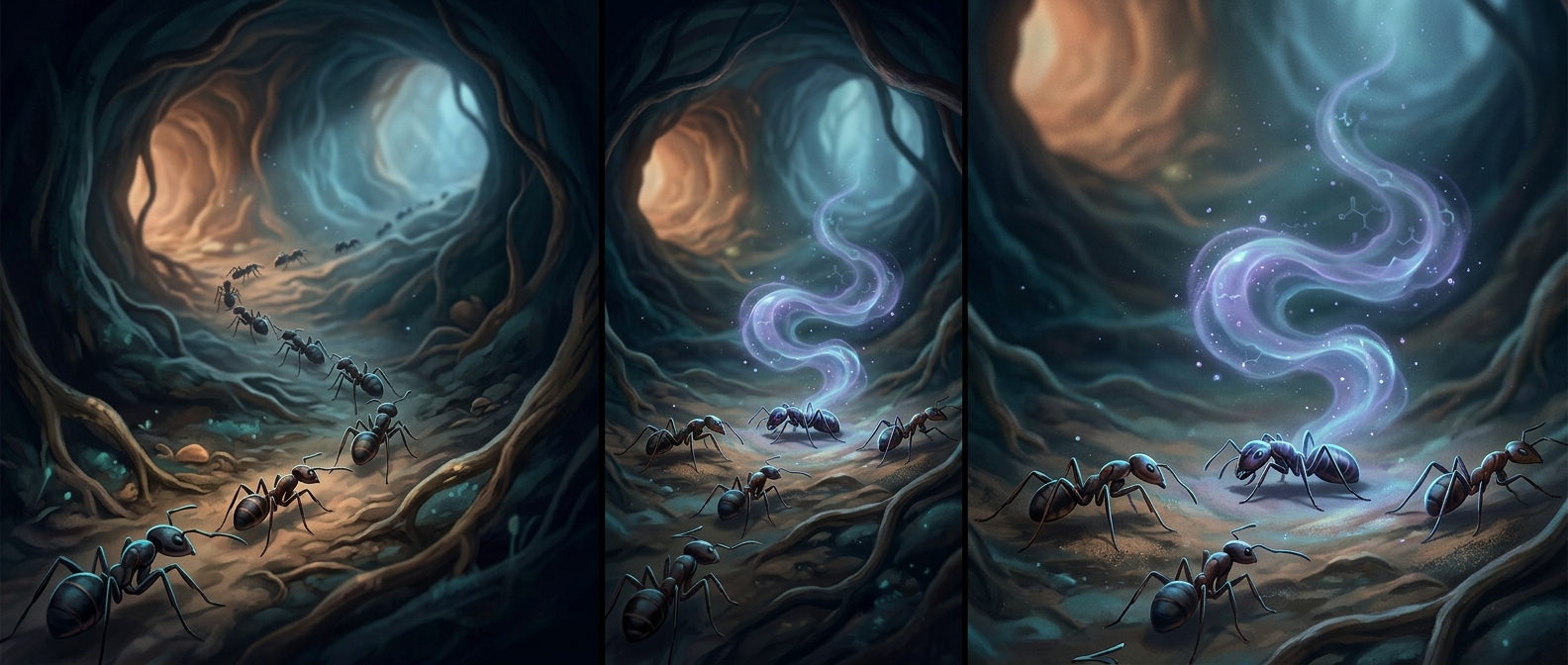
Plant sap contains sugars, but it is dilute and unbalanced as food. Aphids solve that problem by drinking enormous quantities of it and excreting the excess sugar-rich liquid as honeydew. Ants collect this dependable food source, sometimes touching an aphid’s body with their antennae to prompt it to release a drop.
The arrangement benefits both sides. Ants gain calories; aphids gain armed escorts. Ants chase away predators such as lady beetle larvae and can attack or disrupt other insects that threaten an aphid colony. The protection is not a plan made by either animal: it is a repeated exchange shaped by what each can use.
Keeping the herd close
Some ants go beyond guarding aphids where they find them. They may move them onto nearby plants, shelter their eggs in the nest over winter, and carry newly hatched aphids back to feeding sites in spring. Those behaviors help preserve a supply across seasons, when cold or a dying host plant could otherwise end the colony.
In some ant–aphid partnerships, ants also remove the aphids’ wings or favor wingless individuals. Wings help aphids disperse to new plants, but dispersal can take them beyond the ants’ protection—and beyond the ants’ reach. Keeping aphids close makes the honeydew harvest more reliable, though it can limit the aphids’ ability to escape poor conditions.
A trade with costs on both sides
This is farming in a limited, animal sense: ants manage another species to secure food, but they do not breed aphids with deliberate techniques like human farmers. The relationship can also shift from mutual benefit to exploitation. If ants’ protection attracts more aphids than a plant can support, the plant may suffer, while an aphid that needs to spread or flee can be constrained by the very guardians tending it.
A drop of honeydew is therefore more than waste from a sap-feeding insect. It is the payoff that keeps an ant patrol circling a colony—and can turn a patch of leaves into a small, defended pasture.