A life cycle built around timing
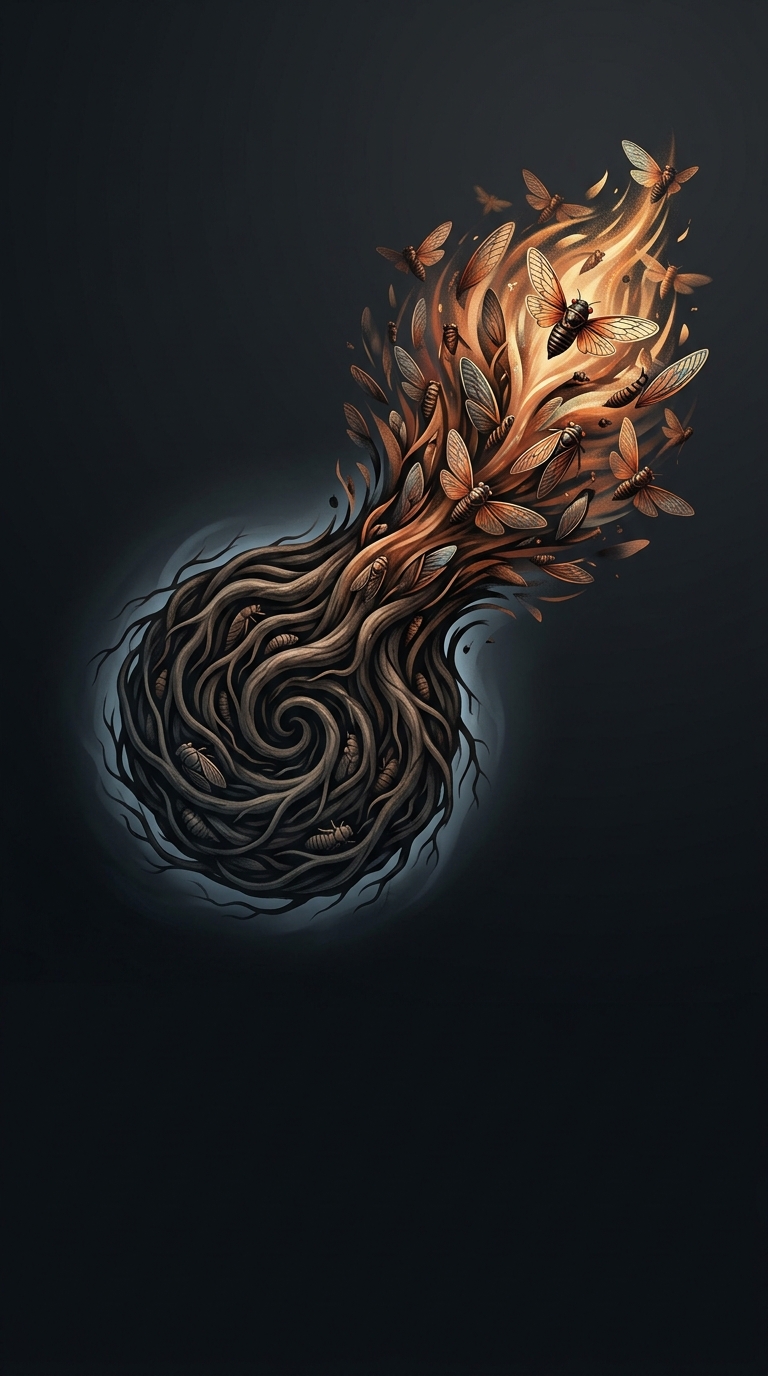
The long underground phase is not simply a pause before adulthood. A cicada nymph develops while feeding on fluids from tree roots, shedding its outer skin as it grows. In some species, development takes 13 or 17 years; many other cicadas follow different schedules. The exact timing varies, but periodic cicadas are notable for emerging in exceptionally large groups after long, coordinated intervals.
When the time comes, nymphs leave the soil and climb nearby surfaces. They molt into winged adults, which have a brief window to mate and reproduce. Their eggs hatch in tree branches, and the young nymphs drop to the ground and burrow down to feed on roots.
Why appearing in a crowd can work
For a predator, a sudden abundance of cicadas creates a feast that is difficult to exhaust. Birds and other animals may eat many, but their capacity to consume prey is limited. Once they are full—or once the immediate surge passes—more cicadas remain to reproduce. This is called predator satiation: a species survives not because each individual avoids being eaten, but because the group arrives in numbers that leave some survivors almost inevitably.
The concentration also makes the short adult phase more effective. With many adults present at once, potential mates are easier to find, and egg-laying can happen across a large area before the adults die.
The advantage of a long, uncommon interval
A predator that relies heavily on cicadas cannot count on them as a steady food source: the insects are absent aboveground for years, then appear in a brief pulse. The 13- and 17-year schedules are also prime numbers, which may make it harder for predators with shorter, repeating population cycles to synchronize their peaks with cicada emergence. That is a proposed advantage, not a guarantee that every predator cycle is mismatched.
The result is a striking tradeoff: individual cicadas are exposed when they emerge, but their sheer numbers—and the difficulty of predicting the next mass appearance—help ensure that enough adults can start the next underground generation.