How a colony turns workers into a shelter
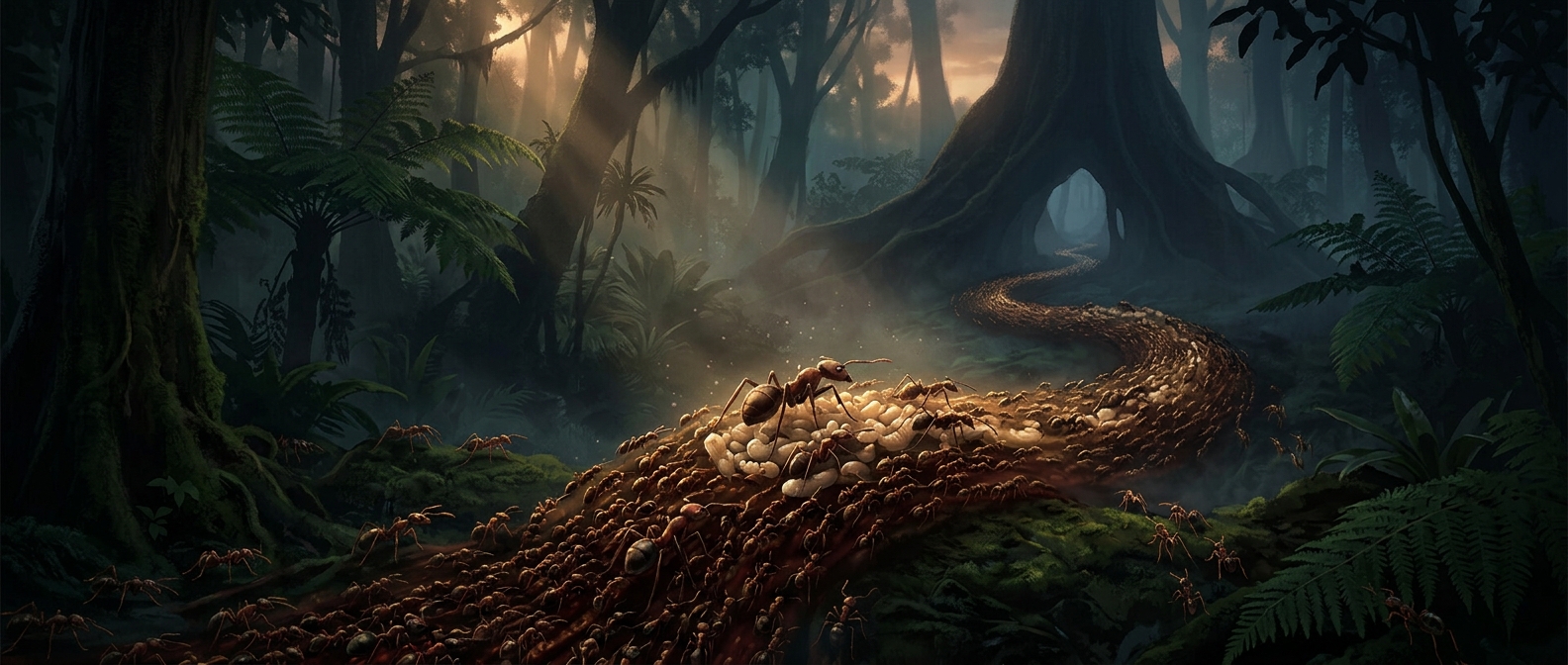
An army-ant bivouac is a temporary nest made from the ants themselves. Workers grip one another with their legs and jaws, linking into a dense, flexible structure around the queen and developing young. The innermost workers form a protected chamber; others make the outer layers, which can shift as ants enter, leave, or reinforce weak spots.
That flexibility matters. Unlike a fixed nest, the bivouac can be assembled in a new place without hauling building material. The colony can also open and close passages through the living structure as its needs change.
Why the home moves
Army ants depend on finding enough prey to feed a huge colony. In many species, workers sweep through an area in coordinated raids, capturing insects and other small animals. Once nearby hunting grounds have been heavily used, the colony’s next move helps it reach fresh food.
The move is not a leader calling out directions. Workers follow chemical trails and respond to the movement of nestmates, allowing thousands of ants to shift together. The queen and brood travel with the colony, carried by workers, while others form the new bivouac at the destination. The timing and pattern vary among species, but some colonies alternate between periods of frequent travel and periods spent in one place while the young develop.
A nest that can change shape
Because the shelter is made of living bodies, it is not a rigid structure that must be dismantled piece by piece. Workers can detach, carry the queen or brood, and reconnect elsewhere. The colony’s architecture is also part of its workforce: the same ants that make the shelter can leave it to hunt, then assemble it again when the colony stops.
That makes the bivouac more than a portable hiding place. It lets a colony keep its most vulnerable members together while the rest of the group searches for the food that sustains them.