A leaf becomes a nutrient trap
Pitcher plants grow in habitats where the soil often supplies too little nitrogen and other minerals plants need to build tissues. They still get most of their energy from sunlight, as ordinary plants do; catching insects helps solve a different problem. The trap is a modified leaf shaped like a deep cup, and its rim may offer nectar that draws in visiting insects.
From a slippery rim to a digestible meal
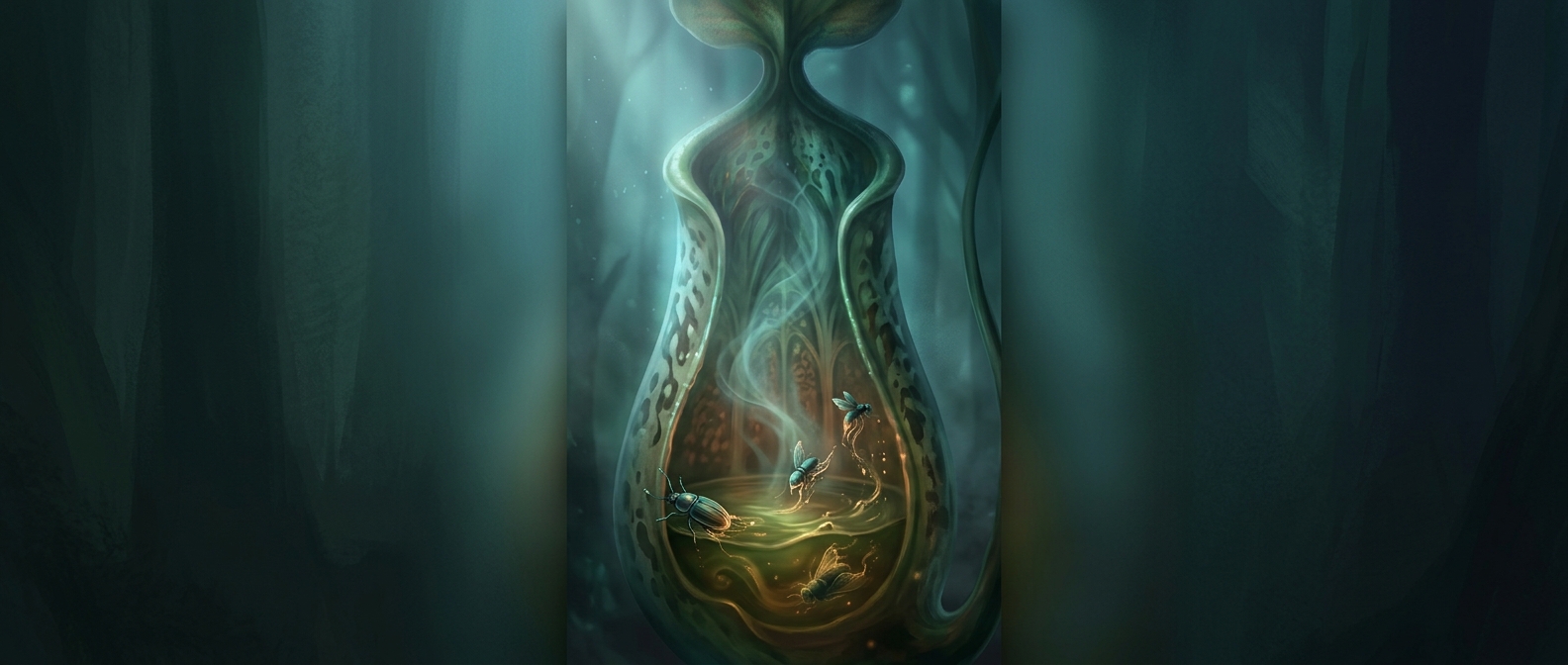
An insect that lands to feed can lose its footing. Depending on the species, the pitcher’s surface may be slick, lined with downward-pointing hairs, or both. The container’s shape makes escape difficult, and the insect falls into the fluid at the bottom.
That fluid is not simply rainwater. Pitcher plants can release digestive enzymes—molecules that break large biological materials into smaller compounds—and some also rely on microbes living in the pitcher. Together, these processes dismantle prey tissues and release nutrients into the liquid.
The plant absorbs the useful parts
The pitcher’s inner surface takes up dissolved nutrients, including nitrogen-containing compounds. Those nutrients help the plant grow, but they do not replace photosynthesis: sunlight remains its main energy source. In effect, the leaf has become both a lure and a digestive chamber, turning scarce nutrients in the surrounding habitat into a supply it can absorb.
The striking tradeoff is that the plant does not need to chase prey or chew it. A visitor arrives for nectar; the leaf’s shape and surface make escape unlikely, and digestion converts the captured insect into fertilizer.