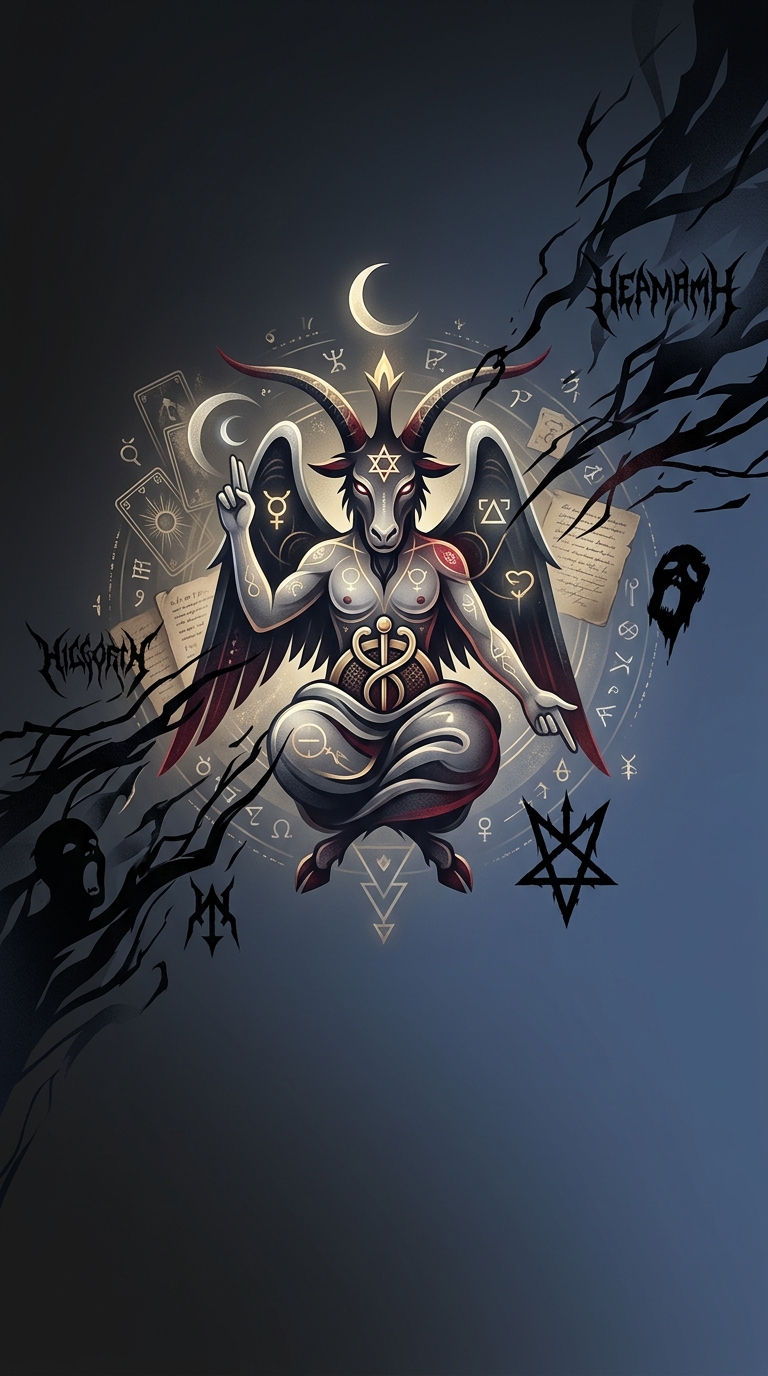
How Lévi turned Baphomet into a diagram
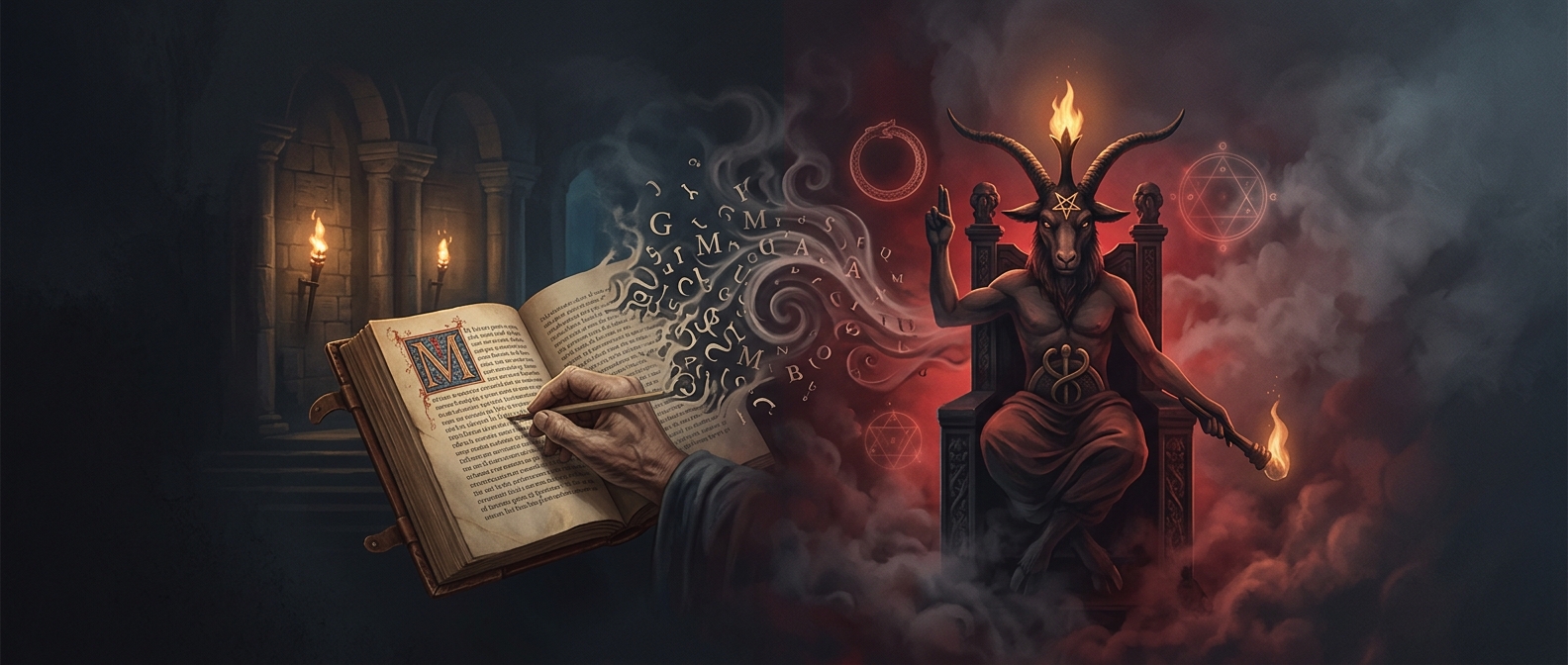
Before Eliphas Lévi drew his famous figure, “Baphomet” was already a name with a history: it appeared in medieval accusations against the Knights Templar, but those accusations did not establish a goat-headed being as an ancient object of worship. Lévi gave the name a striking new visual form in Dogme et rituel de la haute magie, published in two parts in 1854 and 1856.
His winged figure combines traits conventionally read as masculine and feminine, a goat’s head, and a torch between its horns. Its gestures point both upward and downward. These contrasts were not random decorations: Lévi used them to express the idea that opposing forces could be joined in a larger order. The image draws on ideas associated with magic and alchemy, where transformation and the reconciliation of opposites mattered. It was a symbolic construction, not a straightforward portrait of a Christian devil.
Why the image outgrew its original meaning
The drawing was designed to be read like a compact argument. Its mixed features and opposing gestures ask the viewer to hold contrasts together rather than choose one side. That made it memorable—and easy to detach from Lévi’s explanation. Once reproduced on its own, the goat’s head and occult setting could be taken as a sign of Satan, even though the picture’s symbolism was more elaborate.
Later artists, religious interpreters, and popular culture gave Baphomet different meanings; there was no single moment when everyone agreed on what the figure represented. Its use in metal and other provocative imagery made it especially recognizable as a sign of rebellion, but that is only one layer of its afterlife. Lévi’s lasting achievement was to create an image that could travel farther than its original argument: viewers could recognize the figure instantly while disagreeing about what its symbols meant.