A picture that turns a reaction into a story
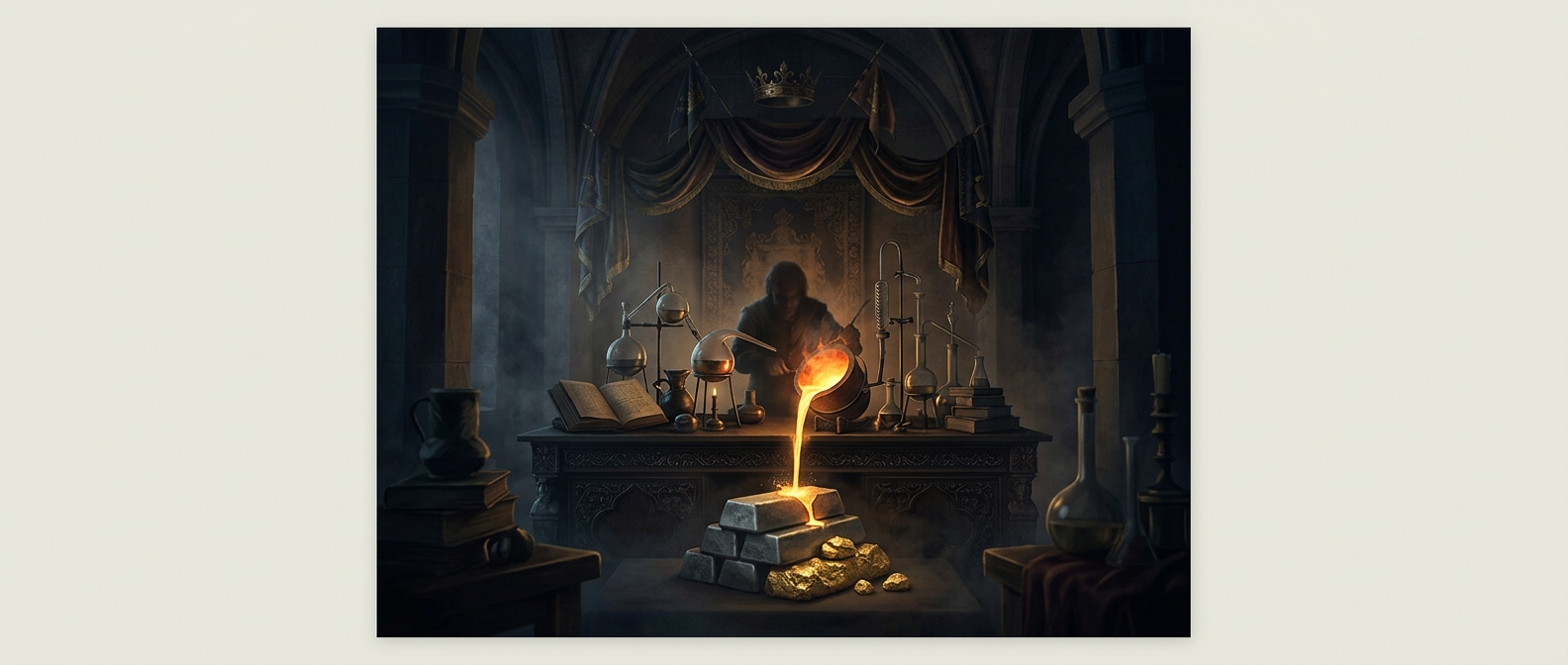
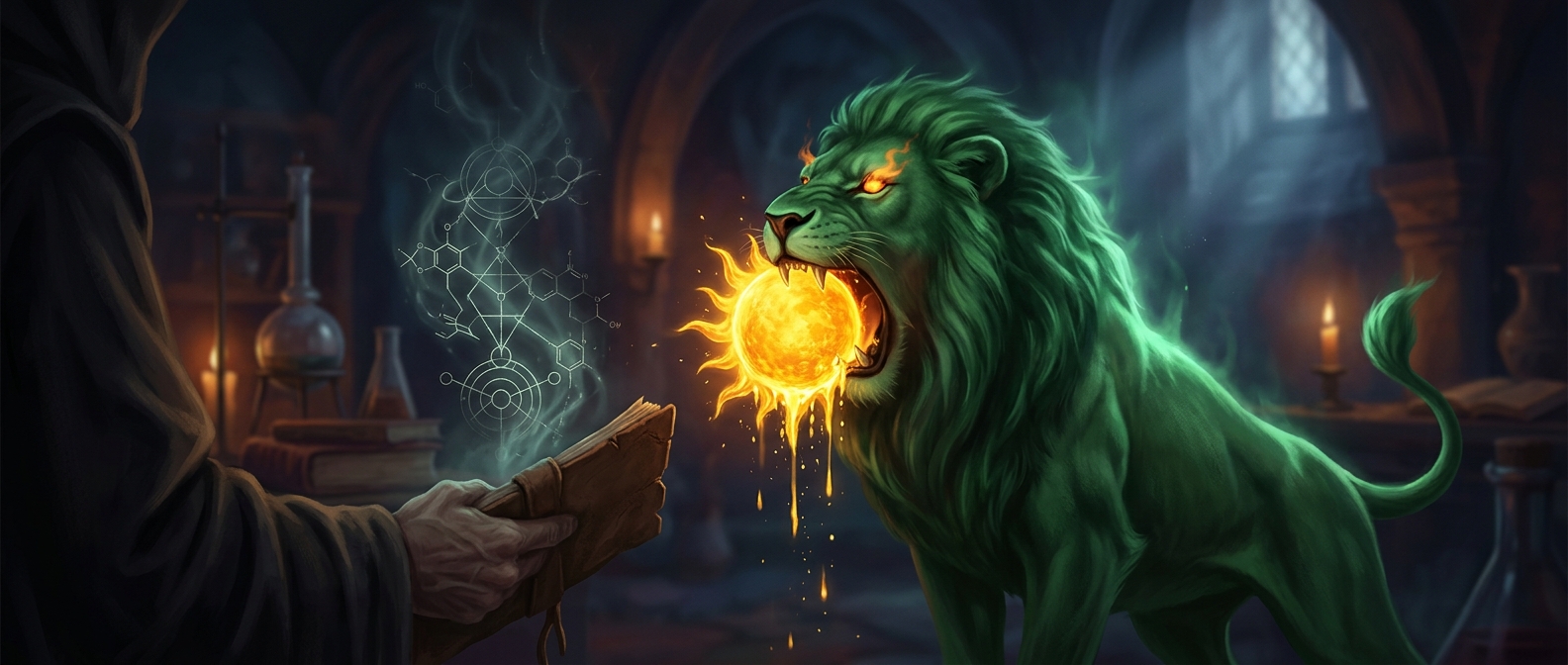
In alchemical writing, the “sun” often stood for gold: both were associated with brightness, perfection, and the precious metal’s resistance to tarnish. A lion suggested a powerful, consuming force. Put together, the image of a green lion eating the sun made a chemical operation memorable: a corrosive liquid attacking and dissolving gold.
The green lion was not a fixed label with one meaning in every manuscript. Alchemists used overlapping names and images for substances, and their interpretations could vary. In this case, the picture conveyed the relationship between a solvent and the metal it acted on without naming a recipe in modern chemical terms.
Why make chemistry hard to read?
Alchemical authors had several reasons to write indirectly. Symbolic language could preserve practical knowledge as a trade secret, mark a text as intended for trained readers, or connect laboratory work to the period’s theories about nature. A recipe could also be dangerous if copied or followed carelessly, so withholding precise instructions had practical value.
That secrecy could favor people who already had access to books, materials, and skilled teachers. But it is too simple to treat every symbol as a deliberate barrier aimed specifically at poor readers. Some images served as memory aids or philosophical shorthand; others concealed details. Their meaning depended on the author and the surrounding text.
The image was a clue, not a complete recipe
A reader still needed to work out what the “lion” referred to, how to prepare or obtain it, and what conditions mattered. The metaphor compressed a process into a vivid scene, but it did not tell an inexperienced reader how to reproduce it safely or reliably. That is part of the image’s lasting force: it makes a hidden chemical action easy to picture while keeping the actual laboratory know-how just out of reach.