The deck can make the right player look wrong
In Secret Hitler, players do not simply choose which policy to enact from a complete menu. The president draws a small hand of policy cards, discards one, and passes the rest to the chancellor, who chooses what becomes law. Because fascist policy cards are more common in the deck than liberal ones, a hand can contain only fascist policies—or leave a president with no liberal card to pass along.
That means a liberal player may enact or pass a fascist policy without supporting the fascist team. The policy is evidence about what happened in that turn, but not proof of the player’s allegiance.
Uncertainty is part of the game’s machinery
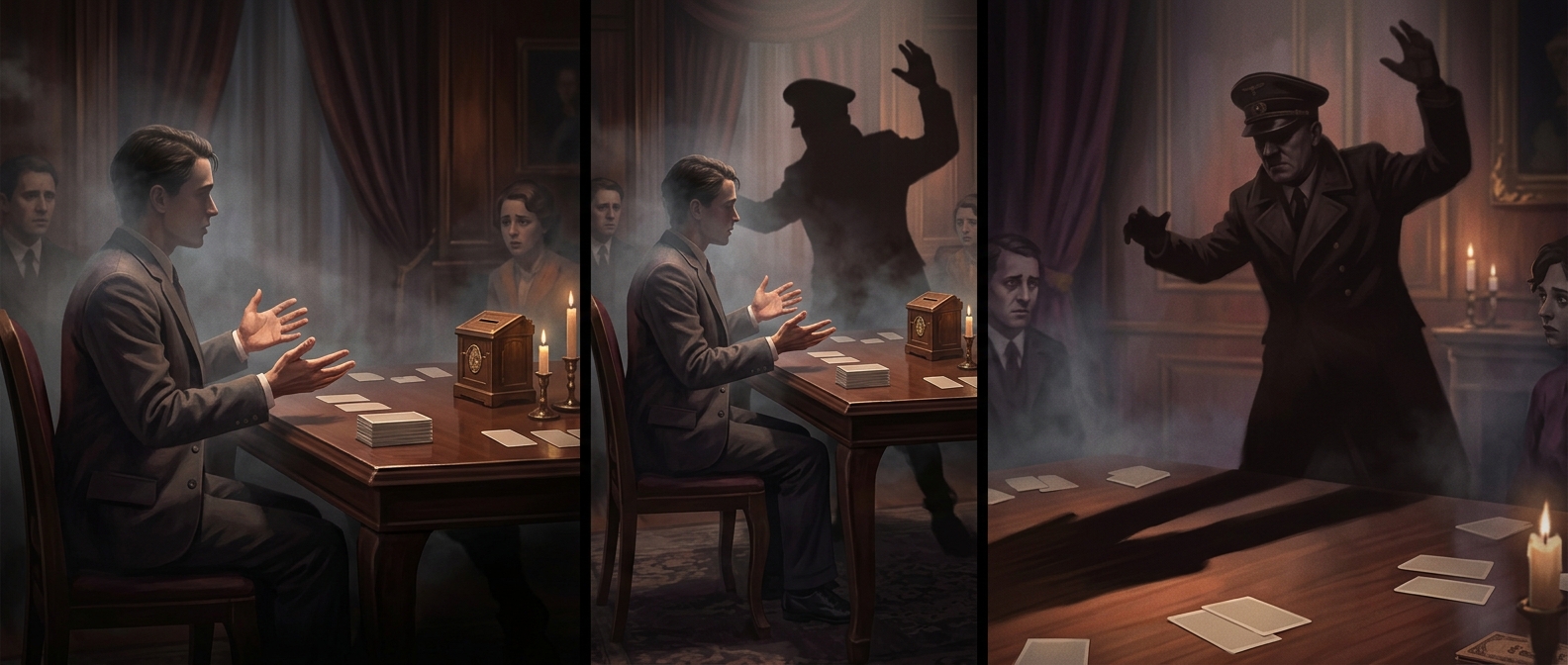
The card draw creates a gap between what a player intends and what the other players can observe. Everyone sees the policy that was enacted, but they cannot see every card the president drew or know which options were available. The president and chancellor can explain their choices; the rest of the table must decide whether to believe them.
That uncertainty gives ordinary bad luck a social consequence. An honest liberal may sound evasive when explaining a fascist policy, while a fascist player can point to the same weighted deck as cover. Players have to weigh the card result against voting patterns, earlier claims, and each other’s behavior.
The design turns a hidden hand into more than a random obstacle: it gives suspicion room to grow. A fascist policy can be real evidence of danger without being a reliable verdict on the person who passed it.