In San Martín Tilcajete, the carving starts with copal
In the Oaxacan village of San Martín Tilcajete, many alebrijes begin as pieces of copal wood. The wood’s shape helps suggest what the creature might become: a curved branch can turn into a horn, a beak, or a long tail. Using hand tools, an artisan carves the body and its separate parts, then joins them into a single figure.
Copal is relatively soft to work, but freshly cut wood can shrink as it dries. That change can split or distort a carving, so pieces need time to dry before they are finished and painted. The delay is part of the craft, even when the finished creature looks as if it sprang directly from the wood.
Paint turns the creature into an individual
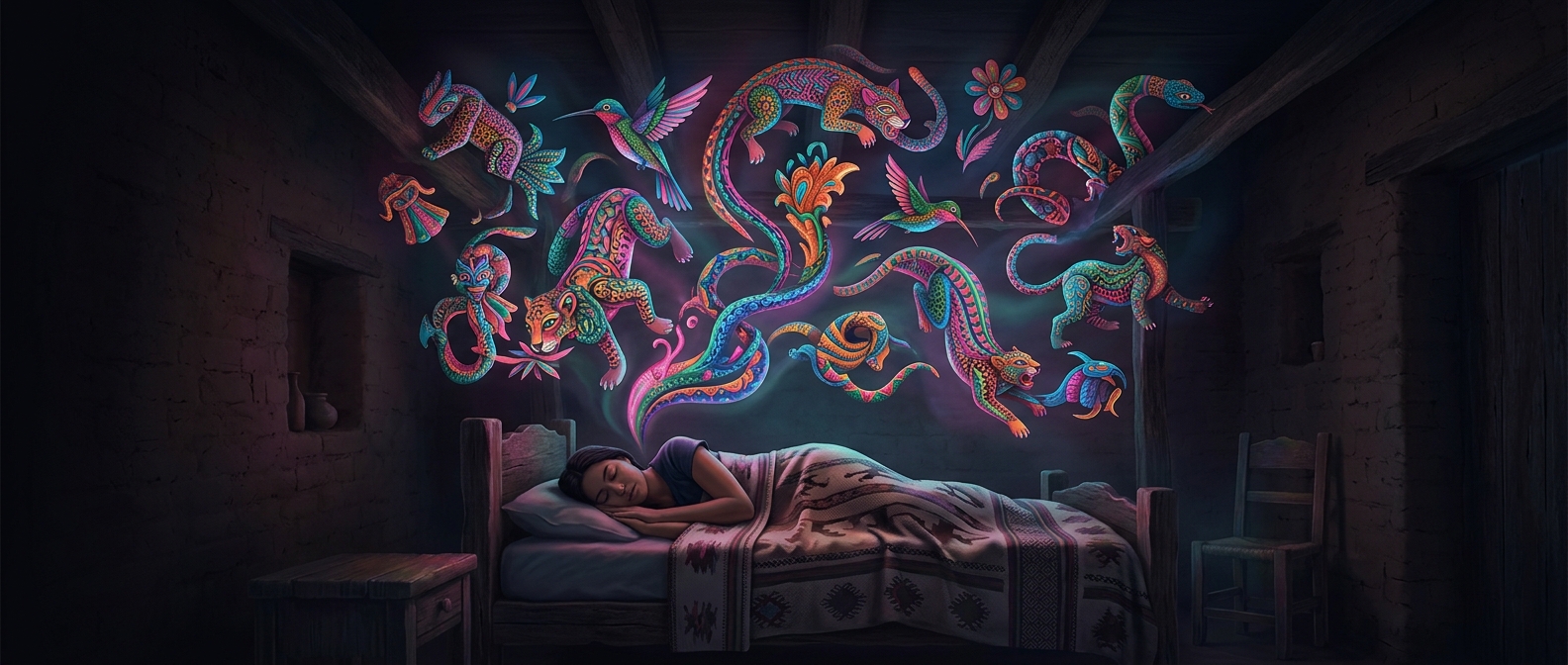
After smoothing the surface, artisans apply bright colors and intricate patterns by hand. Dots, stripes, and repeating shapes may cover the figure from its face to its smallest toes. The painting is not simply decoration added to a standard model: it gives each creature its own character, and details differ from artisan to artisan and workshop to workshop.
The name alebrije is also used for fantastical figures made in other materials, including papier-mâché. Oaxaca’s carved wooden versions are a distinct local craft, shaped by the properties of the wood and the skills passed on in workshops.
What a family workshop makes visible
A visit with a local family can reveal how many decisions sit behind one finished animal: which piece of wood suits the form, how its parts will fit, and how color and pattern will bring it to life. The work is often divided among people with different skills, so the colorful object on display may represent several stages of a household’s craft. The finished alebrije is small enough to carry home, but its patterns preserve the choices made at the carving bench and paint table.