How Dolls Became Part of the Island
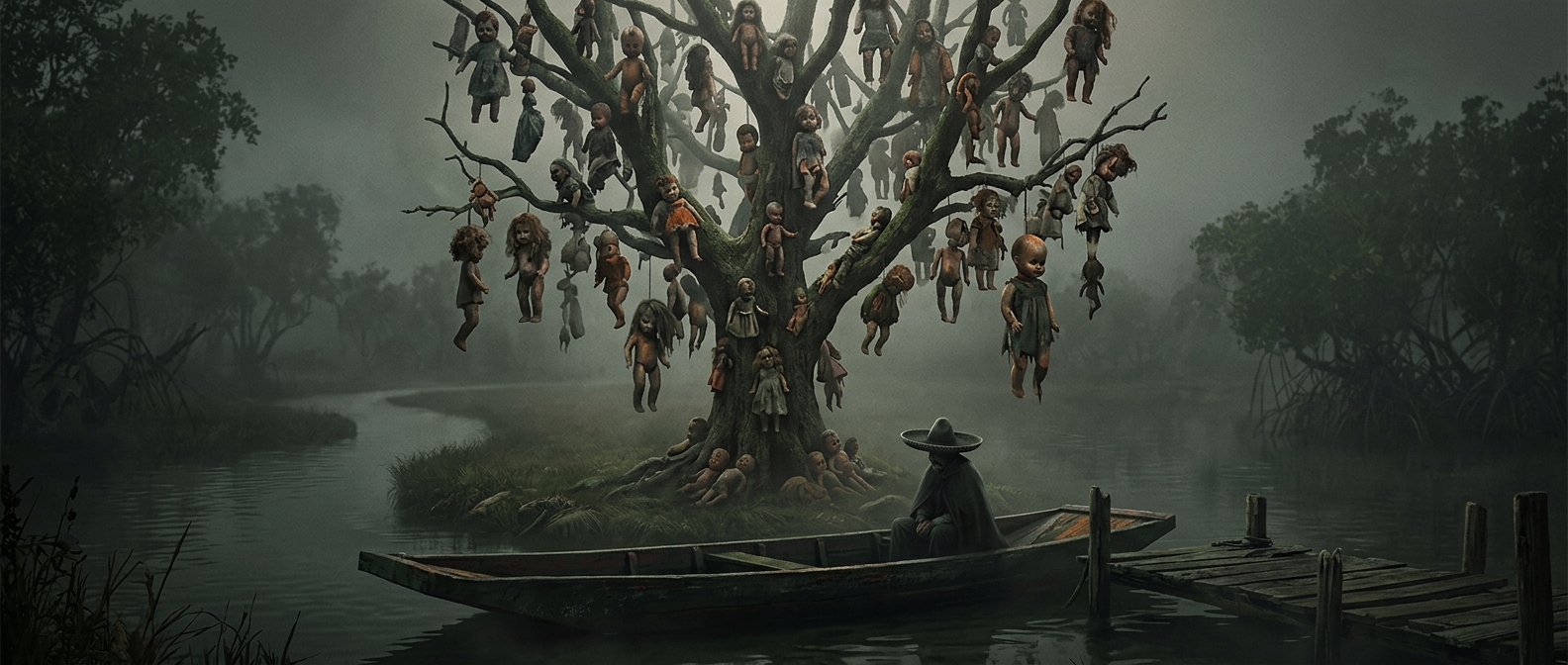
Isla de las Muñecas lies in the Xochimilco canals south of central Mexico City, a watery landscape threaded with narrow channels and small chinampas—plots of land built for cultivation. The island’s startling appearance was not created as a planned attraction. Its former caretaker, Don Julián Santana Barrera, began hanging dolls there, and over time the collection spread across trees and structures.
The story most often told about his choice links it to a girl who drowned nearby. According to local legend, Santana believed her spirit remained in the area and hung dolls in the hope of appeasing it. That is a traditional account of his actions, not something that can be independently established as a supernatural event.
Time Changed the Collection
The dolls were exposed to the canals’ damp air and open weather. Their paint faded, hair and clothing deteriorated, and plastic bodies cracked or lost limbs. That decay made the display more unsettling than a tidy arrangement of toys: each doll looks less like a chosen decoration than an object slowly surrendered to the landscape.
Visitors now encounter the island as both a local legend and a place shaped by one person’s repeated acts. The dolls’ eerie appearance has become its public identity, but the setting matters too: reached through Xochimilco’s canal network, the island feels unusually secluded despite being within Mexico City. A toy that might seem ordinary indoors becomes something else when it hangs, weathering year after year, over still canal water.