A wall where the land runs out
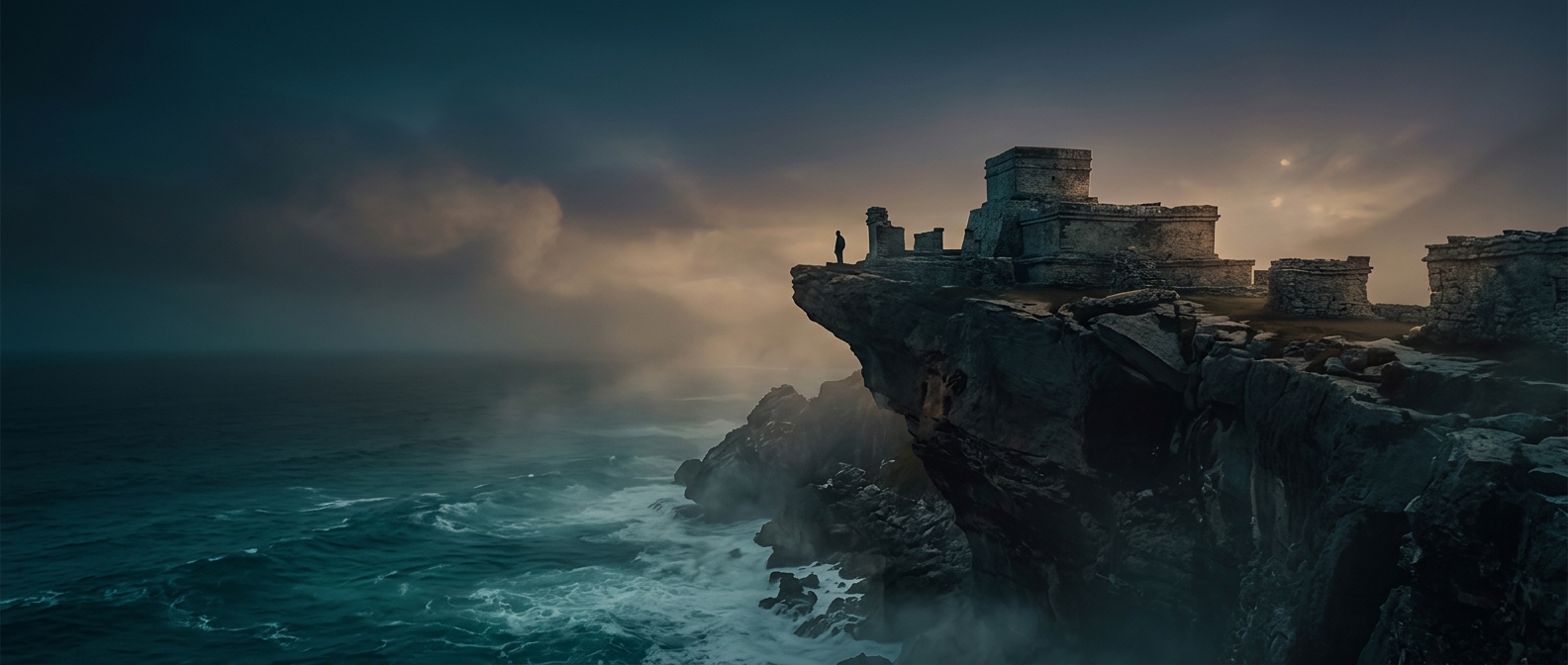
At Tulum, the Caribbean forms one side of the city’s defenses. The settlement stands above the water on a limestone bluff, so the steep seaward edge made a natural barrier: attackers could not simply approach from every direction. On the landward sides, Maya builders added a stone wall, funneling movement toward a smaller number of entrances.
That combination—an abrupt drop on one side and built defenses on the others—helped make the site defensible without enclosing it on all sides. The elevation also offered a broad view along the coast. From above, people could watch the sea and the shoreline rather than discovering an approaching vessel only when it reached the beach.
A lookout with a working coastline
Tulum was more than a strongpoint. It was a coastal Maya settlement connected to maritime travel and exchange, and its position made the sea both a route and a boundary. The cliff gave buildings a clear outlook, while nearby landing places linked the town to boats moving along the coast. A visible landmark could also help mariners recognize where they were in a shoreline broken by coves and headlands.
The setting’s drama comes from that practical overlap. The same edge that protected the settlement framed its relationship with the water: from the city, the Caribbean was not a distant backdrop but an open corridor to watch and use.