A temple caught inside a siege
By 1687, the Parthenon was no longer functioning as an ancient temple. Athens was under Ottoman rule, and the Acropolis—the high, fortified hill above the city—served as a military stronghold. Ottoman defenders stored gunpowder inside the building, using its substantial stone structure as a place to keep ammunition during the conflict with Venice.
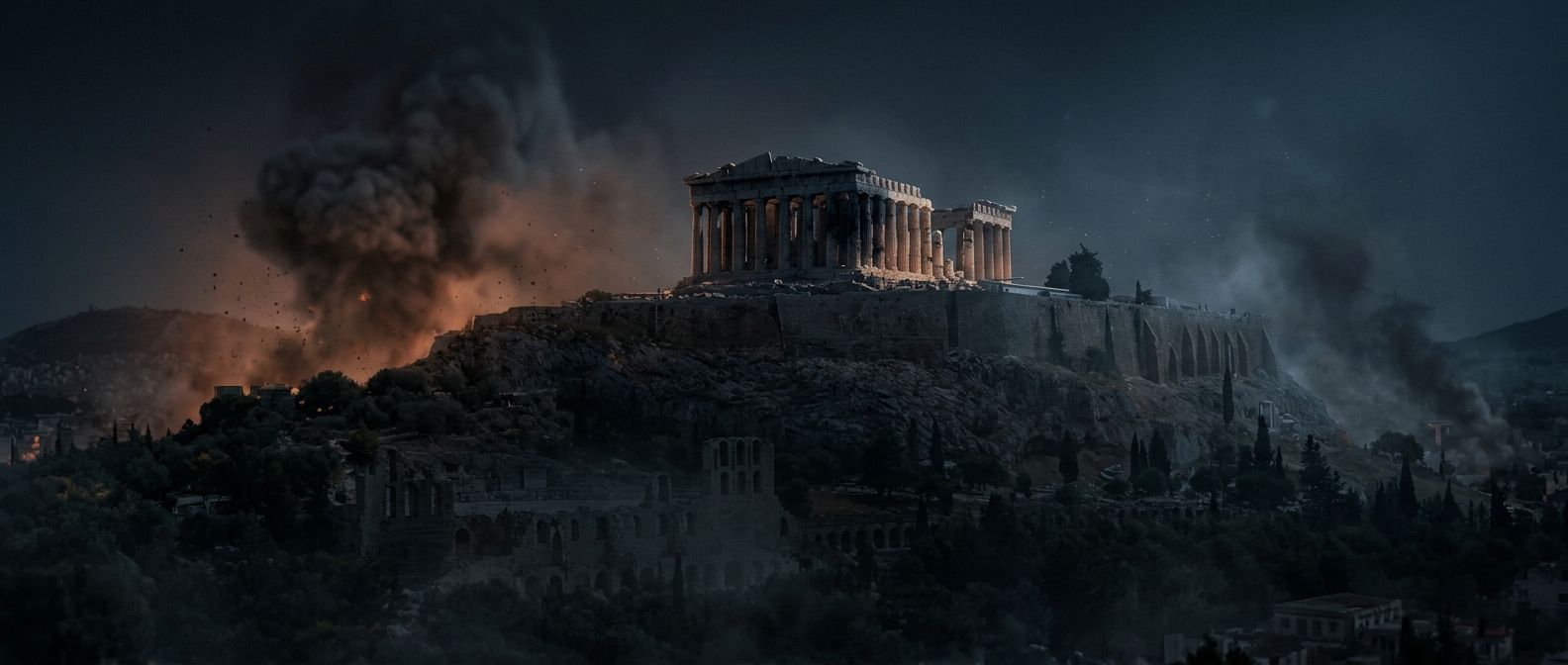
That choice turned the temple into a danger to itself. Gunpowder does not need to be struck by a cannonball to explode; a spark or flame can ignite it. During the Venetian siege, a projectile hit the Parthenon and set off the stored powder.
The blast tore open the building
The explosion blew apart much of the central structure, collapsing sections of the roof and knocking down columns. The Parthenon’s surviving ends and outer fragments make its damage especially legible: the building was not gradually worn away into ruins, but violently broken while it still stood largely intact.
The blast also scattered and shattered sculpture that had remained on the temple. The damage transformed the monument’s appearance and left a major gap in the record of its decoration. What visitors see today is partly the result of centuries of exposure and later loss, but the 1687 explosion was the decisive rupture that opened the building to the sky.
A military decision with lasting consequences
The Acropolis’s height and defensive walls made it valuable in a siege; the Parthenon’s solid interior made it useful for storage. Those practical advantages came with an extraordinary risk. When the ammunition exploded, a military installation and an ancient monument occupied the same space—and the stored powder made the temple itself the blast’s most vulnerable target.