The Plain of Jars is a landscape-sized archaeological site
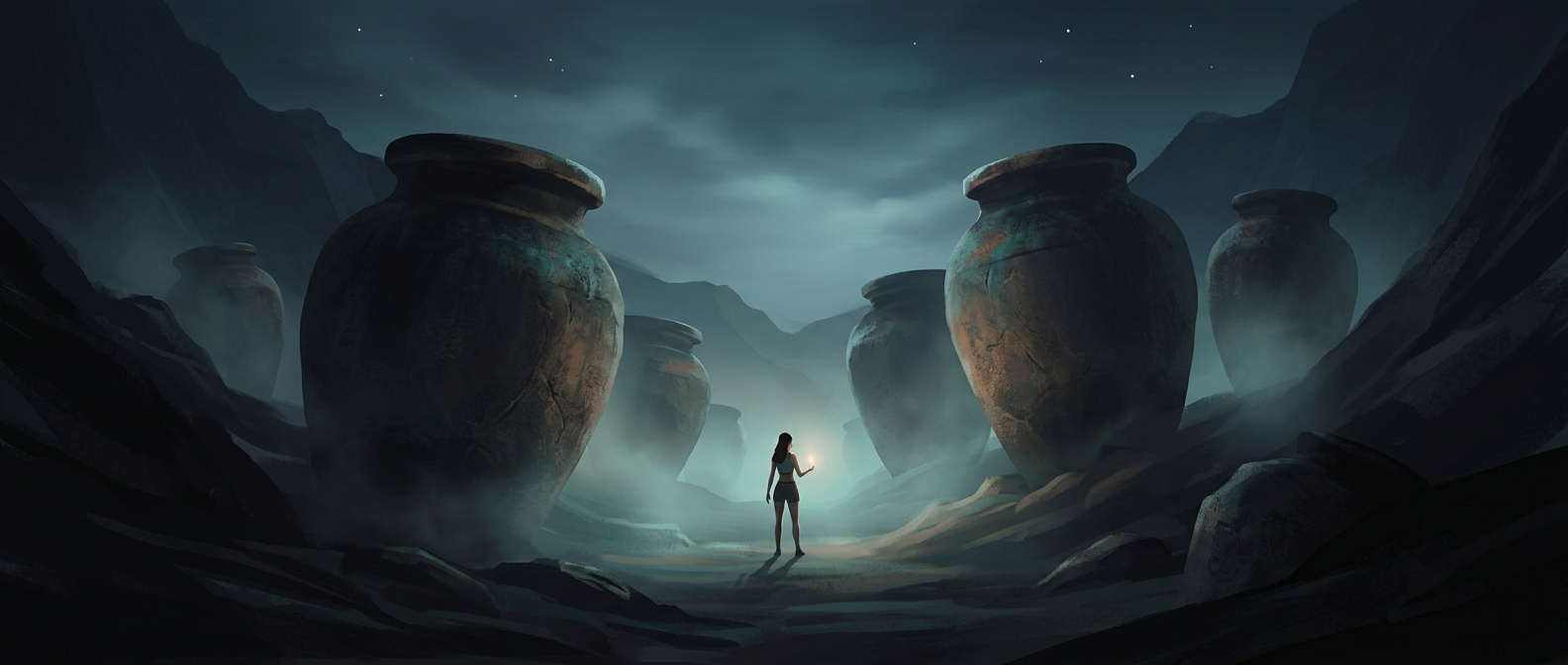
Across the uplands of Laos’s Xieng Khouang region, large stone jars stand in groups on hillsides and open ground. They are not all alike: their sizes and shapes vary, and some have stone discs nearby that may have served as lids. Their scale hints at a substantial effort to shape and move them, though the precise methods remain uncertain.
Burial traces offer clues, not a complete answer
Archaeologists have found human remains and other burial-related material in the wider jar sites. Such evidence makes a funerary role plausible, but it does not show exactly how each vessel was used. A jar might have held a body or remains at one stage of a burial process; the evidence does not establish that all jars had the same function. Stone containers can survive long after organic materials and the practices around them have disappeared, leaving a striking object but an incomplete record.
What the arrangement can—and cannot—tell us
The jars’ grouping suggests that people returned to particular places for organized activities, rather than scattering isolated monuments across the landscape. But arrangement alone cannot reveal the beliefs behind those activities. Without written accounts, archaeologists must compare the vessels’ locations with nearby graves, artifacts, and traces of use—and keep competing explanations open.
That uncertainty is part of the site’s significance: the jars preserve the scale of an ancient undertaking, while the missing bodies, objects, and meanings remind visitors how much of a ritual can vanish even when its stone monuments remain.