The Nazca Lines Were Drawn Across a Landscape, Not Viewed From Above
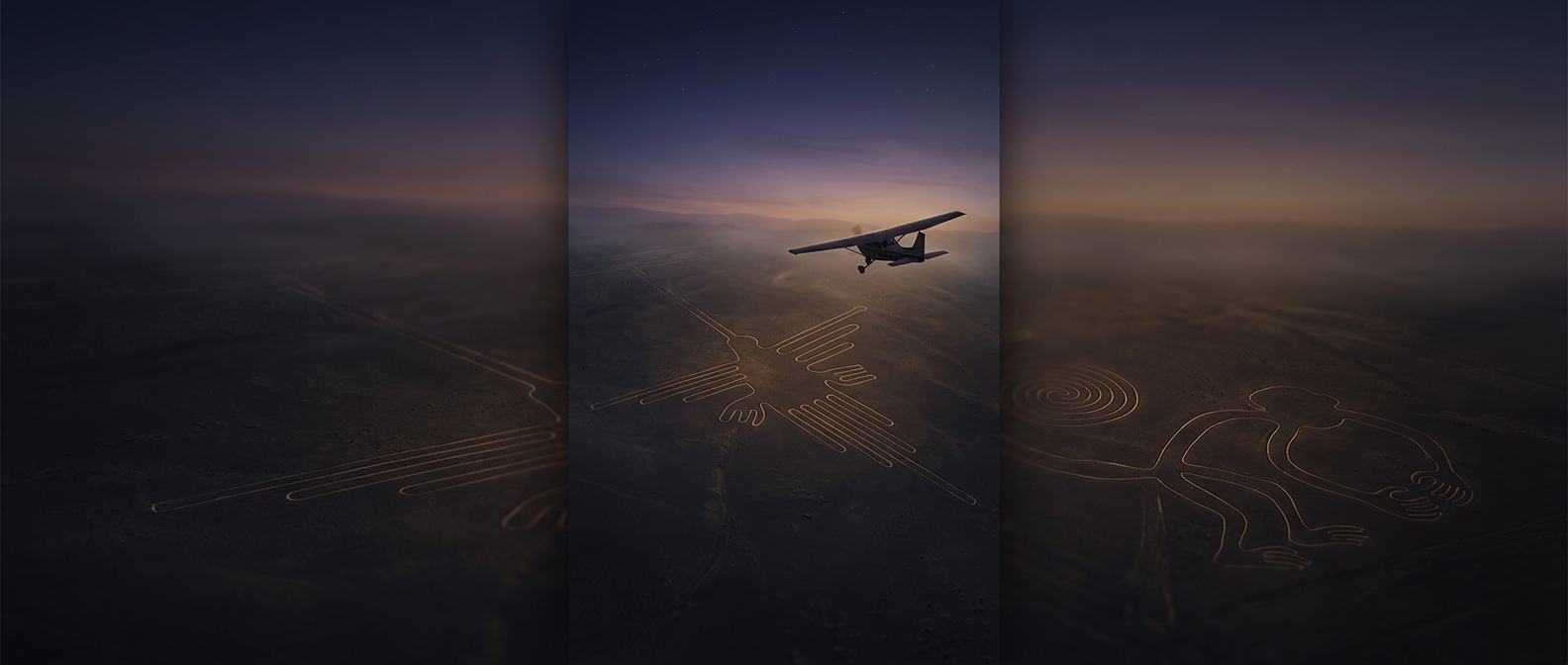
The designs spread across Peru’s dry Nazca plain were not made like pictures on a wall. Many are geoglyphs—large shapes created on the ground by shifting or removing the dark, iron-rich stones that cover the desert surface, exposing lighter soil beneath. In the region’s exceptionally dry climate, those pale marks can remain visible for centuries.
That technique made the figures legible from the sky, but it did not require their makers to see them as complete aerial images. From ground level, a person could follow a line, walk along it, or stand near one part of a figure; nearby rises may also have offered broader views. The whole design, however, is difficult to take in from the flat plain. Its scale may have mattered less as a picture to inspect than as a route or place to use.
A Possible Audience Beyond Human View
Because the images are so much clearer from above, one enduring possibility is that they were made for gods or other supernatural beings imagined to look down on the landscape. That is an interpretation, not a settled explanation. Researchers have also considered ritual journeys and ceremonies connected with water and fertility, concerns of life in an arid environment. Different lines and figures may not all have served the same purpose.
The act of making a geoglyph could itself have been meaningful: people had to mark out a design on the ground and move through the landscape to create it. If a line was also a path, its significance might have unfolded through walking, gathering, or ritual activity—not through viewing the entire image at once.
The Nazca plain therefore presents a striking mismatch between what modern visitors notice from the air and what its makers may have experienced on foot. A design that is hard to see as a whole can still be powerful as a place to travel through.