When a camera starts looking like a production
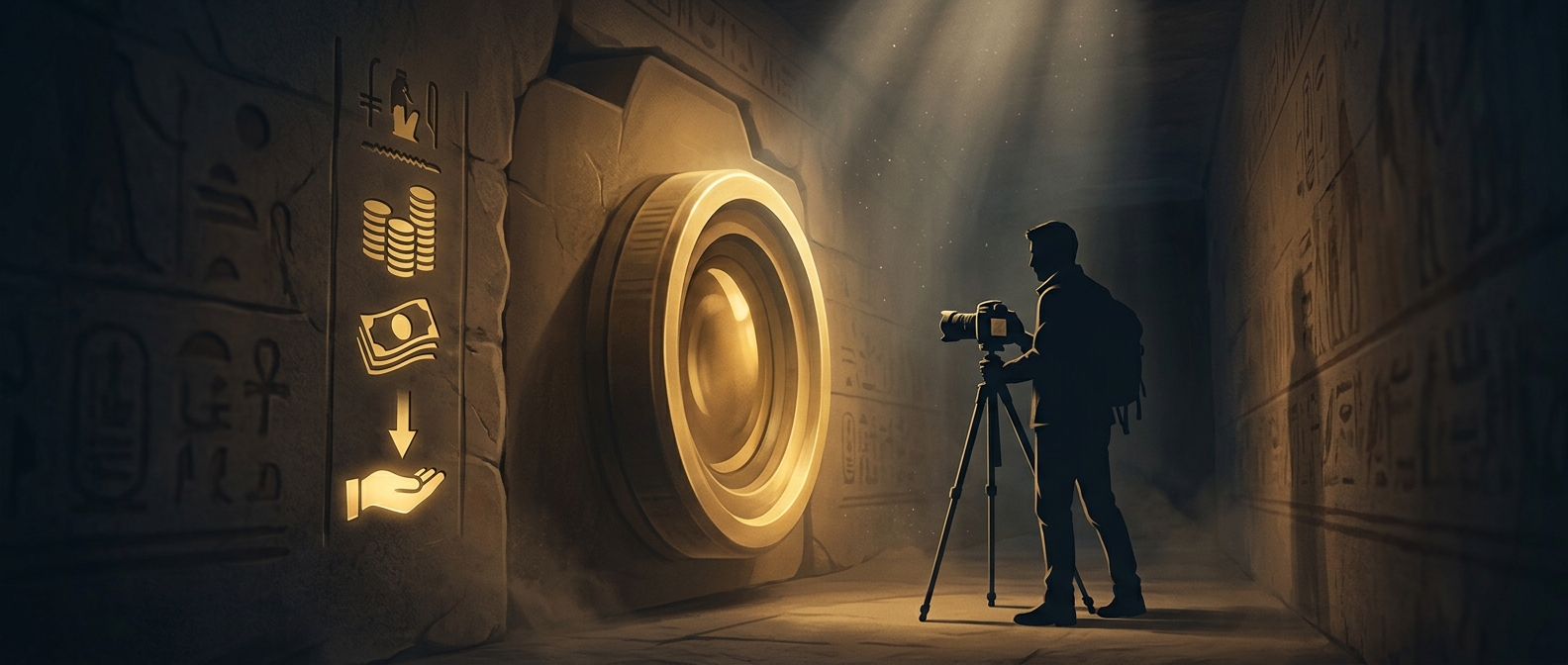
At an Egyptian pyramid, the distinction is often less about whether a device can take a photograph and more about what kind of photography staff believe it enables. A phone is easy to carry and use briefly. A DSLR paired with a tripod looks more like a planned shoot: the support takes up space, setup takes time, and the equipment can affect other visitors moving through a tight passage.
That is why professional-looking gear may be treated differently from a camera used for personal snapshots. A fee or permit can apply to photography considered commercial or production work, even if the person carrying the equipment has not arrived with a film crew. The equipment itself can prompt questions about the intended use.
Why sites make the distinction
A pyramid interior is not a roomy studio. Visitors share confined routes, and equipment that needs to be assembled or placed on the ground can slow movement and interfere with access. Meanwhile, sites must manage photography in places that are both heavily visited and historically fragile. Permission requirements give staff a way to regulate more involved shoots rather than treating every camera as an ordinary visitor’s accessory.
The result is a practical gray area: a camera may be acceptable for casual use, while a tripod or other production equipment changes how the visit is classified. The amount charged and the rules can depend on the site and the kind of photography, so there is no single fee that applies to every pyramid or visit.
Check before packing the kit
Travelers planning to use a DSLR, tripod, or similar equipment should check the specific site’s current policy before arriving and ask whether advance permission is needed. A compact camera for personal pictures is a different proposition from equipment that requires setup—and that difference can determine whether the camera stays in a bag or comes with a substantial extra cost.