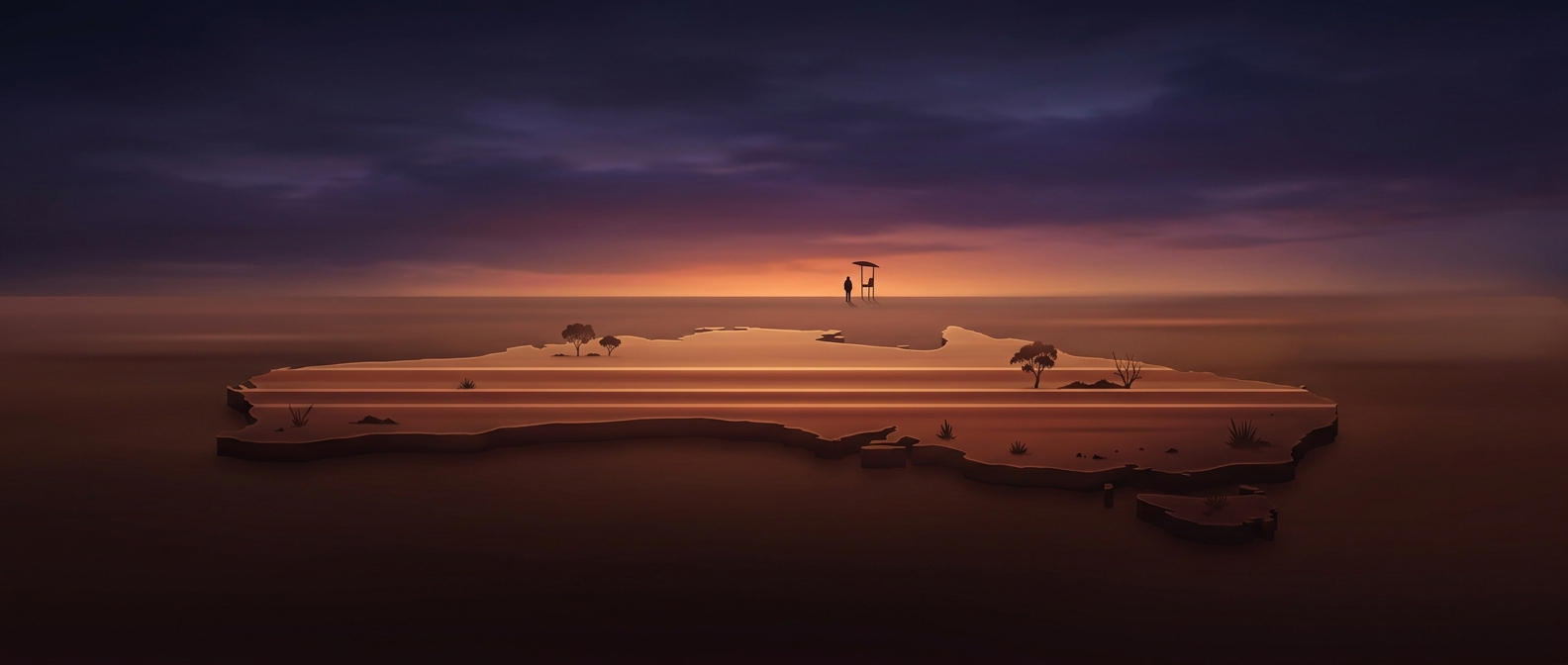
Why the Australian interior stays dry
Much of inland Australia lies beneath a belt of descending air that suppresses cloud formation and rain. Moisture also tends to fall near the coast before winds carry it far inland; in the east, the Great Dividing Range wrings additional rain from some air moving across the continent. The result is a broad interior where rainfall is low and, just as importantly, unreliable.
That unpredictability shapes the landscape. Creeks may run after storms and then disappear, while some river channels carry water only occasionally. In many places, evaporation quickly draws moisture back from the soil. Cracked ground is one visible sign of that cycle, not proof that the land is lifeless.
Life follows brief pulses of water
Plants and animals survive by matching their lives to scarce resources. Some desert plants keep seeds dormant until rain arrives; others grow slowly or develop roots that reach deep moisture. Animals often avoid the hottest hours, and bursts of rain can prompt sudden growth and breeding. These adaptations make the country seem empty at a glance, even when it supports specialized ecosystems.
People, too, have long adapted to local water and seasonal conditions. For travelers, distances between reliable services can be large, and a route that looks straightforward on a map may cross long stretches with little shade or mobile coverage. Checking road and weather conditions, carrying sufficient water, and not assuming a dry-looking channel is safe to cross after rain are practical consequences of the same climate: water is scarce, but it can also arrive suddenly.