A flying link in Airbus’s assembly line
Airbus builds major aircraft components at different facilities, then brings them together for final assembly. That creates a transport problem: a wing or fuselage section can be too wide or awkwardly shaped to fit through the doors of an ordinary freighter, even when the aircraft’s hold has enough volume on paper.
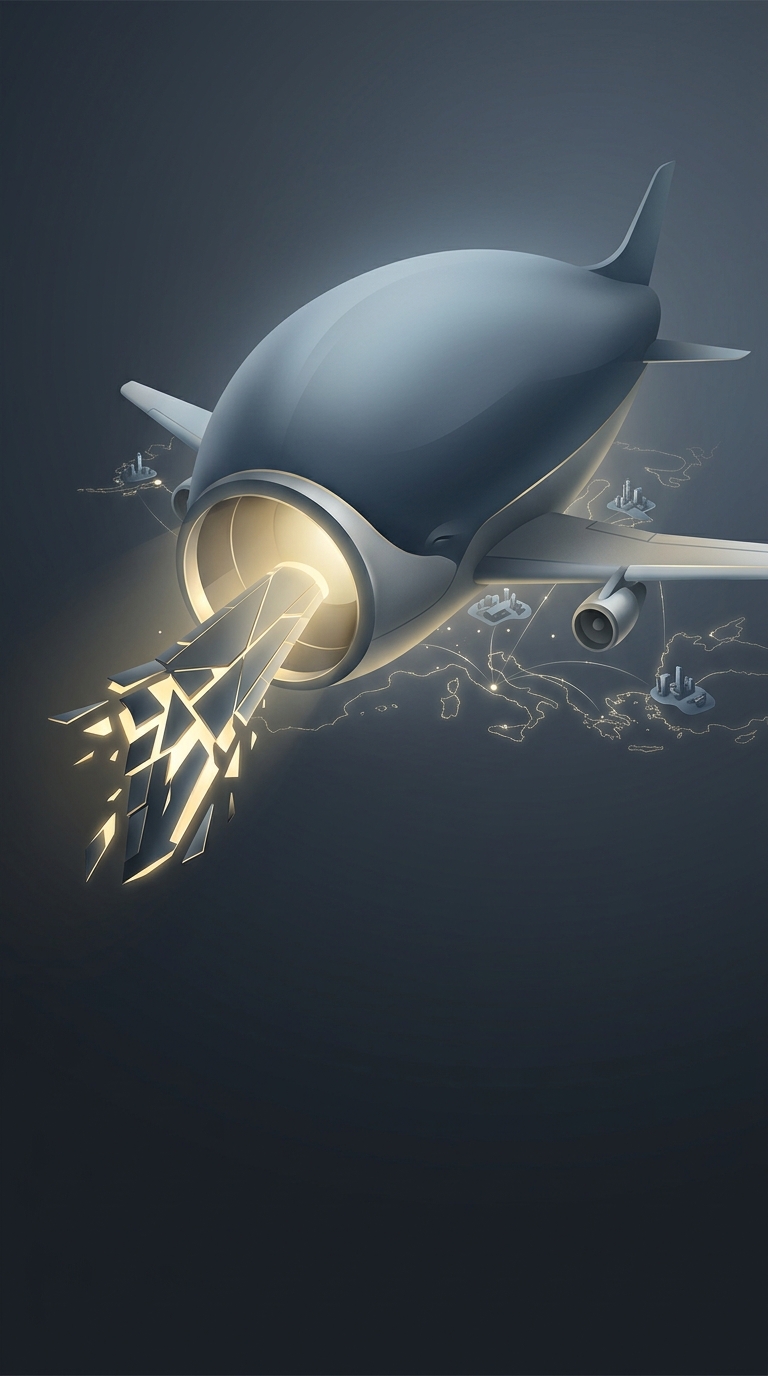
The Beluga was designed around the shape of the cargo, not around standard shipping containers. Its oversized upper fuselage provides room for bulky sections, while the cockpit sits low in the nose. That arrangement leaves the front of the cargo bay clear and lets the nose swing upward for loading.
The tradeoff behind the whale shape
A conventional cargo plane usually loads freight through a side or rear door. Those openings work well for pallets, but moving a long aircraft section through them can require difficult handling or make the load impossible to fit. Opening the Beluga at the nose gives ground crews a direct route into the hold, so large components can be brought in with specialized loading equipment rather than squeezed through a standard-sized opening.
The bulging body is a practical compromise: it creates a large, accessible space for cargo that does not pack neatly, while the aircraft still has to fly between factories and assembly sites. Its unusual outline is therefore not a styling flourish. It is part of a production system in which enormous pieces of an airplane must travel separately before they can become one.
That makes the Beluga more like a moving section of the factory than a general-purpose freight plane: its defining feature is the opening that lets an airplane part enter intact.