Why a space elevator needs to reach beyond orbit
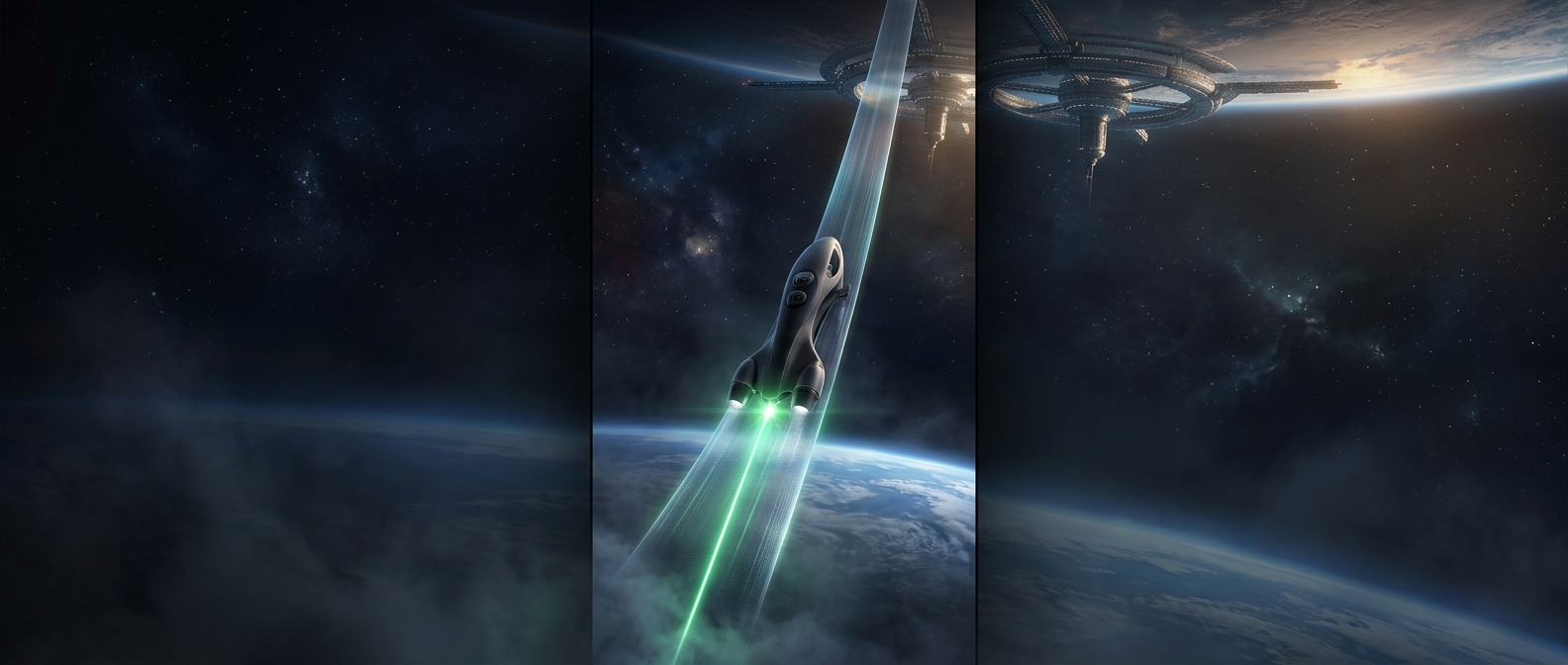
A space elevator would not hang from a satellite parked over one spot. It would use a cable extending from near the equator, through geostationary orbit—about 35,800 kilometers above Earth—and farther out to a counterweight. At that altitude, an object circles Earth once per day, matching the planet’s rotation. The cable’s outer section and counterweight help keep the entire structure taut as Earth turns beneath it.
That tension is what makes the ride possible: a climber could grip the cable and travel upward without a rocket’s brief, fuel-hungry acceleration. But the trip is enormous. Covering the distance at a relatively modest, steady pace could take roughly eight days, depending on the climber’s speed and route.
The slow ride changes the engineering problem
Instead of carrying all its propulsion fuel, a climber would need a way to receive power along the route—potentially from beams sent from the ground or from equipment it carries. It would also have to move reliably on a cable exposed to weather near Earth, extreme conditions higher up, and the stresses of a structure stretching tens of thousands of kilometers.
The hardest constraint is the cable itself. It must be light enough that its lower portions are not crushed by the weight above, yet strong enough to hold the whole system under tension. That requirement is why a space elevator remains a proposed transport system rather than a working route.
If such a cable could be built, the eight-day ascent would be a deliberate trade: far slower than a rocket launch, but potentially a way to carry people or cargo upward without the violent acceleration and large onboard fuel load of a conventional rocket.