A target designed to punish sloppy aim
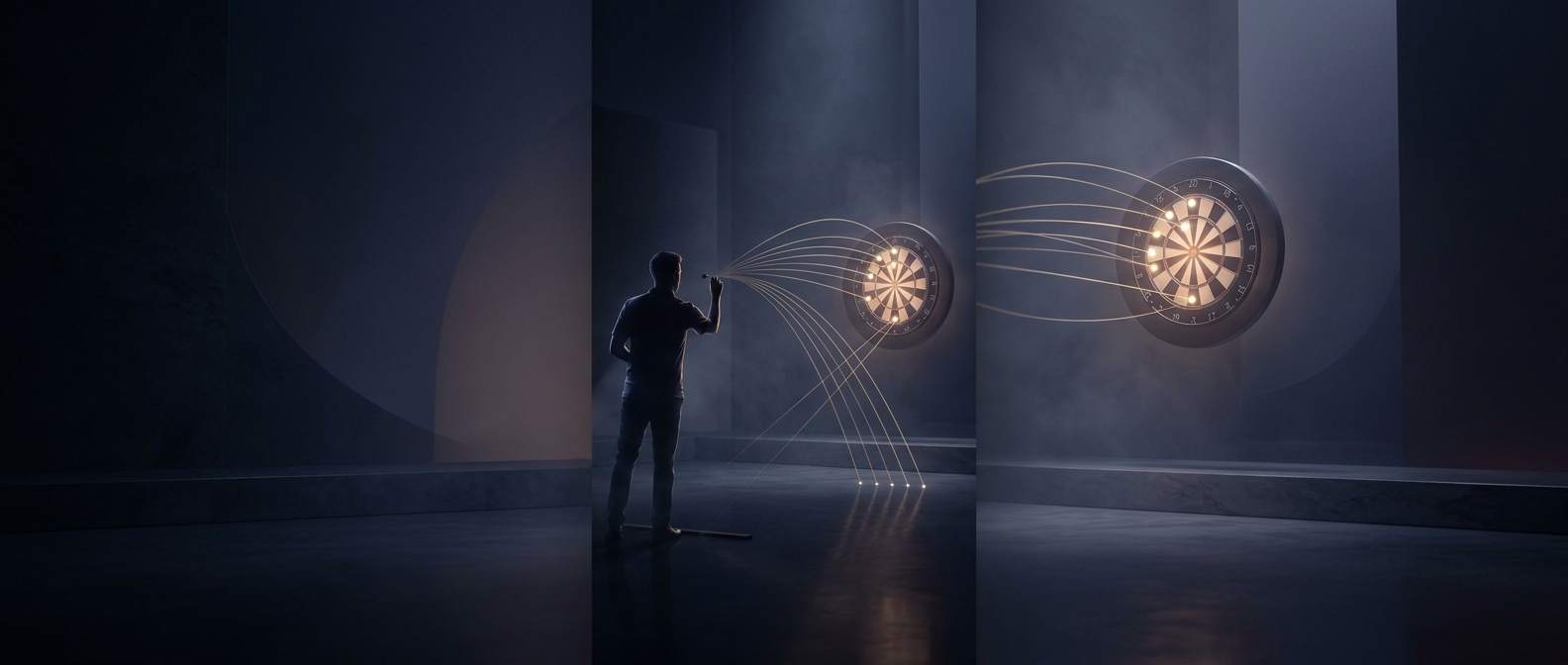
A dartboard is not simply a bull’s-eye surrounded by larger and larger rewards. Its numbered wedges place high-scoring sections beside low-scoring ones, so a small sideways miss can sharply change the result. Narrow inner and outer rings multiply a wedge’s value; the bull’s-eye scores well, but it is not automatically the best target. The layout makes accuracy and risk part of every throw.
Why pub darts is a subtraction game
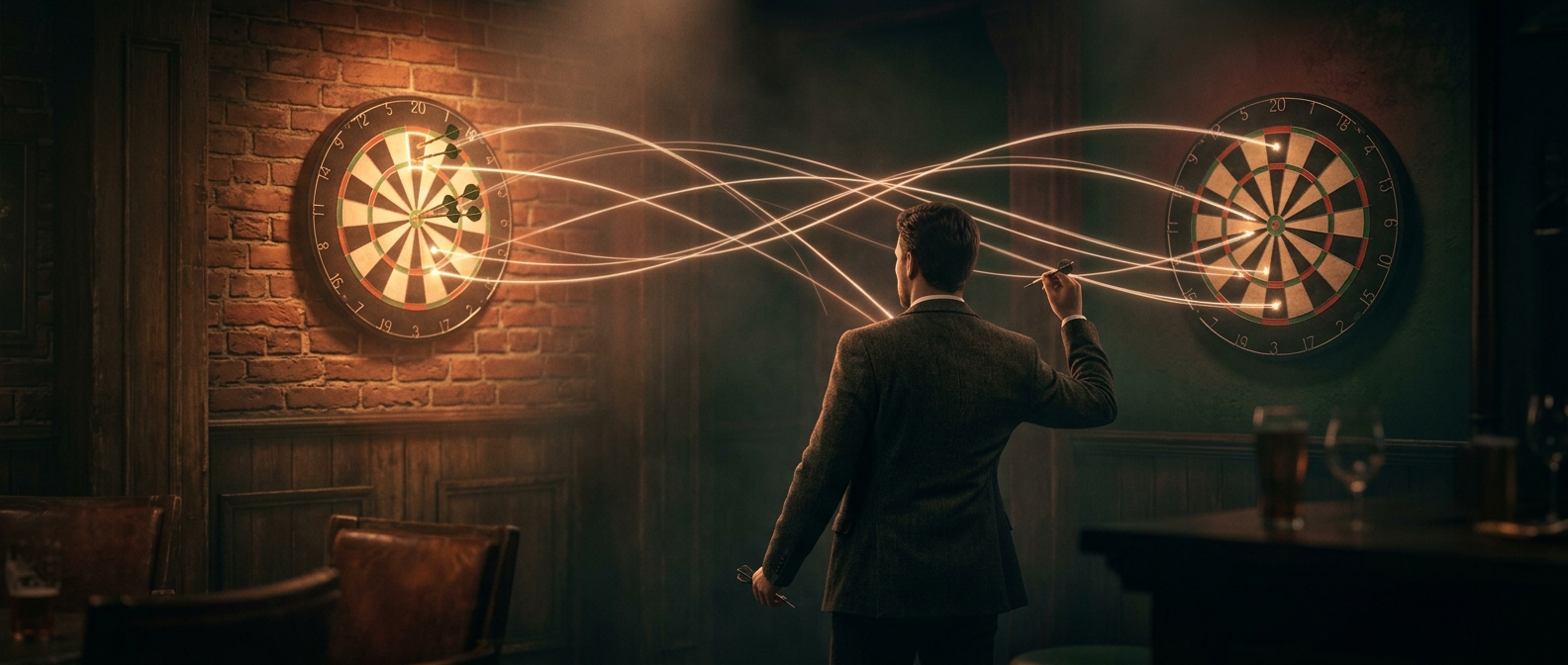
In a common pub format, players begin with a fixed total and subtract each turn’s score, aiming to reach zero exactly. A player may need to choose between a difficult, high-value target and a safer sequence of throws. Near the finish, the problem changes: the remaining total has to match a valid final hit, so a strong score can leave an awkward number rather than bring the player closer to winning.
That arithmetic gives the game its rhythm. A throw is judged not only by where it lands, but by what it leaves the next player—or the thrower—to do.
The wall is part of the challenge
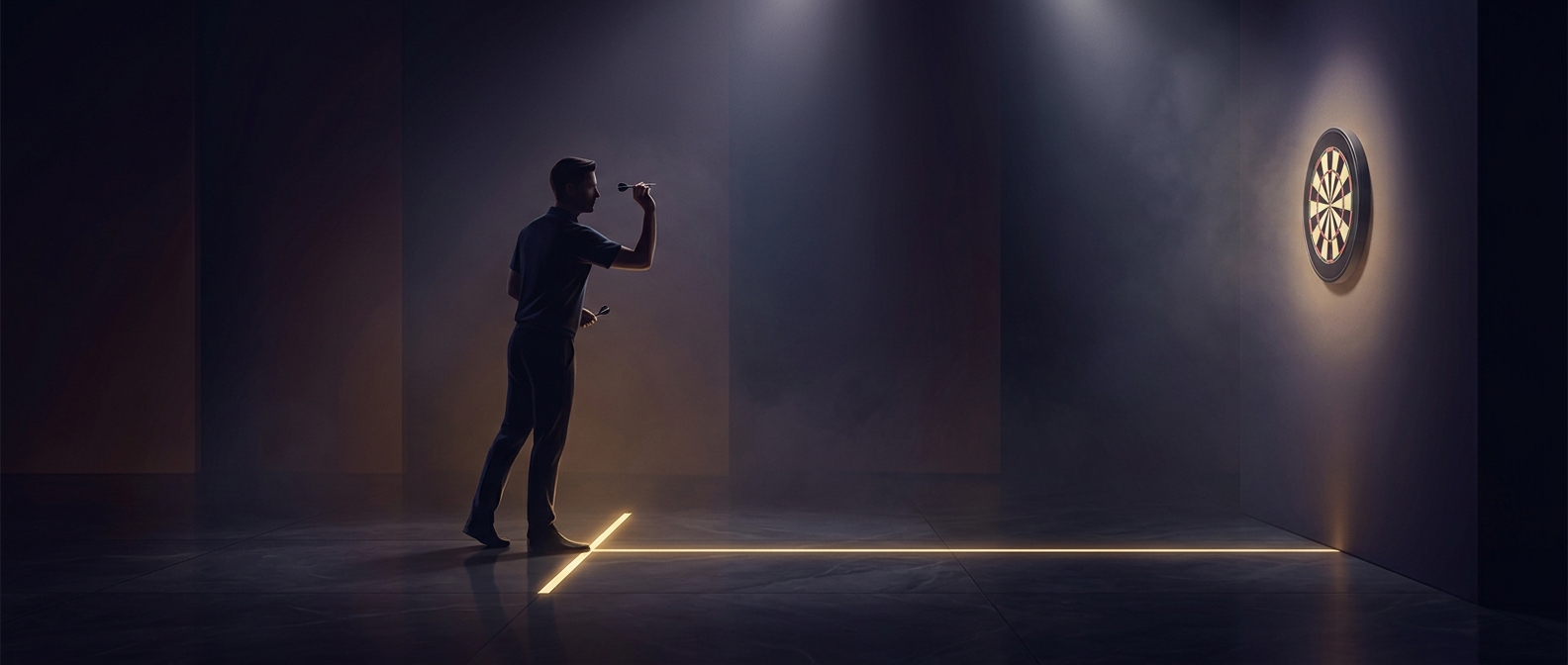
The board’s small scoring zones reward repeatable technique: a consistent stance, a controlled release, and a deliberate aim. But in a pub, throws happen amid conversation and movement, making a clear throwing area essential. The metal point can make a missed throw hazardous, so players take turns and keep people out of the space between the line and the board.
The result is a game that looks casual but combines precision, arithmetic, and turn-taking—qualities that let a few throws hold a room’s attention.