How a Tree Trunk Suggested a Dartboard
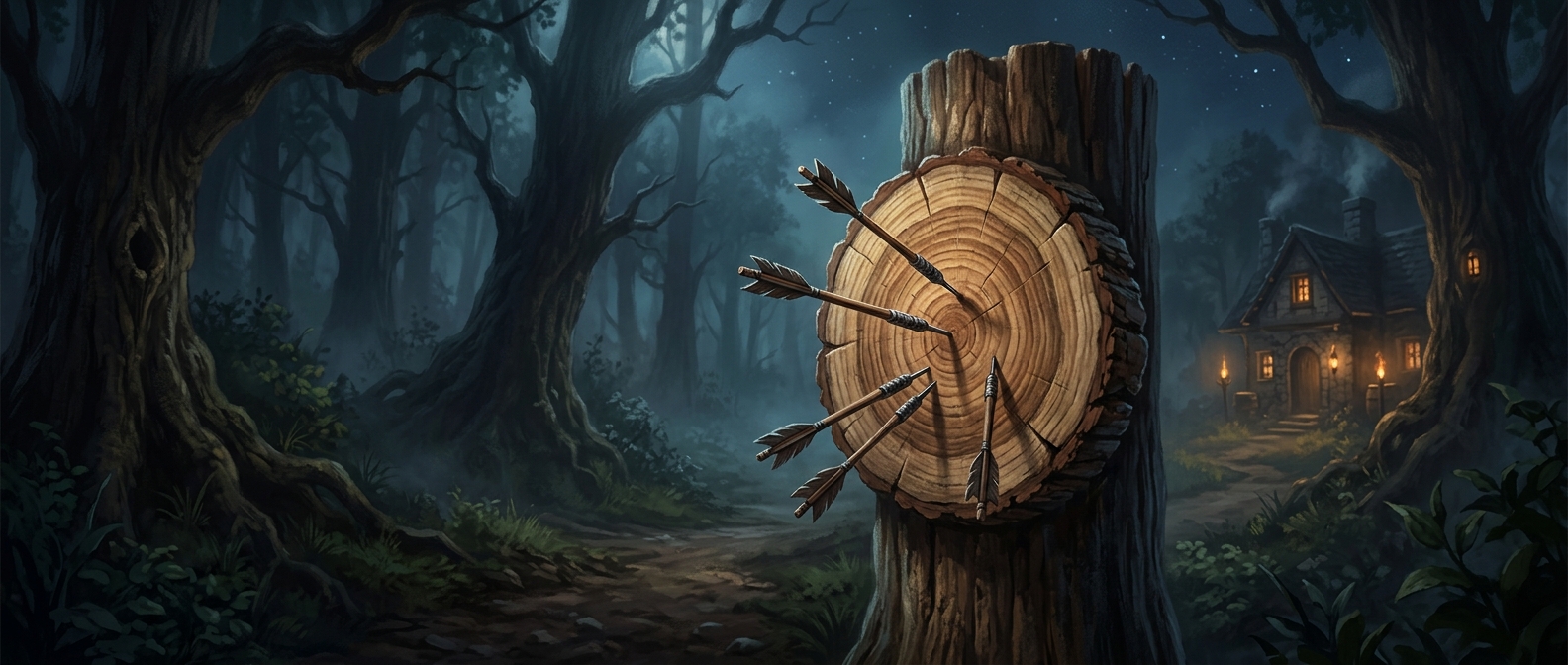
A slice cut across a tree trunk already has two features that make it easy to divide into targets. Its growth rings form circles around the center, while drying can open cracks that run outward from the center like spokes. Together, the rings and cracks create a pattern of concentric bands split into wedge-shaped sections.
That pattern offered a practical starting point for a game: players could aim at distinct regions on a round surface rather than at an undivided target. The tree’s structure supplied the visible divisions; the game’s scoring rules supplied their meaning.
From Natural Pattern to Scoring Board
The cracks were not neat, evenly spaced boundaries. They formed as wood lost moisture and shrank, and their positions varied from one slice to another. Growth rings also reflect the tree’s history, not a designer’s plan. A usable board therefore required choosing or refining divisions instead of simply treating every natural crack as a finished scoring line.
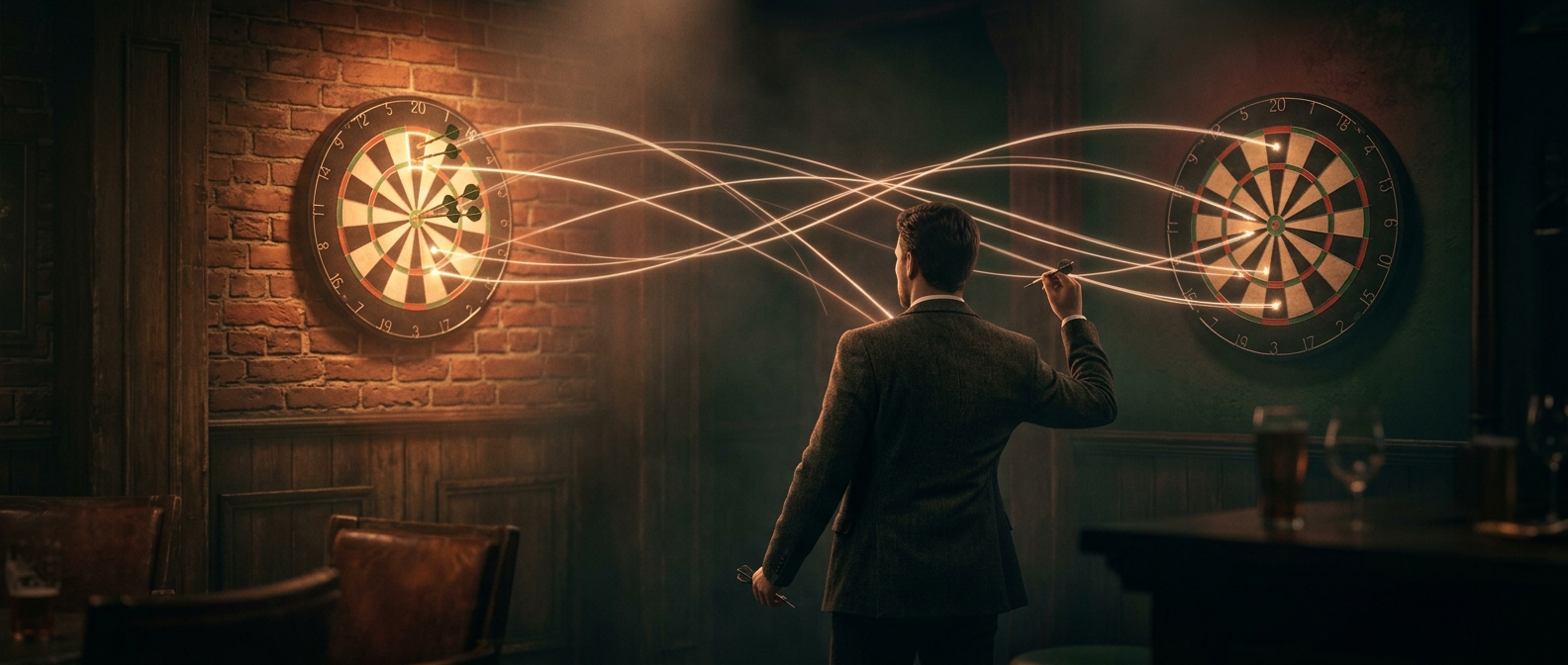
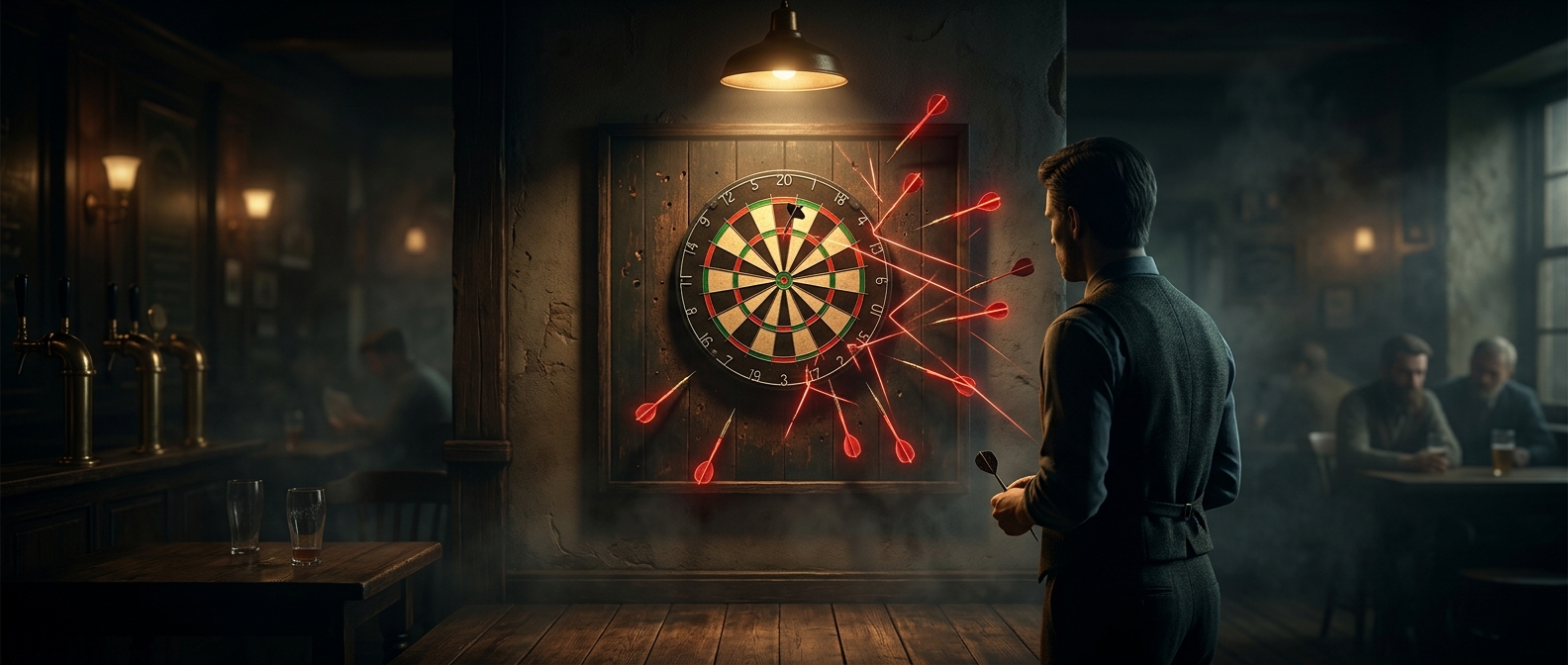
That distinction explains the lasting design idea: the trunk provided the geometry, but people turned it into a game of precision. A dartboard’s familiar circles and wedges echo a pattern that can be seen in a cut tree, transformed from the irregular evidence of growth and drying into deliberate targets.