Why the First PlayStation 3 Was So Heavy
The original PlayStation 3 packed several demanding systems into one living-room machine: a powerful Cell processor, a separate graphics chip, a Blu-ray drive, and—in some early models—hardware that let it play PlayStation 2 games. Those parts needed room, and they drew enough power to produce substantial heat.
That heat shaped the console’s design. A fan and heatsinks—metal parts that draw heat away from chips—had to move warmth out of the case reliably. The power supply was inside, too, rather than in a separate external brick. Together, the cooling hardware, power components, optical drive, and sturdy casing added considerable mass.
The Tradeoff Behind the Bulk
Sony was trying to make the PS3 a high-end game system and a Blu-ray player, while preserving features such as backward compatibility on certain early versions. Fitting that hardware into a compact box would have made cooling and layout harder. The result was a console designed around the needs of its components, not the smallest possible footprint.
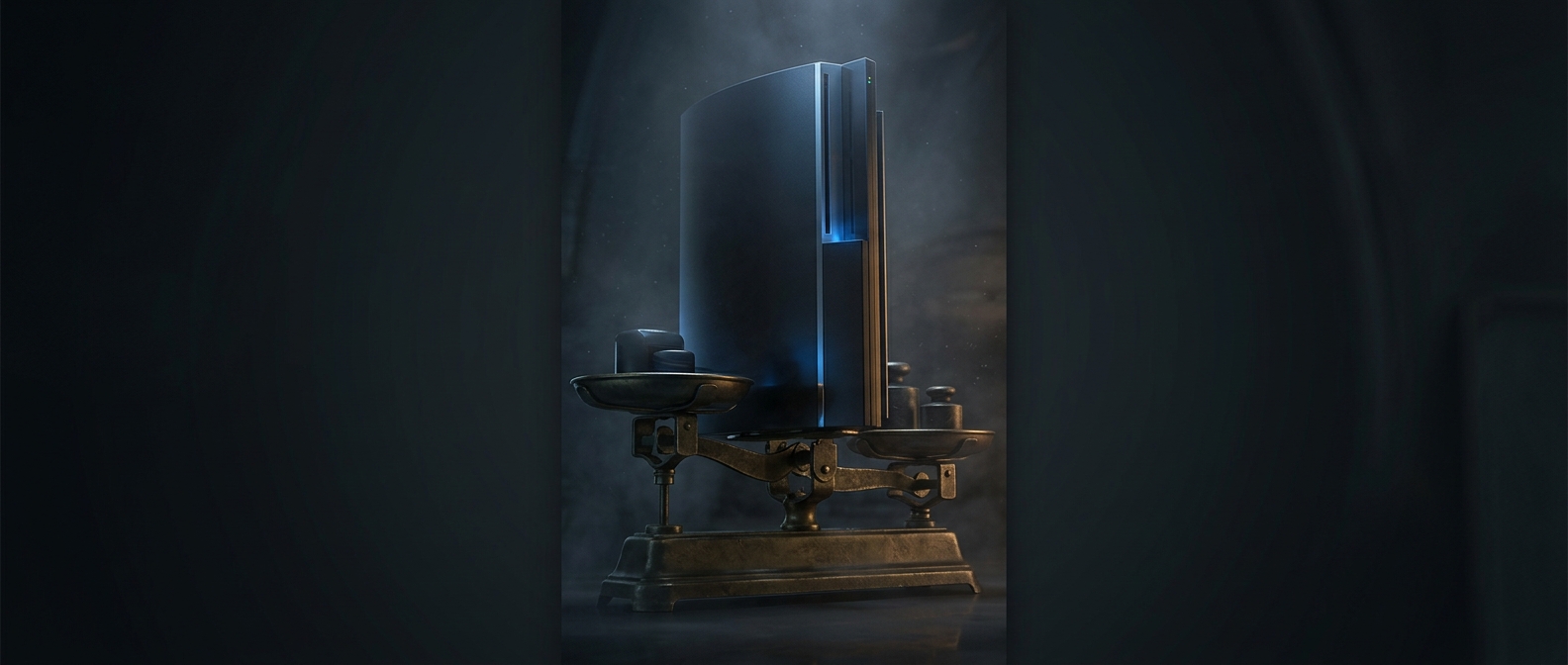
That heft had a practical consequence: moving or repositioning the machine took more effort than with many later consoles. It also reflects how much hardware the first PS3 carried inside—especially compared with later revisions, which became smaller and lighter as Sony simplified and redesigned the system.