What changes inside an alkaline battery
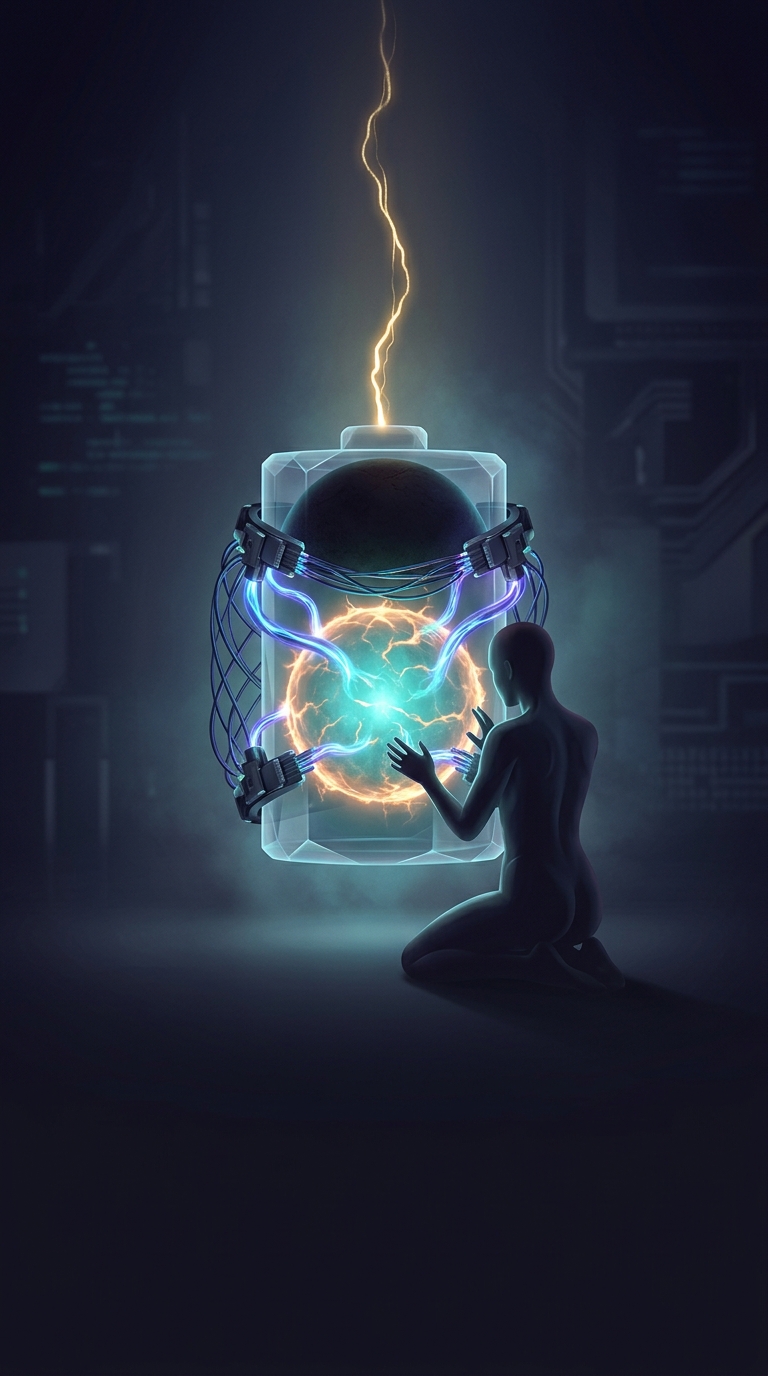
A fresh alkaline battery contains a zinc-rich paste around its negative electrode. As the battery delivers electricity, zinc reacts with oxygen-bearing chemicals in the cell and becomes zinc oxide, a solid. The reaction gradually changes the paste’s texture: zinc oxide forms among the remaining materials, helping link them into a stiffer mass.
That matters because a battery dropped onto a hard surface must absorb the impact somehow. A soft, loosely packed interior can shift and deform, dissipating much of the energy. A more rigid interior is less able to absorb that jolt, so it can give more energy back to the battery’s motion.
Why the dead cell springs back
When a discharged alkaline battery hits the floor, its outer metal casing briefly compresses. With the contents stiffened by the discharge reaction, the casing and interior act more like a spring: they rebound instead of swallowing as much of the impact. The battery therefore tends to bounce higher than a comparable fresh one, whose softer contents damp the collision.
The bounce is a physical consequence of changing materials inside the cell—not a motor-like push from the battery. It is most relevant to alkaline batteries, whose zinc-based chemistry produces the stiffening solid. A battery that once landed with a dull thud can end its useful life with a noticeably livelier hop.