From curbside service to a window in the wall
Before drive-throughs, many American restaurants already served motorists without making them come inside: carhops carried orders out to parked cars. A drive-through changed the choreography. Instead of parking and waiting, a driver followed a lane to a service window, ordered, paid, and collected food while staying in the vehicle.
Red’s Giant Hamburg in Springfield, Missouri, opened in 1947 and is credited with pioneering that arrangement. Its importance was not simply that customers arrived by car; the building and service were organized around a moving line of cars. That let the restaurant serve people who wanted a quick meal without finding a parking spot or leaving their seats.
Why the format suited soldiers
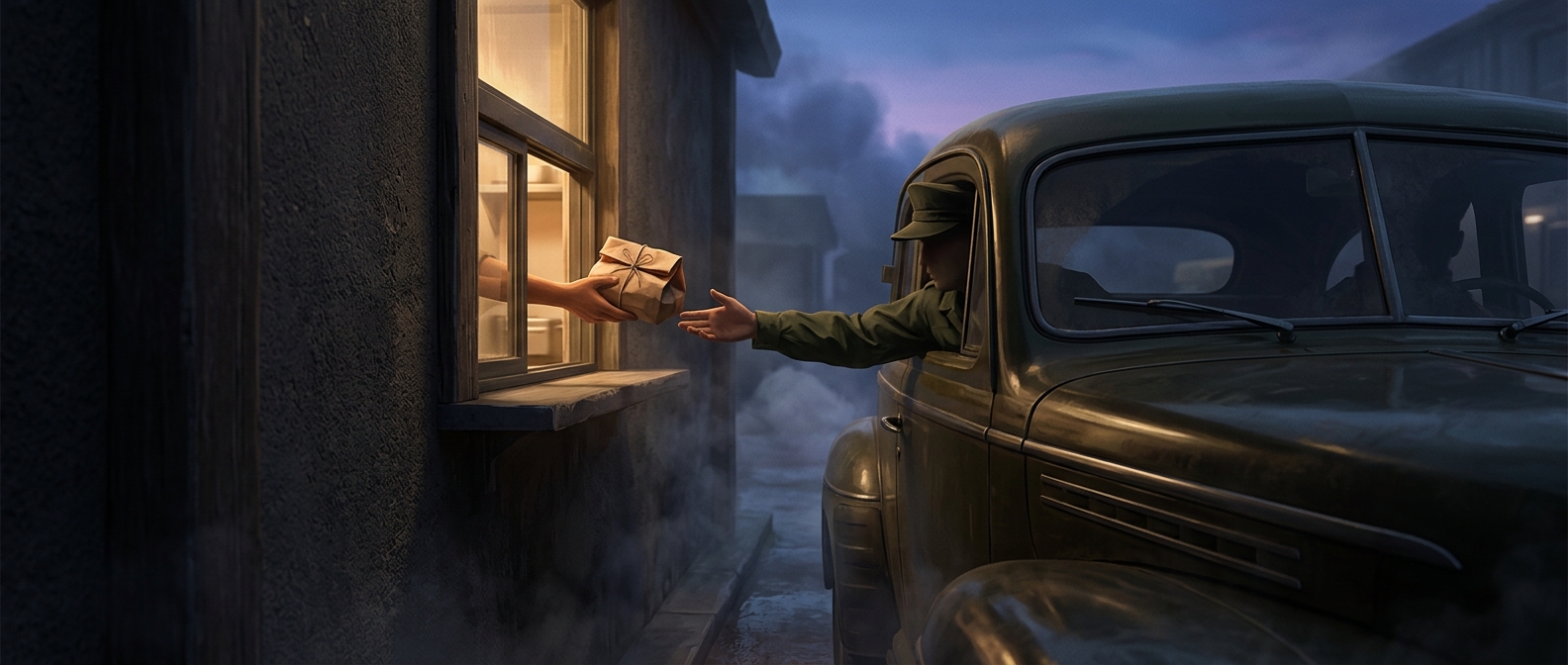
In-N-Out, which opened in California the following year, helped make the drive-through familiar in its region. The format had a practical appeal for nearby soldiers: those in uniform were not allowed to leave their cars, so a service window let them buy food without getting out. The vehicle was more than transportation—it became the place where the transaction happened.
That small change shaped the restaurant’s layout and pace. The lane had to bring each car close enough to order and receive food, while staff handled the exchange from the building. For customers, the benefit was convenience; for the restaurant, it meant serving motorists without asking them to park and enter. A rule that kept soldiers in their cars thus made the drive-through’s central idea especially useful—and helped turn a roadside innovation into an everyday way to get a meal.