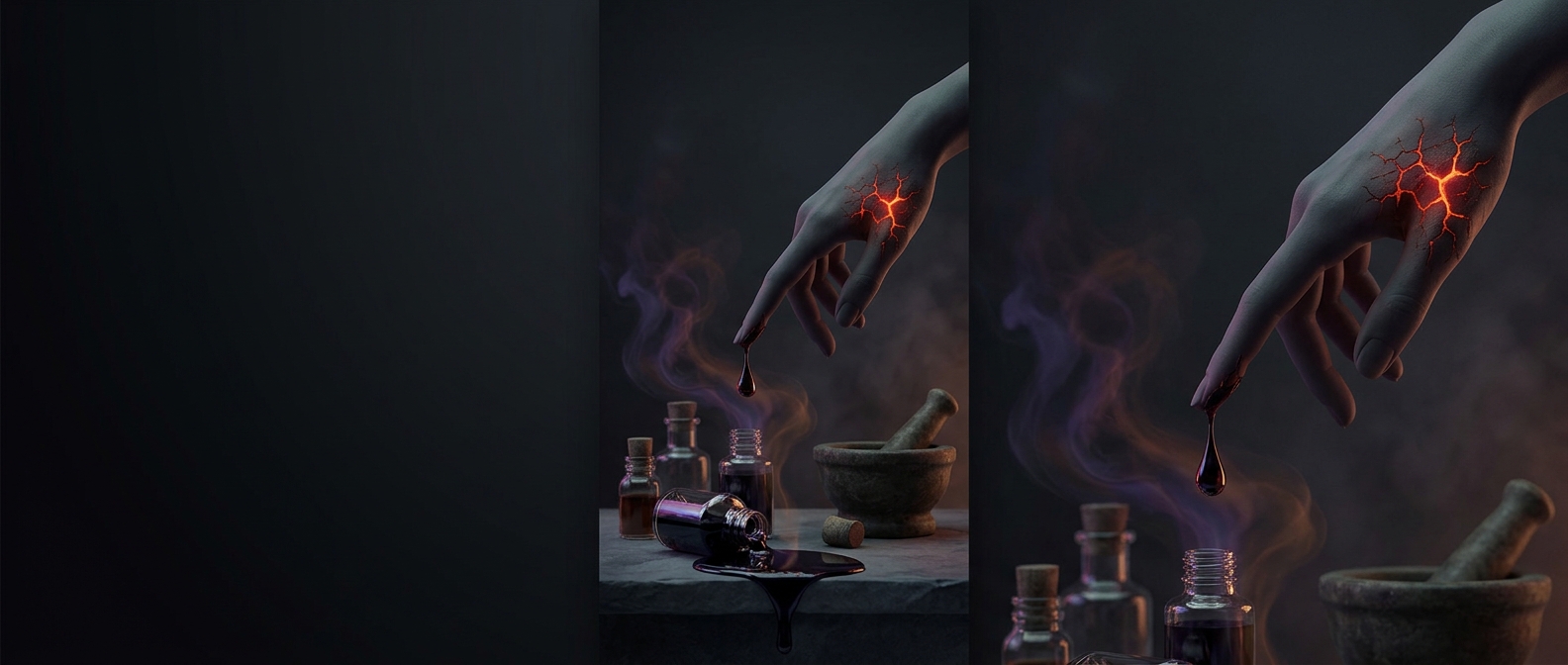
Why a plant oil can hurt skin
An essential oil is not the same as the mild oil left on a leaf or fruit. It is a concentrated mixture of volatile chemicals, often obtained by distilling or pressing large amounts of plant material. Applied straight to skin, some of those chemicals can irritate the outer skin barrier, triggering redness, pain, swelling, or blisters. This is a chemical injury, not a heat burn.
Two different reactions
Irritant reactions can happen when a substance directly damages or inflames the skin. The strength of the reaction depends on the chemical, its concentration, how long it stays on the skin, and where it is applied. Thin or already damaged skin may be more vulnerable.
Other reactions are allergic contact dermatitis: the immune system learns to recognize a chemical as a threat and reacts to it later. The rash may appear after a delay, and a person can become sensitized even if earlier uses caused no obvious problem. Some plant chemicals can also make skin unusually sensitive to ultraviolet light, so sunlight after exposure can worsen injury.
“Natural” doesn’t set the dose
The key question is not whether an ingredient came from a plant, but what chemicals it contains and how concentrated they are. Diluting an oil can reduce exposure, but it does not make every oil safe for every person or body area. A product intended for skin should be used according to its label; undiluted essential oils are a poor experiment, especially on the face, broken skin, or a child’s skin.
If a product causes burning or a rash, wash it off gently and keep the area out of sunlight if light exposure could be involved. Blistering, severe pain, or a spreading reaction warrants medical advice. A tiny bottle can contain the concentrated chemistry of a much larger quantity of plant material—and skin responds to that chemistry, not to the reassuring word “botanical.”