A startup gust can shake dust loose
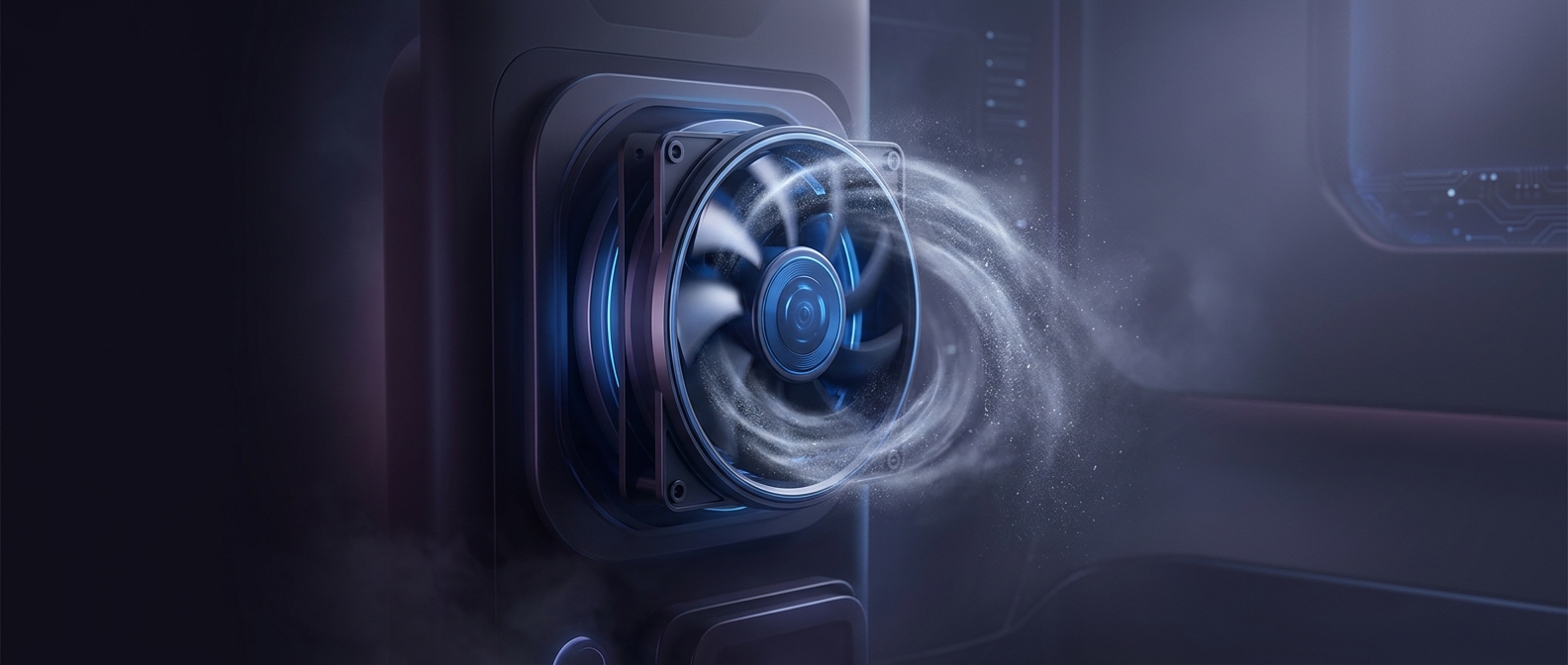
In some high-performance computer rigs, fans briefly push air the opposite way when the system starts. That short burst is meant to dislodge dust and lint caught on vent grilles and other places where incoming air normally leaves debris behind. Once the clearing pulse ends, the fans return to their usual direction and cooling airflow.
The idea is simple: instead of waiting for dust to build into a mat that restricts airflow, give it a quick push from the other side. Even a thin layer over an intake can make it harder for air to pass through, leaving the cooling system with less room to carry heat away.
Reversing a fan takes design, not just a command
Most computer fans are built to move air efficiently in one direction. Their blades are shaped for that flow, and an ordinary fan does not necessarily become a useful reverse-flow fan just because its motor spins backward. A system designed for this feature needs a fan and control electronics capable of producing the brief reverse airflow, then switching back to normal operation.
The cleaning pulse is a maintenance aid, not a substitute for cleaning. Dust can cling to filters or surfaces the gust cannot reach, and what comes loose may settle somewhere else inside the case. Still, a short burst can help keep vent buildup from quietly choking airflow between cleanings.