What thermal paste is doing between the chip and cooler
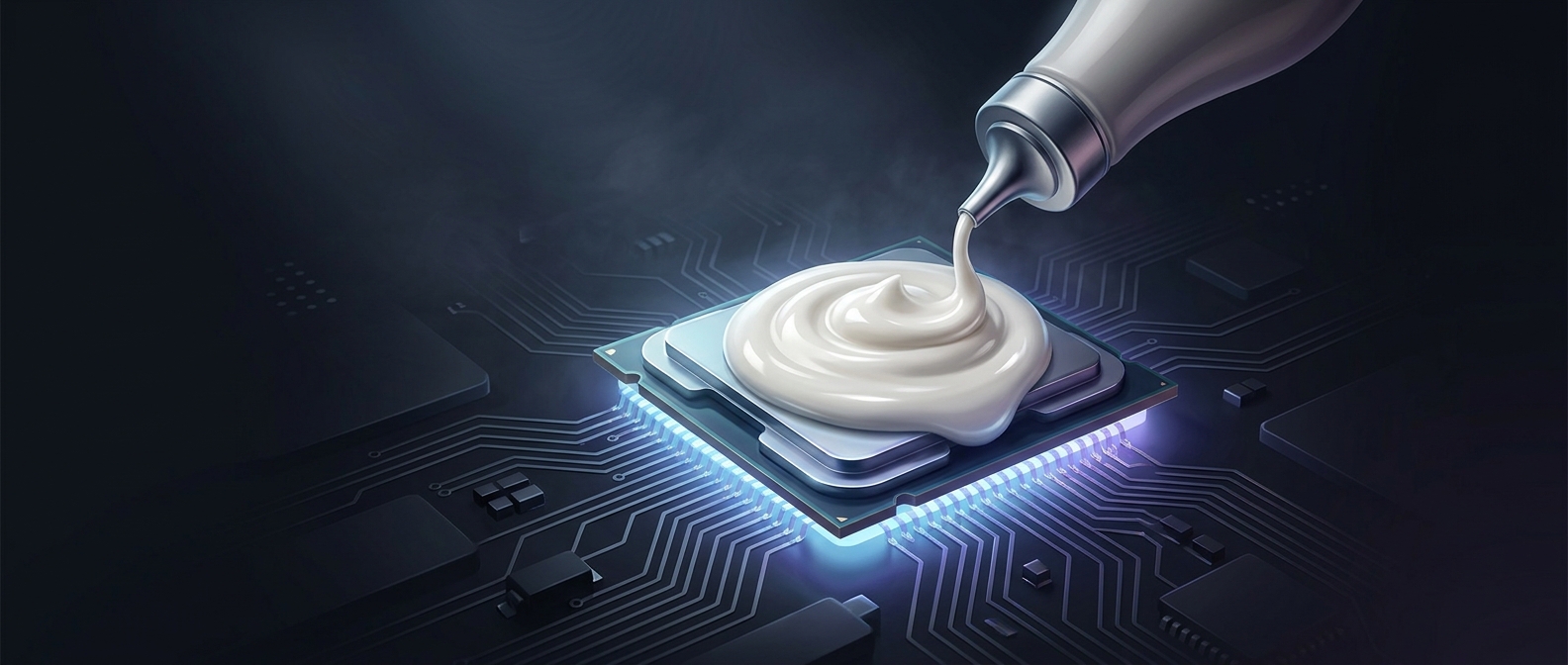
A processor’s heat spreader and its cooler may look flat, but under magnification both have tiny pits and ridges. Those gaps hold air, which transfers heat poorly. Thermal paste fills them with a material that conducts heat better, helping energy move from the chip into the cooler.
The paste is meant to form a very thin layer. It is not a permanent solid bond: it must stay soft enough to conform to the surfaces while tolerating repeated heating and cooling.
Heat cycles change the material
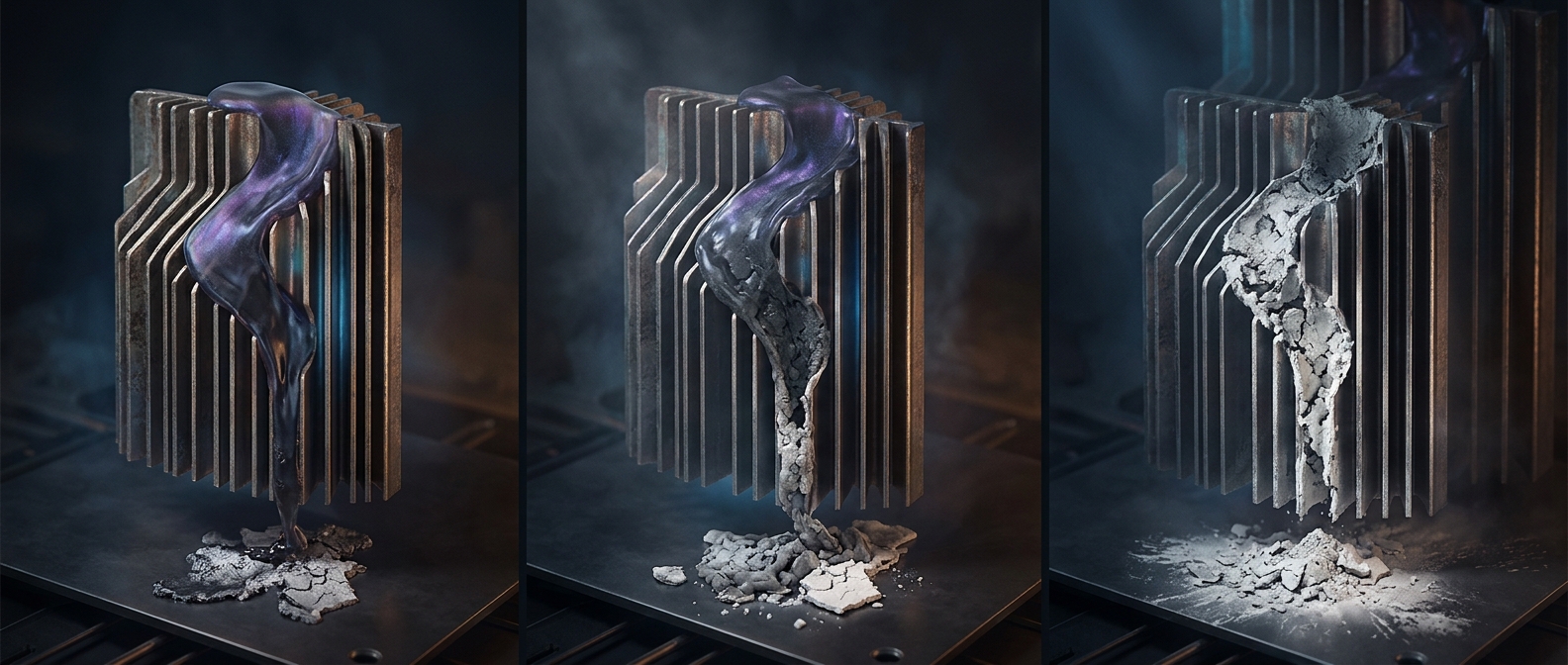
Each time a computer warms up and cools down, the paste expands and contracts along with the surrounding parts. Over many cycles, its synthetic oils can evaporate or migrate, leaving less of the soft, fluid component behind. The remaining material becomes dry and brittle—the “chalky” residue people may find when removing an old cooler.
Once the paste no longer spreads into surface irregularities, contact worsens and heat has a harder time escaping the processor. The chip can then run hotter, reduce its speed to protect itself, or—if temperatures become severe—cause instability or shutdowns. A crash is a possible consequence, not an inevitable result of old paste; cooling problems can have other causes, too.
Why replacing it can help
Fresh paste restores a thin, gap-filling layer when the old compound has dried out or the cooler has been removed. The goal is not to add as much as possible: an overly thick layer can interfere with close contact. What matters is a continuous, thin film between the two surfaces, so heat can pass from the processor into the cooler instead of getting stranded in microscopic gaps.