Why a Blank Could Sound Too Small
A movie gunshot has to read instantly as a gunshot, even when it is recorded indoors and played through a theater’s speakers. A blank cartridge can produce a real report, but on a recording stage that sound may come across as a brief, thin pop rather than the forceful crack audiences expect. The microphone captures the shot in a controlled room, not amid the reflections and distance that shape a gunshot outdoors.
A Whip Adds the Missing Crack
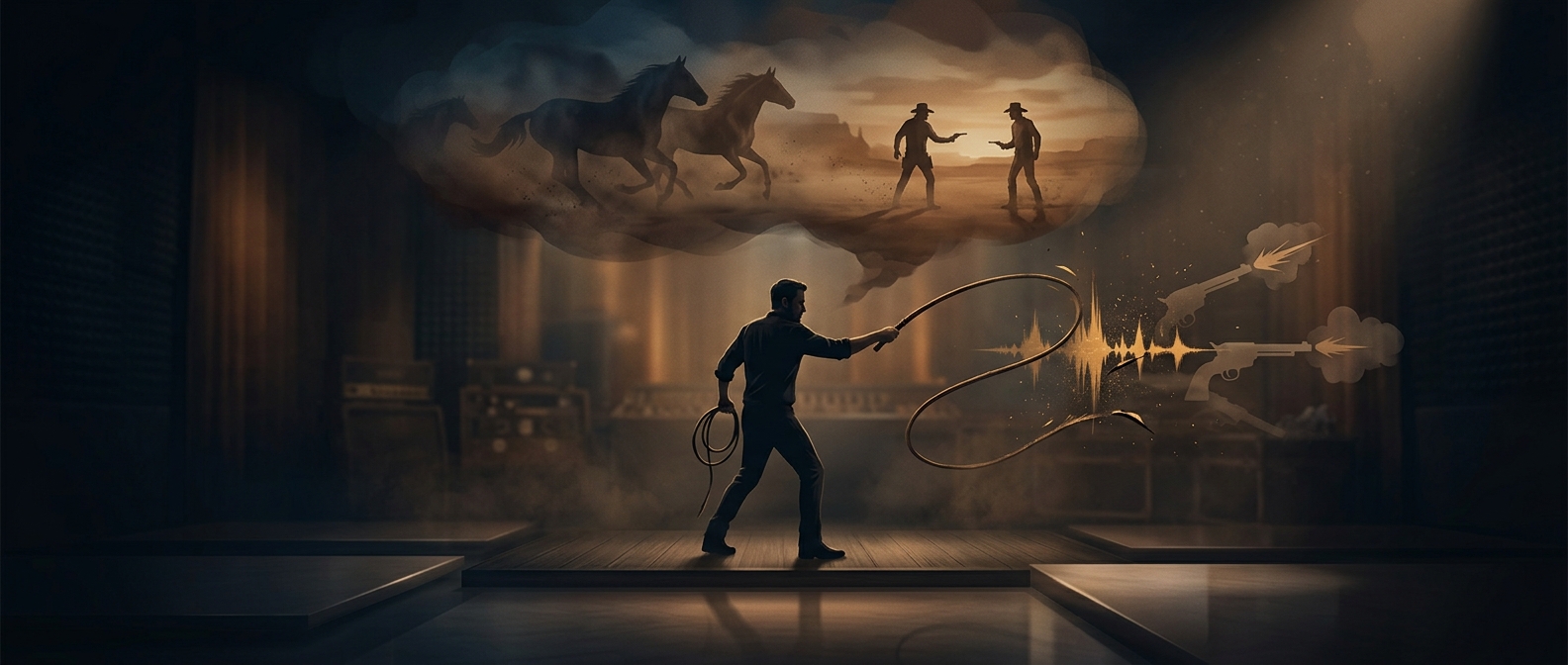
Sound engineers could layer in the sharp snap of a leather whip. The whip’s sudden attack supplies a crisp transient—the brief burst at the very start of a sound—while the blank recording contributes the gunshot’s own character. Mixed together, the two recordings can make a shot feel more abrupt and forceful than either would on its own.
That is a sound-design trick, not a claim that every film gunshot comes from a whip. Movie effects are often built from separate recordings chosen for what each contributes. The memorable part is how little has to match literally: a whip is not a weapon, but its crack can give a recorded blank the punch the scene needs.