Why a Fire Needs More Than Fire
A real flame does not produce a steady, perfectly legible crackle. Its sounds can be faint, irregular, or lost beneath dialogue and music. In a film mix, the audience needs to recognize fire quickly—and hear its character: a small flame’s delicate snaps, or a larger blaze’s busier, more forceful texture.
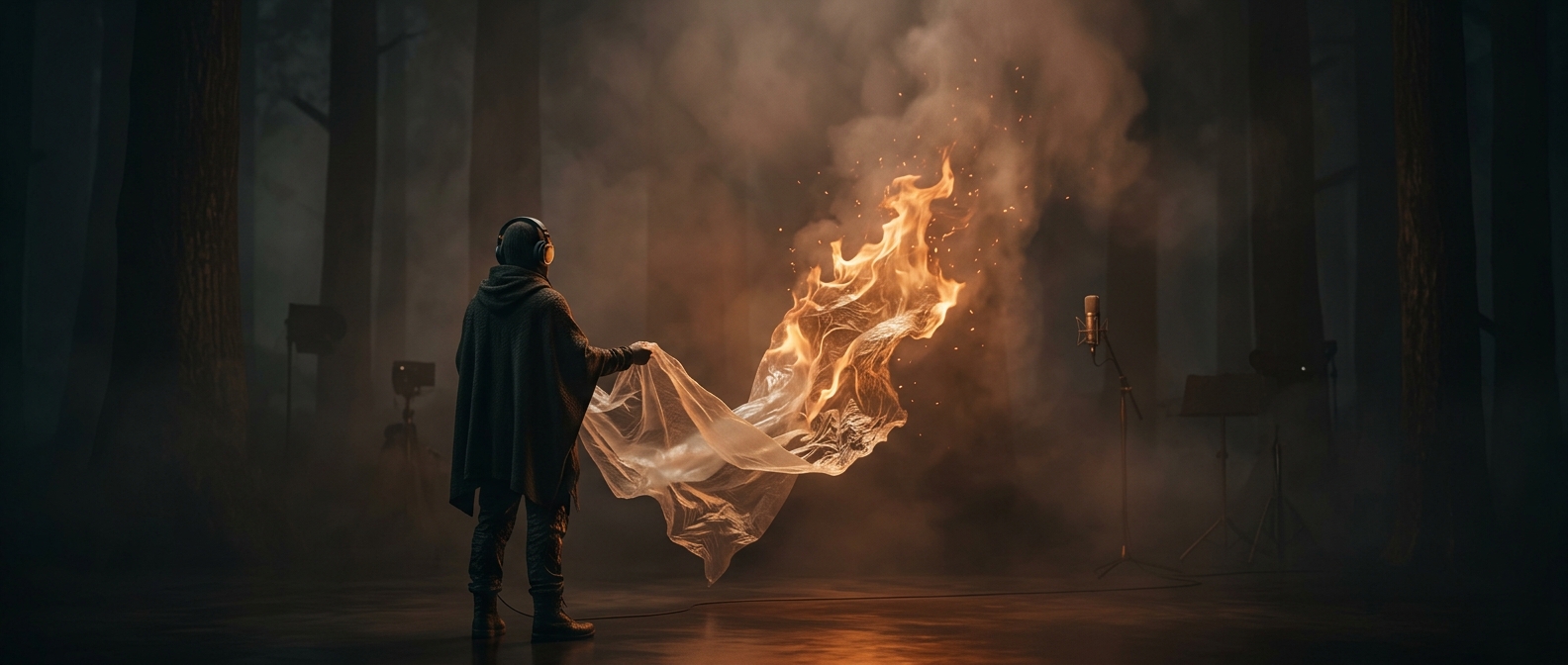
That is why a sound designer may crinkle stiff cellophane instead of recording burning wood. The material makes sharp, irregular pops that suggest the rapid little breaks and shifts listeners associate with flame. It is a practical imitation, not a claim that cellophane and fire sound physically identical.
Shaping the Sound to Fit the Scene
Cellophane is also easy to perform. A sound artist can squeeze it gently for a restrained fire or handle it more vigorously for a stronger crackle, repeating the action until it suits the scene. That control matters: the sound has to fit the apparent size and mood of the fire, while leaving room for speech and other important audio.
The recorded performance can then be selected and mixed with the rest of the soundtrack. A tiny, close crackle might make a fireplace feel intimate; a denser layer can help a larger blaze feel present. The trick works because movie sound is designed to communicate an impression, not simply document what a microphone would capture on location. Sometimes a familiar material, handled at just the right intensity, tells the audience “fire” more clearly than fire itself.