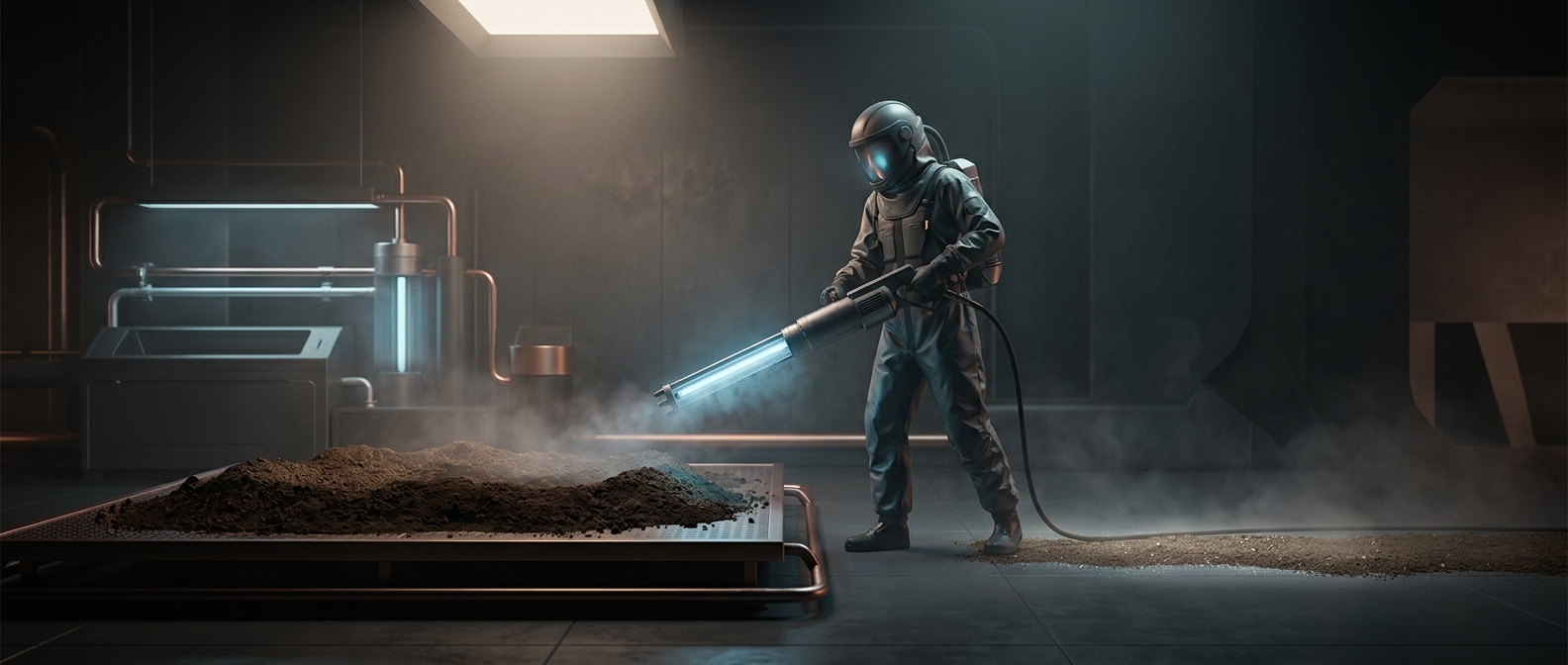
Why a film set needs controlled dirt
Real soil is an unpredictable material. It can carry insects, seeds, mold, and bacteria into a studio, where it may be spread across floors, costumes, and equipment. It can also contain stones or other debris that interfere with a scene. For indoor work, that uncertainty is more than a matter of appearance: crews and performers may be handling or breathing near the material for hours.
So prop dirt is often prepared before it reaches the set. Sifting removes unwanted chunks and debris; sterilizing or, in some cases, baking helps reduce living contaminants. The aim is not to make dirt look pristine. It is to make a gritty-looking material safer and more manageable to use.
The mess still has to look right
Preparation also helps the art department control what the camera sees. A scene may need dirt that can be spread, moved, or reset between takes without introducing surprises. Natural soil varies from handful to handful; processed material can be selected and handled to better suit the shot. The exact approach depends on the production and the effect being created.
That distinction is the useful one: movie dirt is designed to look rough, not to arrive with every hazard of ground dug up outdoors. A trench can appear filthy on screen while the material around the actors has been screened and treated for a tightly controlled indoor environment.