How a blank makes a movie gun cycle
A semiautomatic firearm uses energy from each shot to move its slide or bolt, eject the spent cartridge, and load the next one. A blank has no bullet to travel down the barrel, so firing it may not produce the pressure or recoil the mechanism needs to complete that cycle.
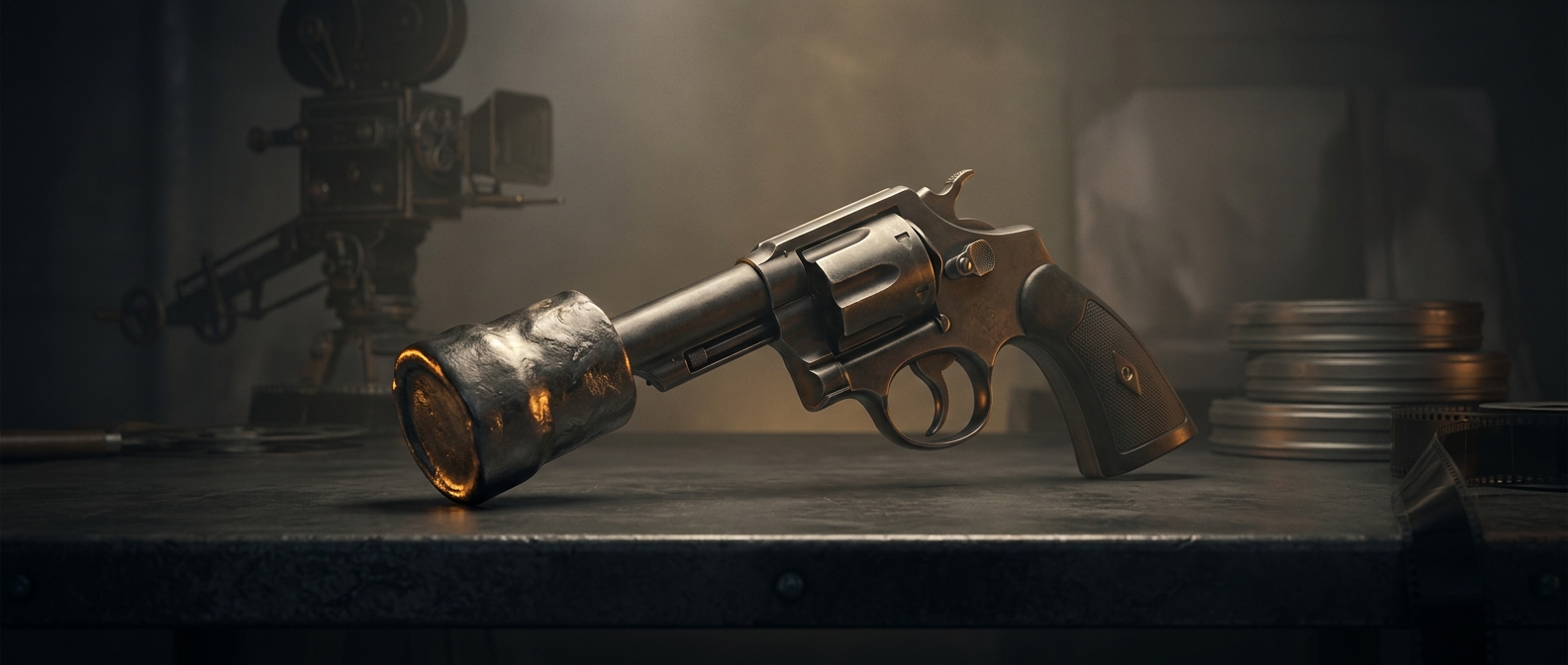
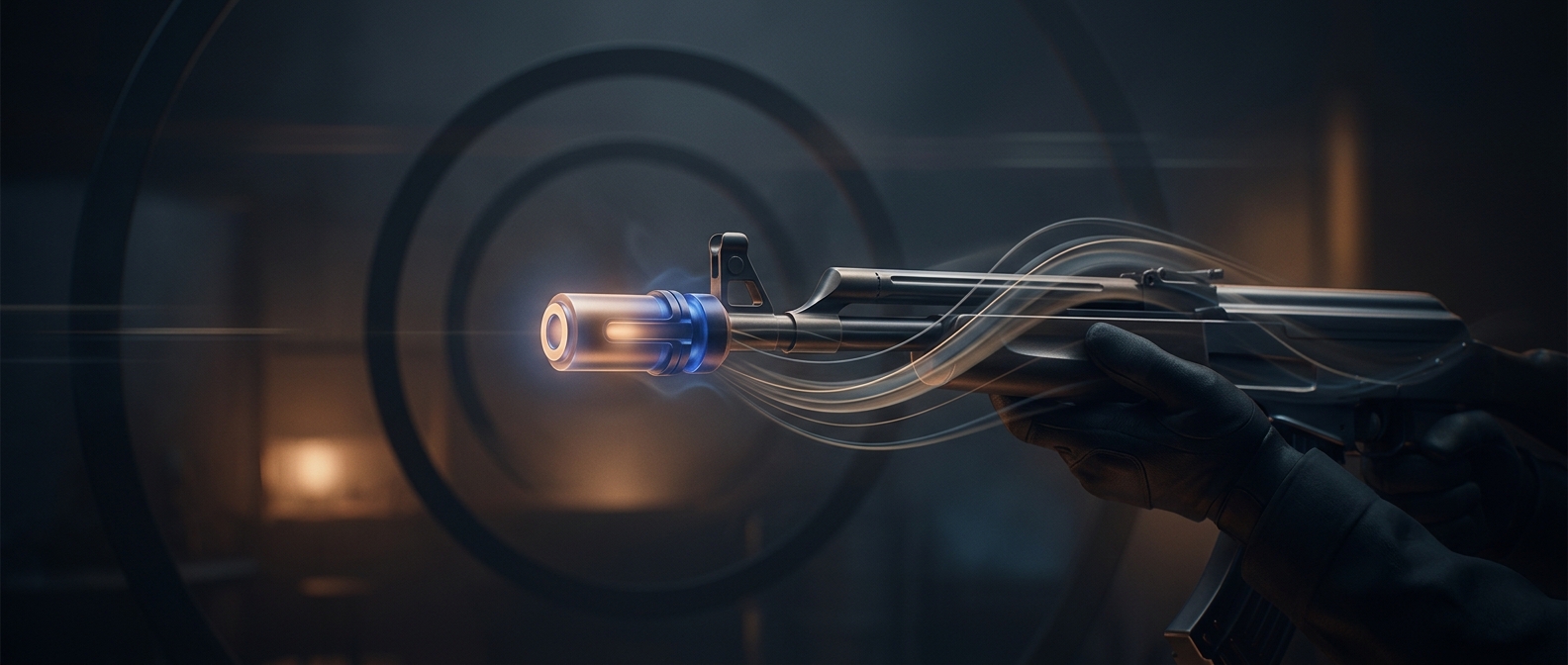
A blank-firing adapter fitted at the muzzle changes how gas escapes. By restricting or redirecting the gas from the blank, it helps the firearm generate enough force to cycle on camera. The slide can move and the gun can appear to fire repeatedly, even though no live projectile is being launched.
Why “blank” does not mean harmless
Blanks still contain propellant. Their hot gases—and any material expelled from the cartridge—can injure someone, particularly at close range. The adapter also changes the firearm’s operation; it does not turn it into a toy or make every setup safe by itself.
On a production, the practical effect is a working action that can be filmed firing blanks, rather than a gun that merely looks convincing while its movement is added later. That visible cycle is what makes the muzzle-mounted device useful: it gives the camera a real slide movement and spent cases, while leaving the barrel without a lethal bullet.