Why a White Powder Has to Work on Camera
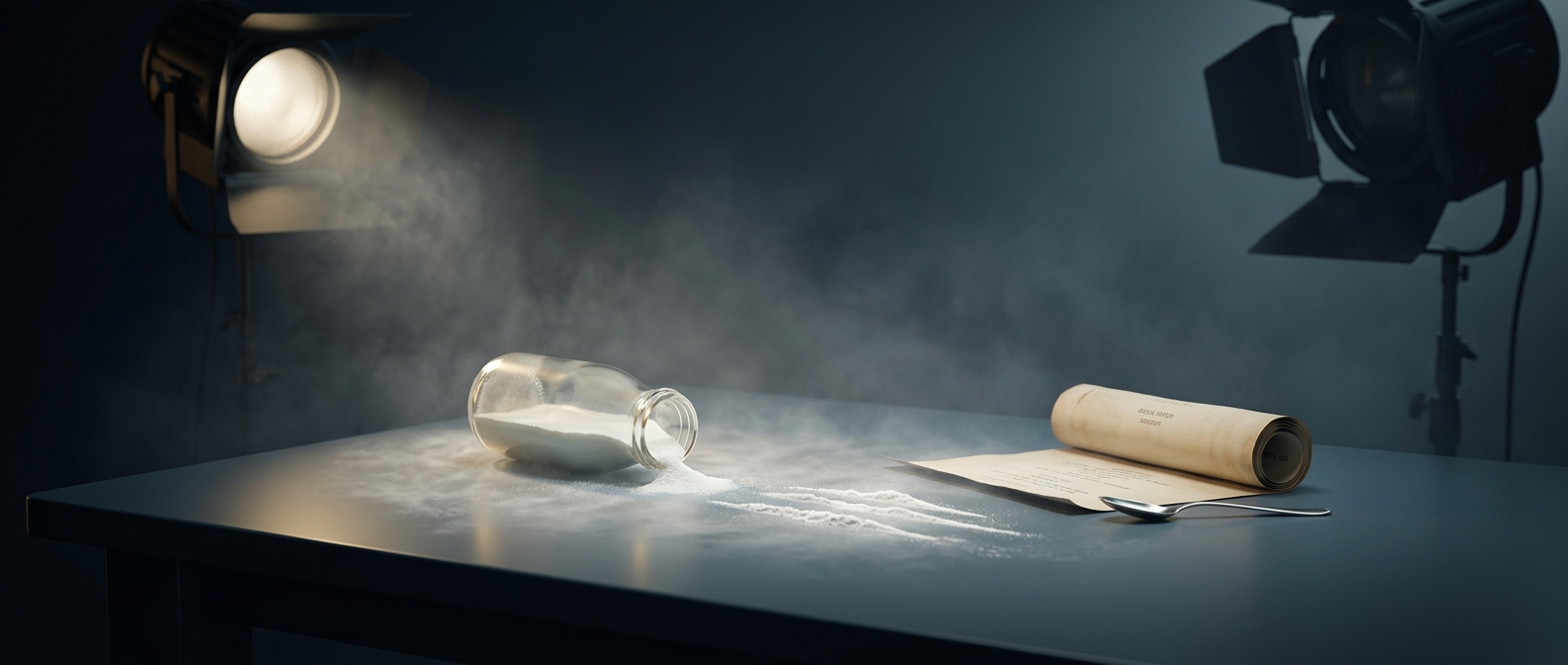
A movie powder has a job beyond looking convincing in a close-up. It must pour, scatter, cling to a surface, and remain consistent across repeated takes. Real cocaine is illegal and hazardous to handle, so prop teams use harmless stand-ins—sometimes crushed vitamin B tablets or powdered baby formula—to create the visual effect.
The Substitute Is Chosen for the Shot
Different powders behave differently. A fine powder may make a neat line on a tabletop but disappear when disturbed; a coarser one may look wrong in a close-up or drift unpredictably. Props staff consider the scene’s framing and action, then prepare enough of the same material for retakes. If actors need to handle or inhale anything, productions must take additional precautions: “harmless” does not mean safe to breathe as dust.
Continuity Makes the Illusion Hold
A scene may be filmed out of order, with the same surface reset between takes. The crew must reproduce the powder’s position and amount so that cuts do not reveal a change. The stand-in also has to look right under the set’s lighting, which can make a pale powder seem brighter or more reflective than it does in ordinary room light.
The audience sees a few seconds of apparent drug use; the production manages a material, a camera angle, and a repeatable setup. The convincing part is not the powder alone, but how carefully it is placed and filmed.