Why a Sword’s Weight Can Change a Scene
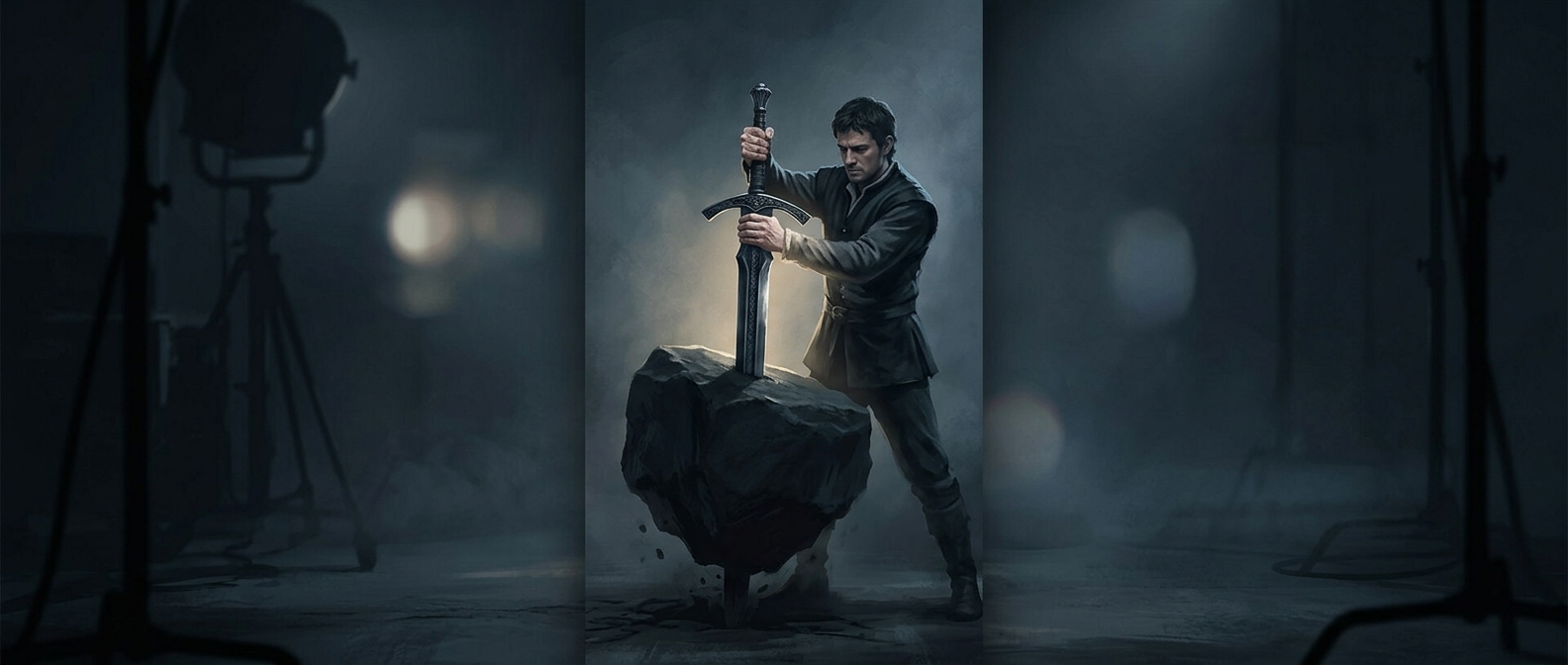
A sword’s weight affects more than how hard it is to lift. It also affects how quickly it starts moving, how difficult it is to stop, and how much effort an actor must put into each swing. A heavier prop can make a fight look labored: the performer’s shoulders tense, the weapon takes longer to recover, and each strike seems to carry more force.
That physical effort can help sell a character who is exhausted, inexperienced, or fighting with a burdensome weapon. It gives the actor something real to respond to instead of asking them to imitate strain while moving a very light object.
The Prop Has to Serve the Shot
Weight is a performance choice, not a universal rule for movie swords. A production may use different versions of a weapon for different moments. A metal prop can suit a close-up or a deliberately strenuous scene; a lighter or more flexible version is often more practical for fast choreography and repeated takes. The actors and fight team also need to control the weapon safely and reproduce the same movements from shot to shot.
That creates a tradeoff: more weight can make effort look convincing, but it can also slow the action and increase fatigue. The screen version of a sword is therefore shaped not just by what a historical weapon was like, but by what the scene needs the actor to show. Sometimes the visible struggle is not acting alone—the prop itself is making the movement harder.