Why Pharah Can Trigger a Hero-Swap Cycle
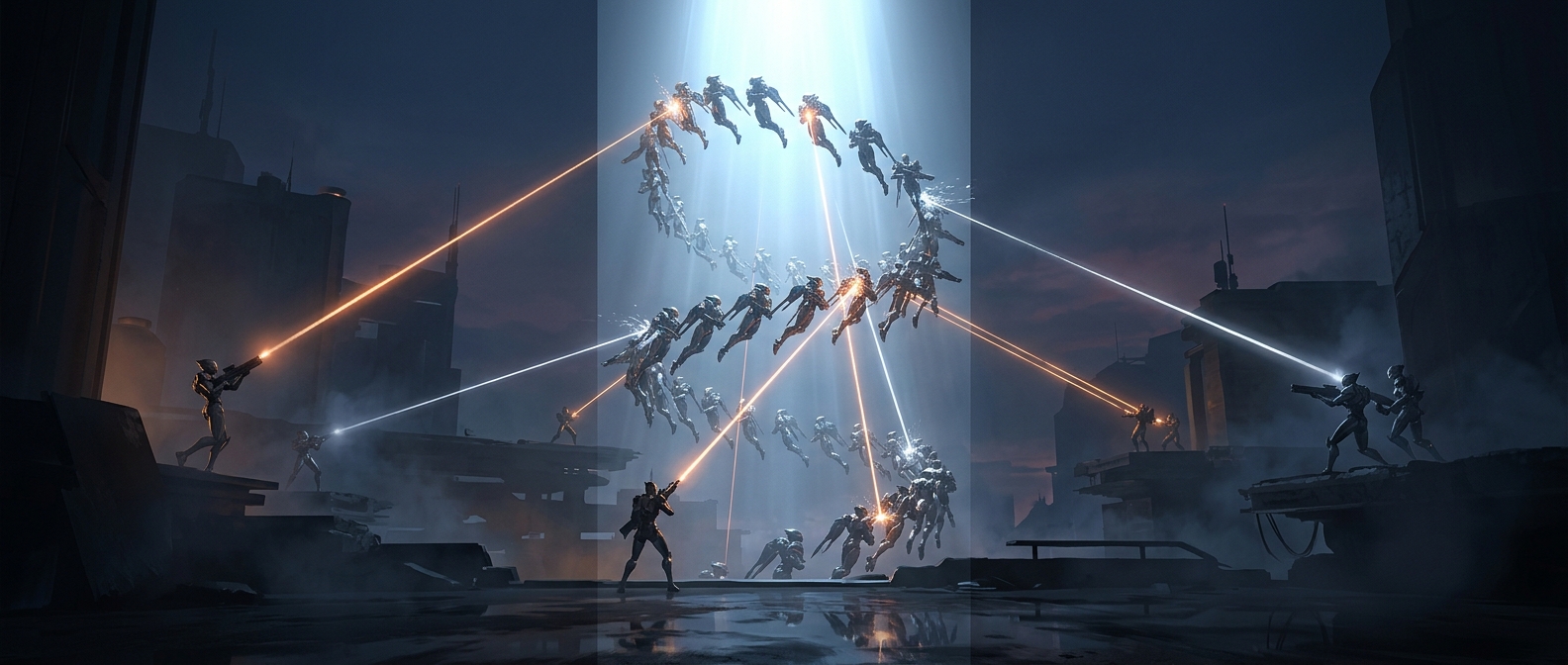
Pharah attacks from above, where her height and movement can make her a difficult target for heroes whose shots travel as projectiles. A projectile takes time to reach its target, so the shooter must lead Pharah—aim ahead of where she appears to be. A hitscan weapon, by contrast, registers its shot at the moment it is fired; if the crosshair is on her, the hit lands without projectile travel time.
That makes heroes such as Cassidy or Widowmaker attractive answers. The change is not a magic counter: the player still has to track Pharah, land shots, and stay safe from her rockets. But it changes the aiming problem from predicting her position to placing a shot on her current one.
The Counterpick Becomes Another Problem
Overwatch lets players change heroes between fights, so a Pharah who is pressuring the team may prompt a switch to hitscan. That response can then reshape the next fight: the opposing team may protect Pharah, attack the hitscan player, or switch to heroes better suited to the new lineup. The first team may in turn adjust again.
“Swapping” is therefore less a one-time fix than a series of choices about which threats matter most. A hitscan hero may be better equipped to challenge an airborne target, but that pick still has to fit the rest of the team and handle the other opponents. Pharah’s presence can keep the counterpick cycle going because answering her changes the battlefield without guaranteeing she is dealt with.