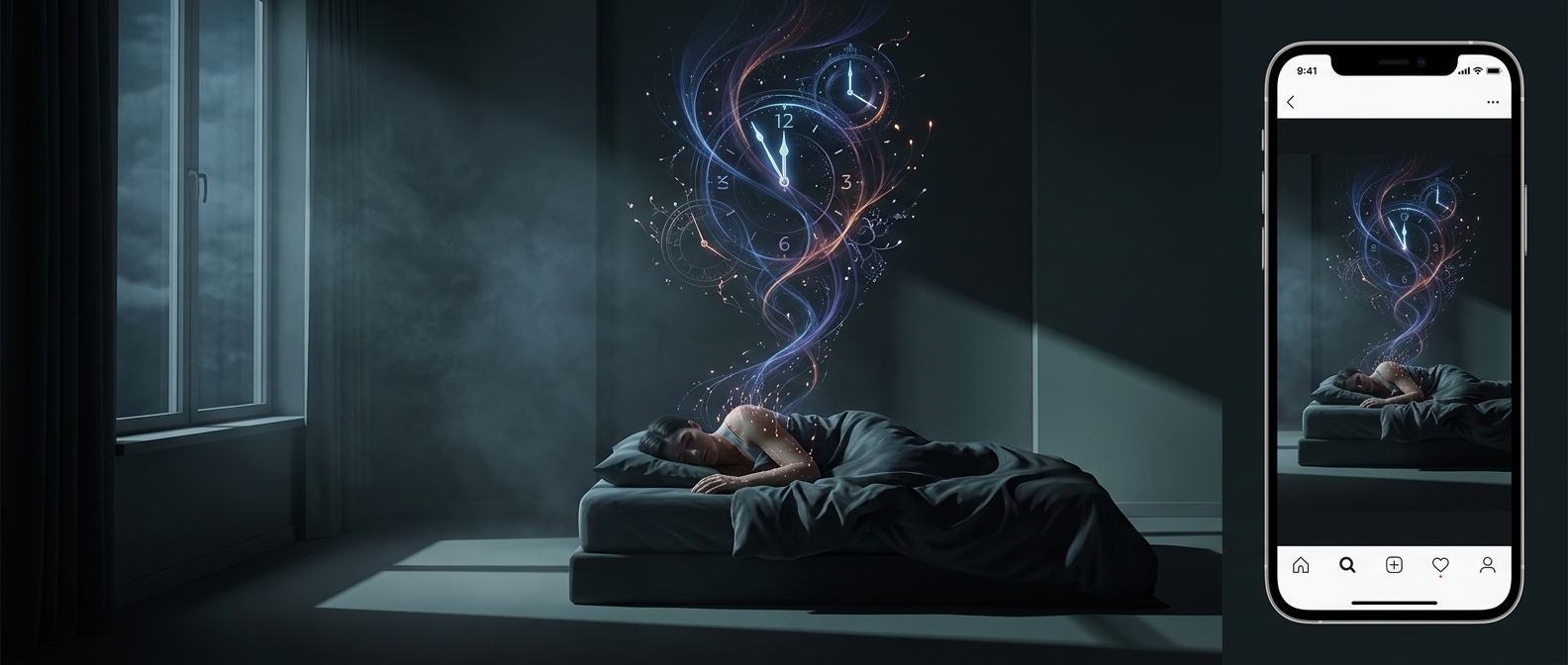
Why Itch Can Feel Stronger at Night
An itch does not have to become more intense for you to notice it more. At bedtime, there are fewer competing demands: no work to focus on, chores to finish, or conversation to follow. With less occupying your attention, sensations that were easy to ignore during the day can move to the foreground.
Skin and Body Rhythms Add to the Effect
The body’s daily clock also changes conditions at the skin. In the evening, skin temperature tends to rise as the body releases heat, and the skin’s outer barrier can become more permeable—meaning it lets water and other substances pass through more readily. A drier or more reactive surface may irritate nearby sensory nerves and make an existing itch feel sharper.
The body’s natural anti-inflammatory signals also vary over the day. As their activity dips at night, some people may have less of that built-in dampening of irritation. These effects can stack: a sensitive patch of skin, a warm bed, and fewer distractions all make the same small stimulus harder to overlook.
Why Scratching Can Keep the Cycle Going
Scratching briefly competes with itch signals, which is why it can feel relieving. But it can also damage the skin’s surface, increasing irritation and prompting more scratching. Noticing the pattern can help explain why an itch seems to intensify just as you settle down—even when nothing dramatic has changed in your surroundings.