The space between car seats became part of the design
Early cars often had a single front bench, so passengers could move across the seat and there was little reason to build a barrier down the middle. As separate bucket seats became more common, the gap between them turned into an awkward strip of unused space. Designers could leave it empty—or make it work.
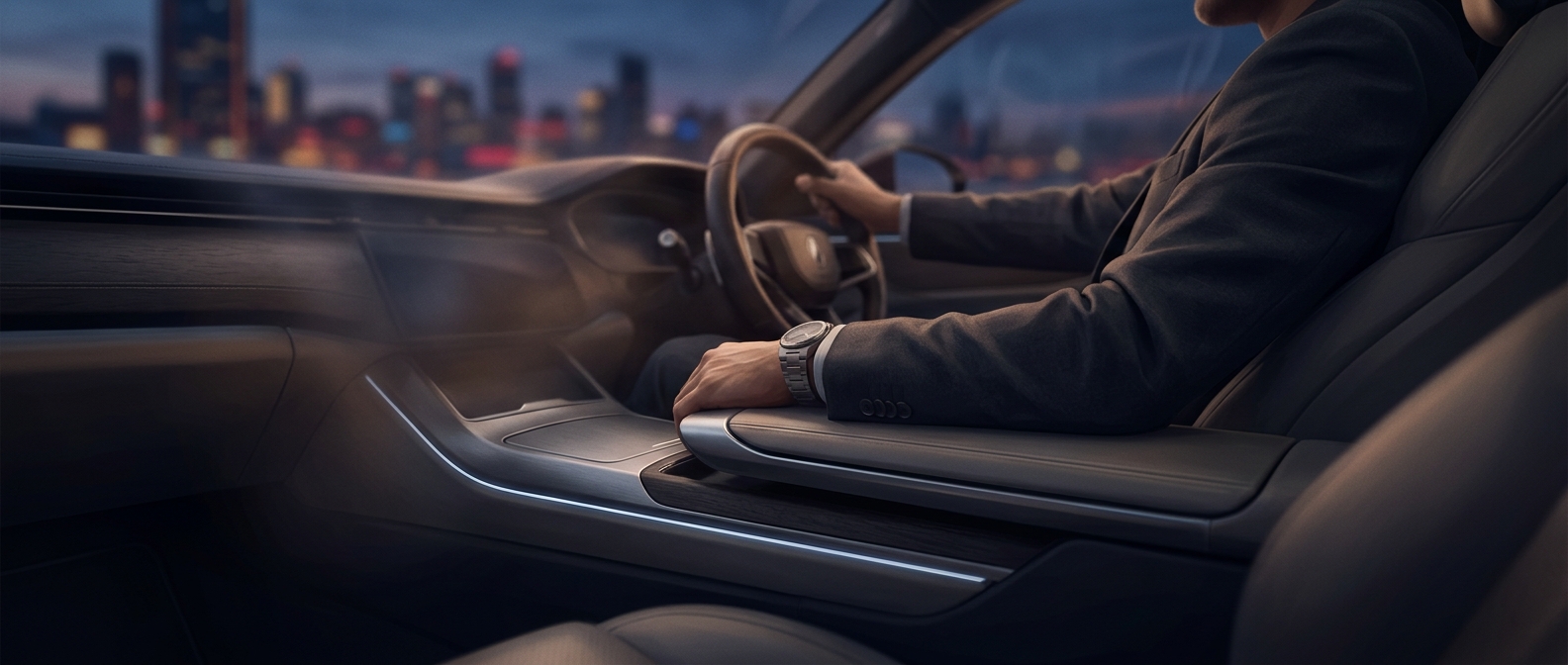
A center console makes that gap useful while keeping the driver’s and front passenger’s spaces distinct. Its enclosed compartment offers a handy place for small items, and its top can serve as an armrest. Because it sits within easy reach of both front occupants, the console also provides a natural home for controls and, later, cupholders.
A small box with several jobs
The console is more than a storage bin: it helps organize the cabin around the people seated in front. Placing frequently used items and controls between the seats can make them easier to reach without spreading them across the dashboard or doors. The tradeoff is that the solid divider gives up some of the open floor space and freedom of movement that a bench seat allowed.
That is why the console feels so ordinary now. Once the front seat was divided, the leftover gap was not merely empty space; it was a convenient place to put the things drivers and passengers wanted close at hand.