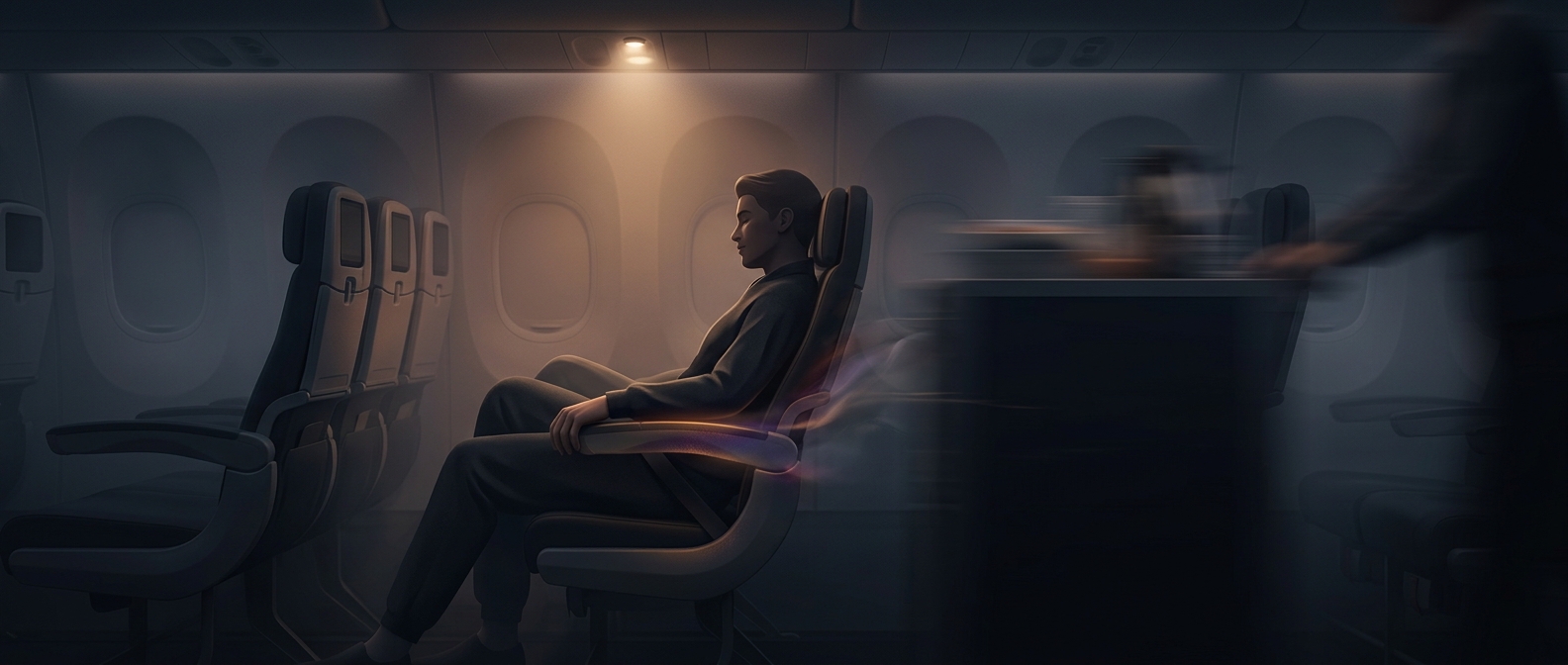
The aisle is a shared space
An aisle seat puts you beside the route everyone else must use. That makes it easier to stand up without asking a seatmate to move, but it also places your shoulder, elbow, and sometimes your belongings close to passing traffic. The aisle is not extra personal space; it is a narrow corridor doing a second job as the way in and out.
The interruptions come in bursts. During boarding, people turn sideways to reach their seats and lift bags into storage. Later, carts or other passengers pass through the same channel. A backpack that clears the seat may still swing into the aisle, and a person focused on getting by may not notice how close they are. The seat’s exposure follows from its location, not from any one careless passerby.
Access in exchange for exposure
For someone who expects to get up often, that position can be worth it: there is no need to climb over a seatmate. For someone hoping to sit undisturbed, the same convenience works in reverse. Others have an easier path past you, and you may find yourself drawing in an arm or leaning away to make room.
Choosing the aisle is therefore less a promise of freedom than a trade: you gain a direct route out, while sharing the edge of your space with everyone moving through the cabin.