Iamblichus’s Hot-Spring Miracle and the Logic of Theurgy
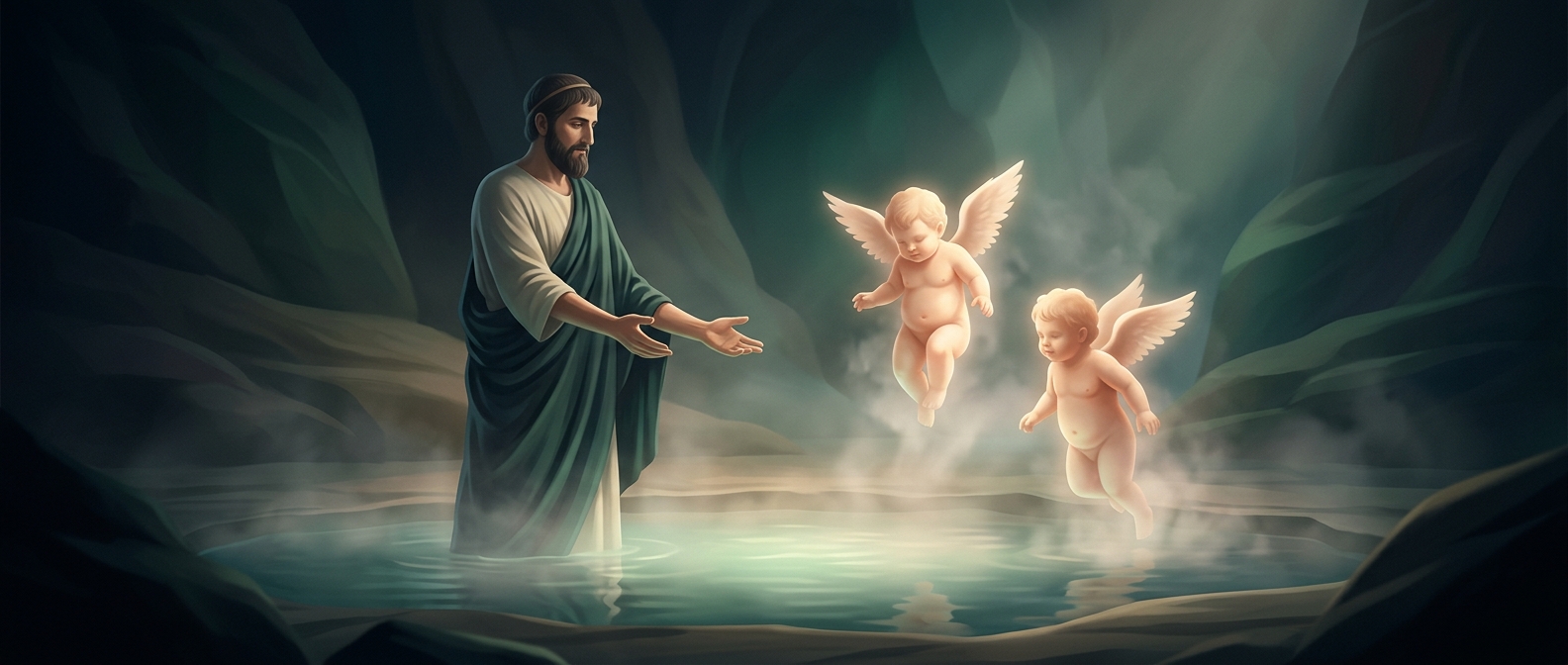
In a story told by his biographer, the Neoplatonist philosopher Iamblichus faced a challenge from his disciples at Syrian hot springs: could he provide a visible sign of divine power? He responded with an incantation, and two spirits identified as Eros and Anteros appeared as glowing, fair-haired boys who embraced him. The account turns a philosophical disagreement into a dramatic public display—but its deeper point lies in what Iamblichus thought ritual could do.
Why a Philosopher Would Use an Incantation
Iamblichus was associated with theurgy, a term for ritual practices meant to connect human beings with divine powers. In this view, the practitioner did not simply persuade a god through clever words or personal force. Sacred rites and symbols could act as a bridge, allowing divine influence to reach the human world. The ritual’s authority came from the divine order it invoked, not merely from the performer’s skill.
That distinction helps explain why the episode presents the appearance as a response to an incantation rather than as a trick of argument. The disciples ask for proof; Iamblichus answers in the form the story’s religious framework considers most compelling: an encounter with divine beings.
Eros and Anteros as a Paired Sign
Eros was the Greek god associated with desire and love; Anteros was linked with reciprocal or returned love. Their paired appearance makes the scene feel like more than a display of supernatural spectacle: the visitors embody a relationship of attraction and response. The embrace then gives the story a vivid, bodily ending, bringing an abstract claim about divine presence into the disciples’ immediate view.
The episode survives as a biographical report, not as independently verified evidence of an apparition. Its value is as a window into how Iamblichus’s tradition imagined religious expertise: at the springs, the philosopher’s authority rested on his claimed ability to make the divine perceptible.