Why Iamblichus Thought Ritual Needed Matter
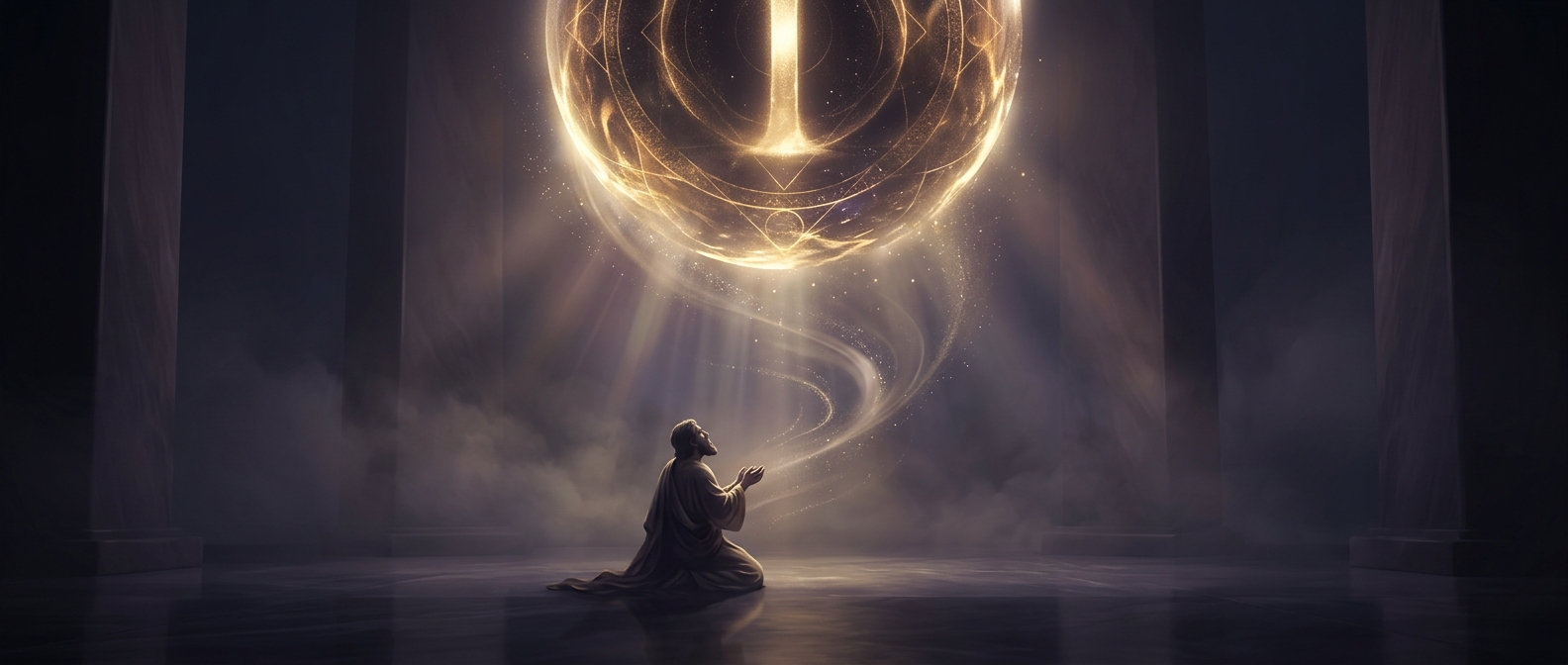
For the Neoplatonist philosopher Iamblichus, the soul could not reach the divine by reasoning alone. In his view, human beings were embodied and limited, while the gods belonged to a higher order of reality. A ritual gave the gods a way to make their presence known through the material world—and gave human participants a way to become receptive to it.
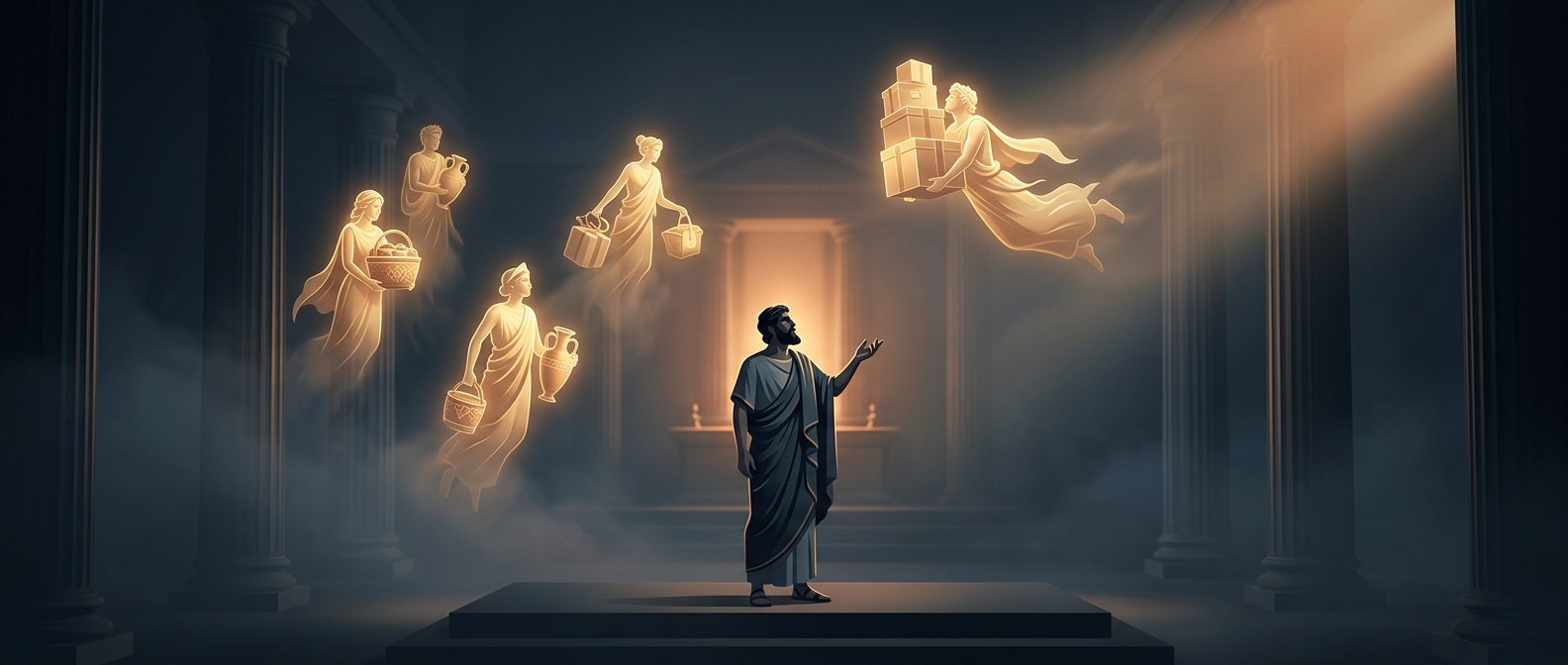
Iamblichus called this practice theurgy, meaning “work of the gods.” Its rites could involve prayers, offerings, images, and natural materials such as stones or plants. These were not merely props or ingredients in a recipe for controlling a deity. Iamblichus held that the universe already contained divine signs, called synthemata: material marks placed in things by the gods. Used in the right ritual, they could help establish a connection between the visible object and its divine source.
A Statue Was a Focus, Not a Prison
That logic made a sacred statue more than a carved likeness. A properly prepared image could serve as a material focus for divine presence. In accounts of ancient ritual, statues might be described as receiving or displaying a god’s presence; this did not mean that stone was literally transformed into a living body. The claim was that divine power could become perceptible through an image.
The distinction mattered. Iamblichus rejected the idea that a human performer could simply force a god to appear through clever technique. Ritual worked, he argued, because divine power initiated the connection; the objects and actions helped make a person or place fit to receive it. Theurgy was therefore a religious practice grounded in a theory of how the cosmos was joined together, not just an attempt to manipulate supernatural forces.
The Dispute Behind the Rituals
Iamblichus developed this defense in response to a challenge from the philosopher Porphyry, who questioned whether ritual practices could genuinely aid the soul. Their disagreement exposed a larger divide: could a person rise toward the divine through thought alone, or did salvation require participation in sacred actions and material forms?
For Iamblichus, the stone, plant, or statue mattered precisely because the divine was not confined to abstract ideas. The striking implication was that, in his system, matter could become a meeting point between human beings and the gods.