A picture drawn in grains
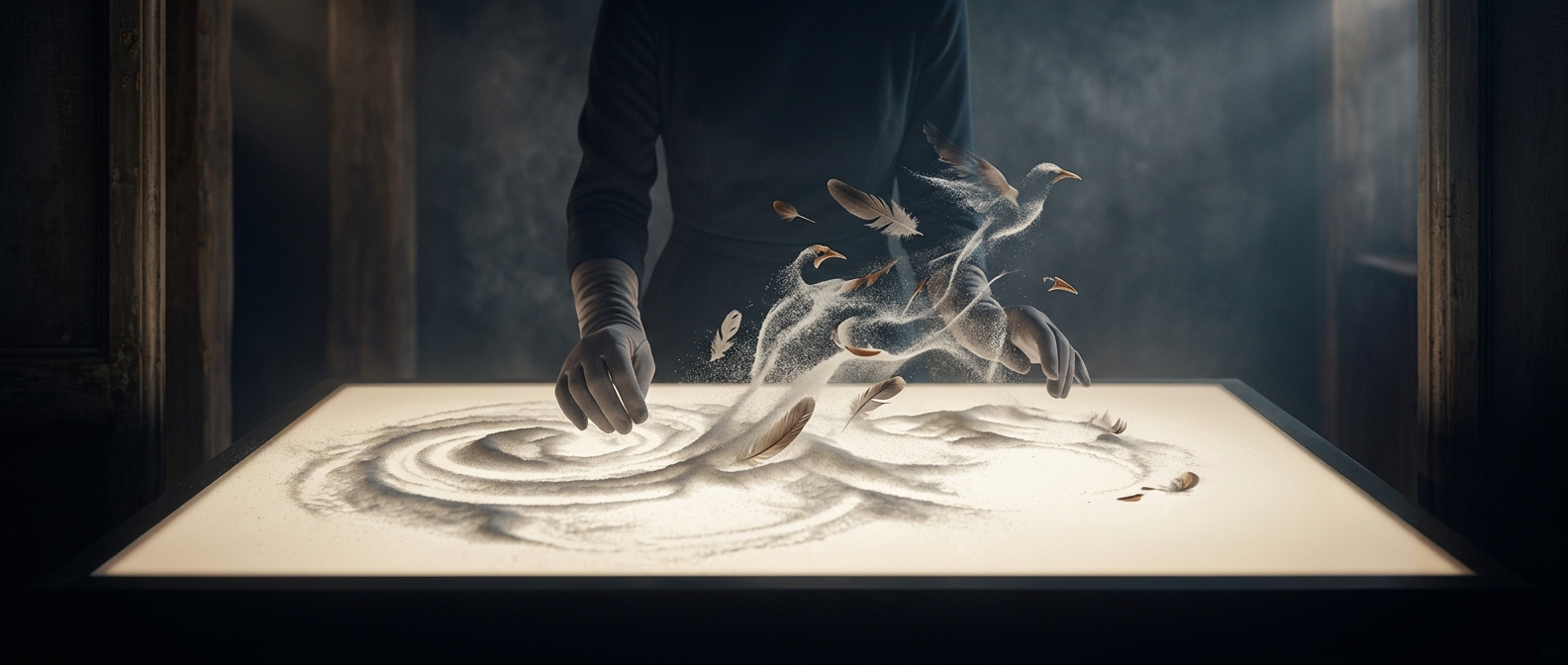
Aleksandra Korejwo’s salt animations used a surface that could be both image and material. On backlit glass, dyed salt caught the light; its colored grains formed shapes and textures directly in the camera’s view. A feather could nudge a small patch into a new contour, letting the animator reshape the picture rather than move a finished puppet or cutout.
The grains also made the image unusually vulnerable. Unlike paint fixed to a surface, loose salt could shift with an accidental breath or disturbance. A condor feather offered a delicate way to move it, but each adjustment had to be controlled: too much could scatter the grains and undo the composition.
One photograph at a time
The method was a form of stop-motion animation. Korejwo arranged the salt, photographed the glass, changed the arrangement slightly, and photographed again. Projected in sequence, those still images made the shapes appear to move. The camera preserved each fleeting arrangement, but it could not restore one once the salt had shifted; the next frame had to be built from what remained.
That constraint shaped the animation itself. Movement had to emerge from tiny, deliberate changes in a fragile picture, so the finished motion carried traces of the material’s instability. The image was not merely drawn with salt—it was continually at risk of coming apart.