Why Standing in Fire Can Empty a Health Bar So Quickly
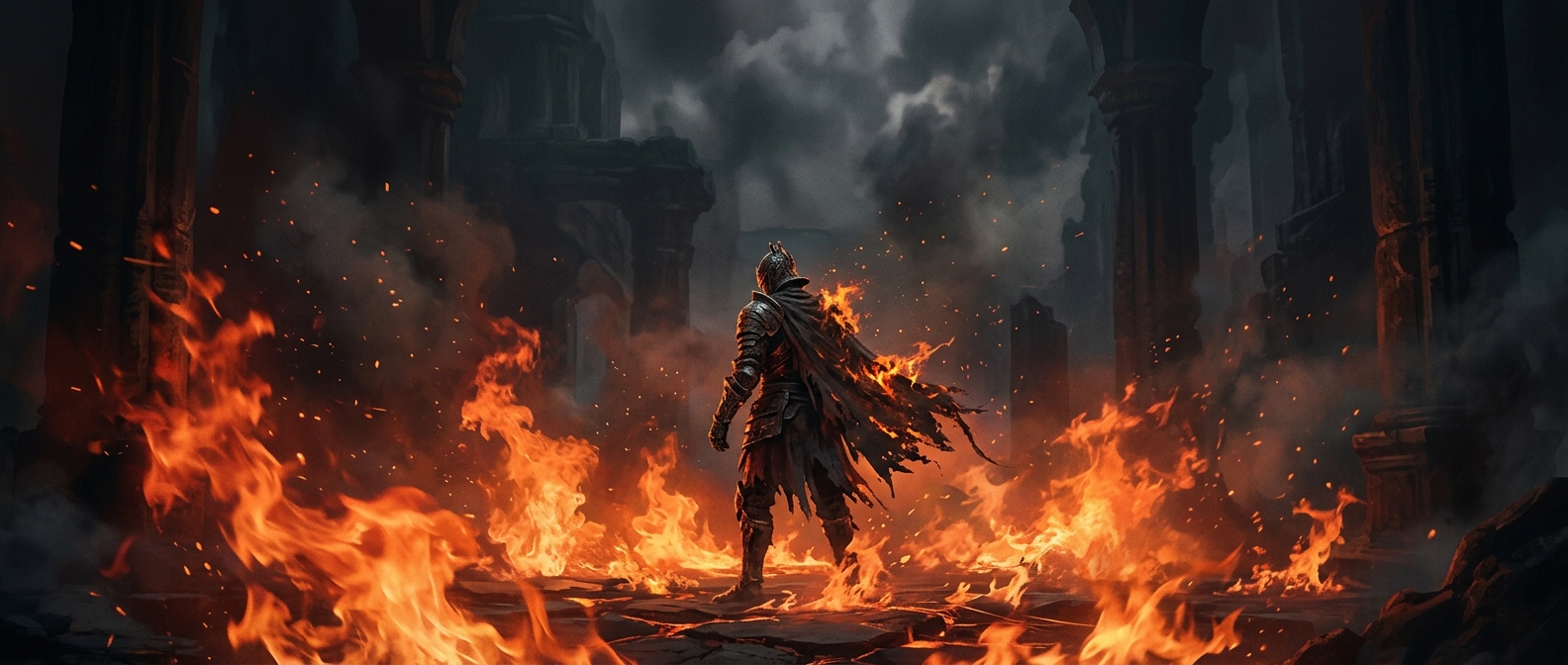
Fire in a game is usually not one large hit. It is a damage-over-time hazard: while a character remains inside the dangerous area, the game repeatedly subtracts health at short intervals. Each hit may be modest, but several arrive before the player can react, recognize the danger, and move clear.
The Hazard Is Built for Urgency
Designers tune those repeated hits to make fire feel different from a slow-moving enemy attack. Flames mark a place as unsafe, so a rapid health loss creates a clear incentive to leave rather than fight from the same spot. If damage were too slight, players could ignore the hazard; if it were instantly fatal, it could feel less like a warning and more like an unavoidable punishment.
The visible flames are only part of the signal. A game may also flash the health bar, play a warning sound, or make the character react. Those cues help communicate that damage is happening, but they do not necessarily pause it. The next damage tick can arrive while the player is still processing the warning.
Why Moving Out May Not Be Enough
The dangerous area is defined by the game’s collision rules, not just by what looks fiery on screen. A character may still count as inside while crossing the edge of the effect. Some games also apply a separate burning condition that continues briefly after escape, though that depends on the game.
That is why the safest response is usually to move decisively out of the hazard, then check health and any status indicators. In a game, a few steps spent hesitating in the flames can cost more than the first warning suggests.