Why the pilots’ meals are kept separate
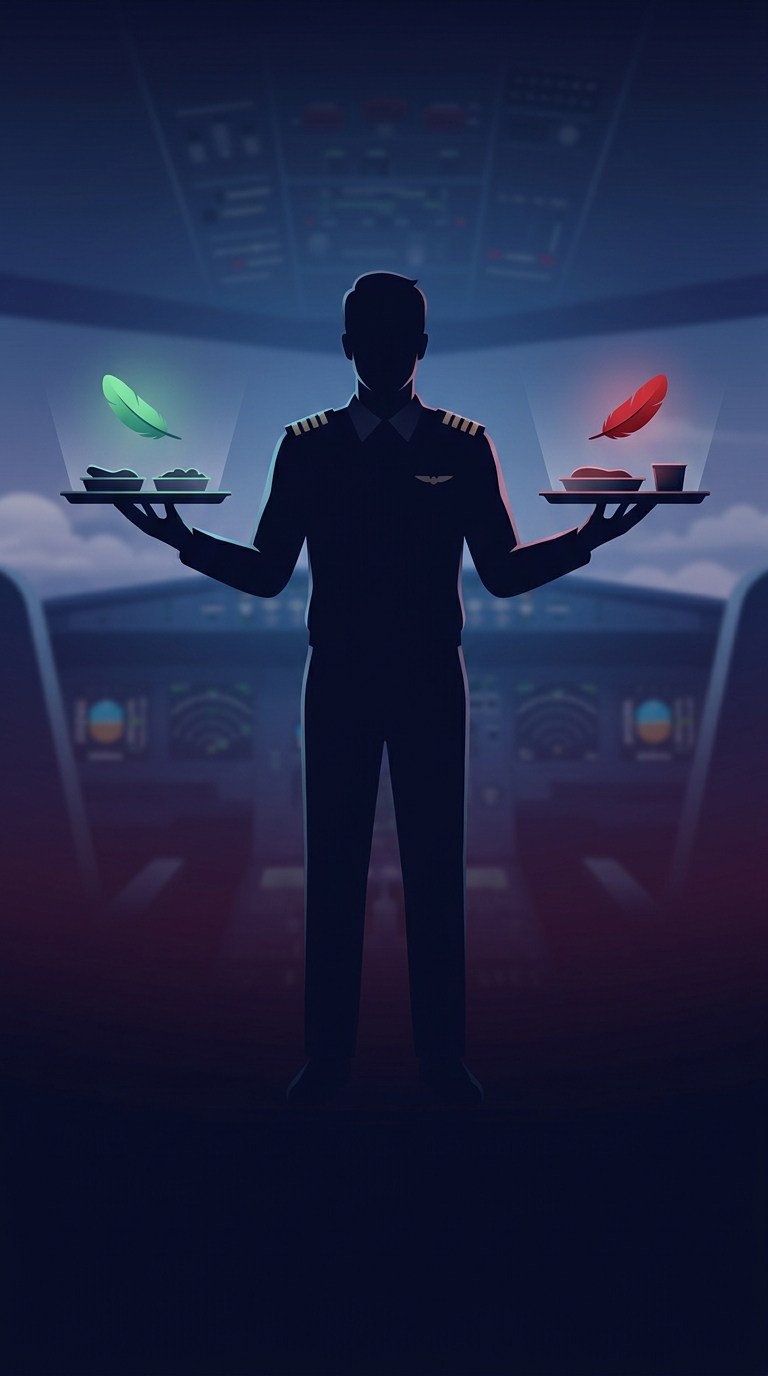
On many commercial flights, the two pilots are not supposed to eat the same meal. The point is simple: if one dish is contaminated and makes someone ill, the other pilot should still be able to fly.
Foodborne illness can begin with nausea, vomiting, or other symptoms that make it difficult or unsafe to concentrate and operate aircraft controls. The risk is not that a meal will suddenly affect the plane; it is that both people responsible for flying could become incapacitated around the same time.
A small precaution against a shared failure
The rule is an example of redundancy: keeping a backup capable of doing the job if the first person cannot. Pilots already divide duties and monitor one another, but that safeguard depends on at least one of them remaining fit to act. Choosing different meals reduces the chance that a single contaminated item will affect both.
Airline procedures can differ, so this should not be treated as one identical regulation followed in precisely the same way by every carrier. Where meal-separation procedures apply, they are part of the operational precautions pilots follow, not a guarantee that either meal is risk-free.
The practical consequence is modest but important: the cockpit’s backup plan can begin before takeoff, with the two pilots choosing different food rather than sharing the same potential source of illness.