How a power line makes air glow
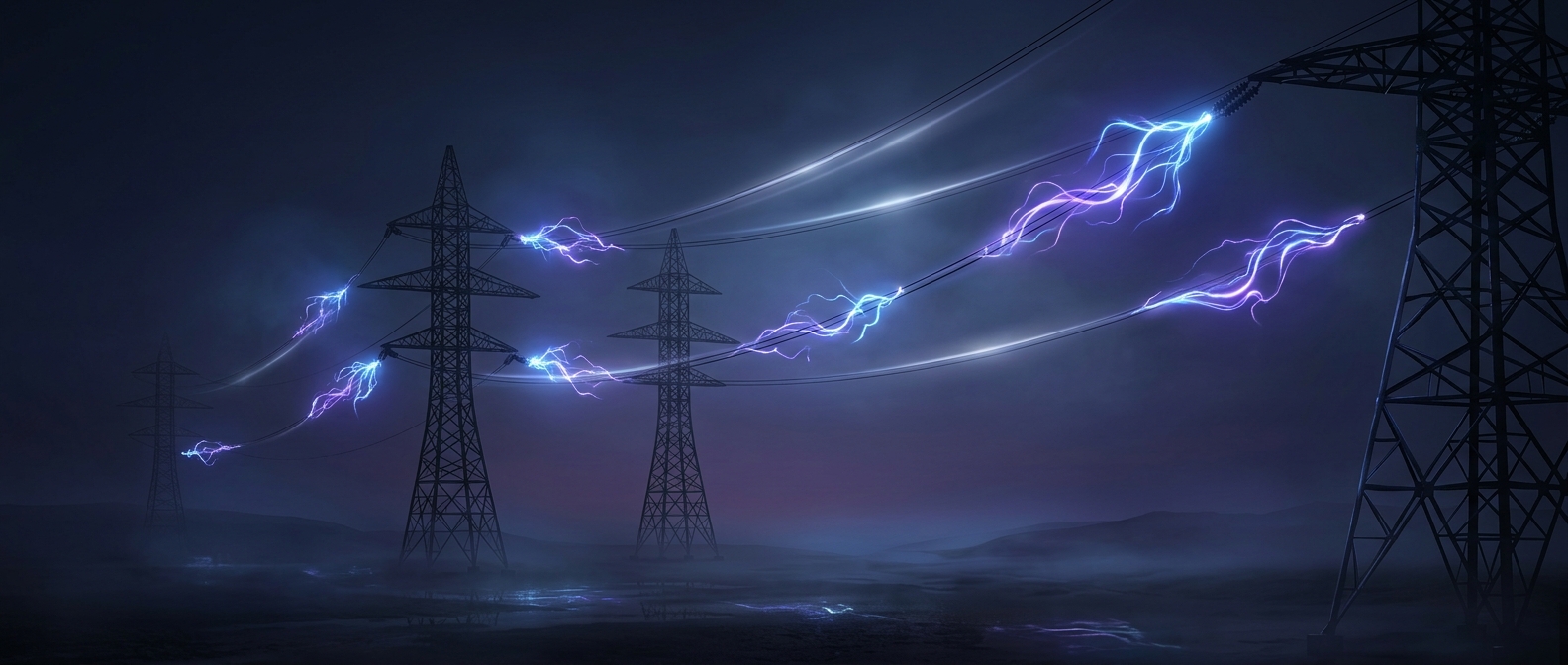
A high-voltage conductor can create an intense electric field in the air immediately around it. Near rough spots, fittings, or small surface defects, the field may become strong enough to strip electrons from nearby air molecules. This process, called corona discharge, turns a small amount of air into electrically charged particles.
As those particles collide and recombine, they can emit light. The glow is usually faint and may look bluish or purple, so it is easiest to notice at night. Corona is more likely when the air is wet or the conductor’s surface is especially uneven, because water droplets and sharp points concentrate the electric field.
Why the discharge can be heard
The charged air also moves and changes pressure as the discharge forms and fades. On alternating-current lines, the electric field reverses direction repeatedly; the resulting pulses can produce a low buzz or hum, often accompanied by a sharper crackle. Rain and other damp conditions can make the sound more noticeable by encouraging discharge around the conductor.
The sound is not simply the wires vibrating in the wind, though mechanical vibration can also make noise. And not every high-voltage line audibly hums: the voltage, conductor design, surface condition, and weather all affect how much corona forms. What sounds like a faint electrical buzz is, in effect, tiny repeated discharges in the air around the line.