Making the space age feel like a story
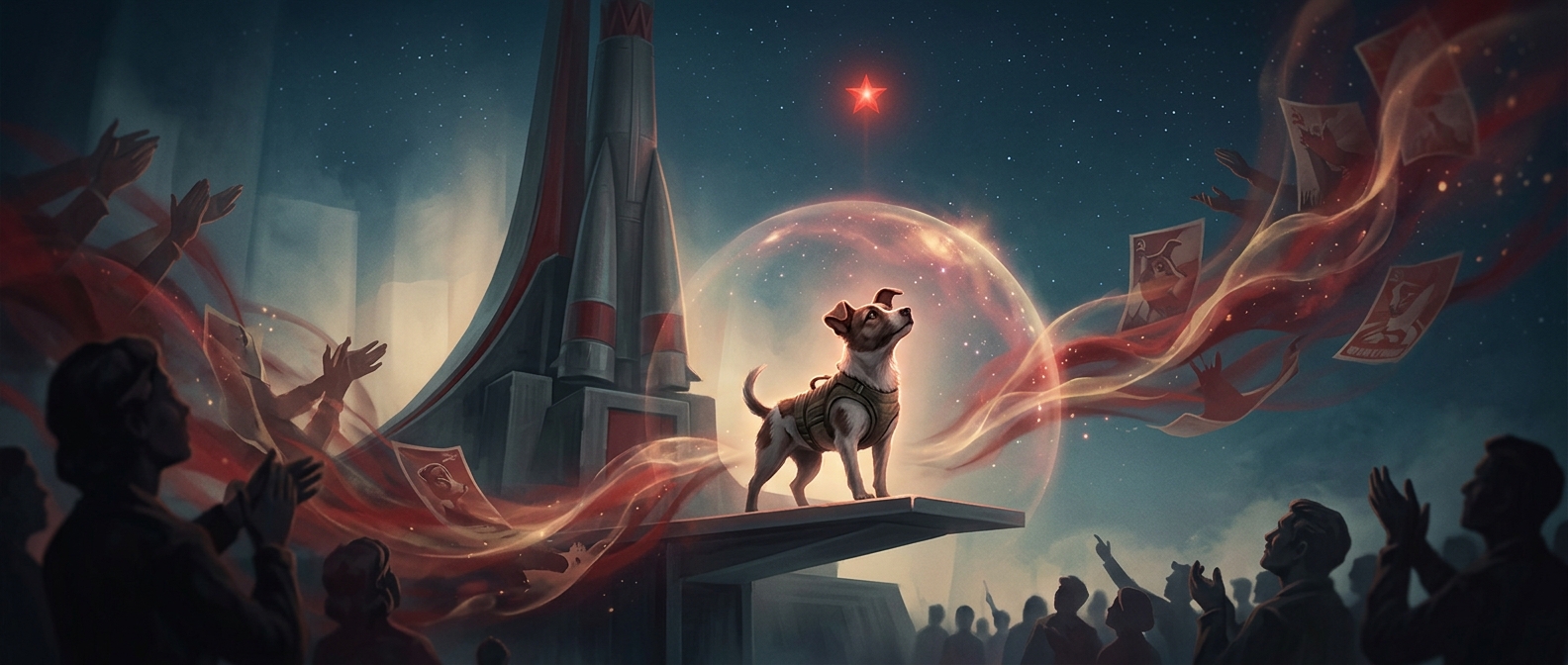
A rocket and an orbiting satellite were difficult to picture for people who had never seen either up close. Palekh painters offered a way to make these unfamiliar achievements legible: they could present them not as cold machinery, but through a visual tradition associated with sacred images and Russian tales. The shift was not in the technology itself, but in the language used to show it.
From icon painting to national spectacle
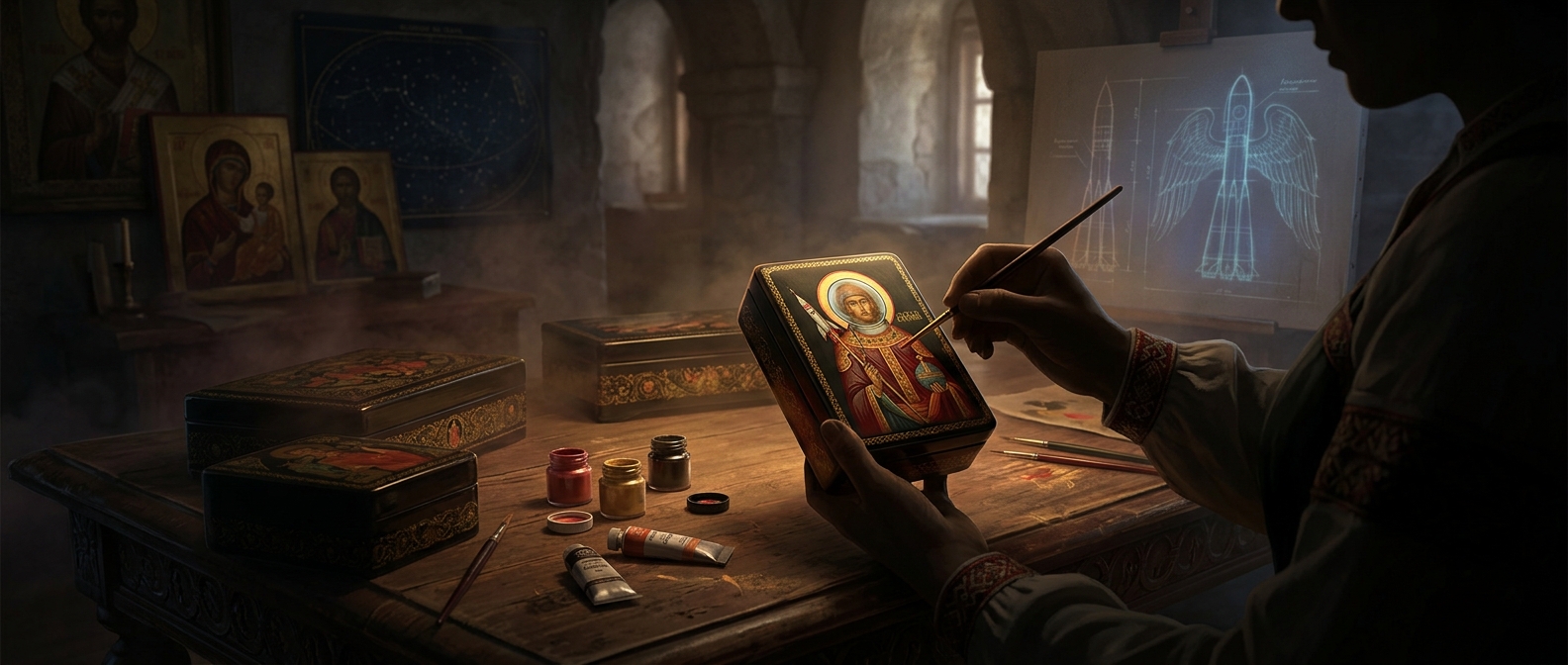
Palekh’s artists were known for painting religious icons—images made for devotion, with established ways of arranging figures and drawing the eye. When they depicted Sputnik or Yuri Gagarin, that practiced hand could lend a new subject an aura of importance and wonder. The glowing, storybook treatment connected modern achievement to imagery viewers might already recognize, giving spaceflight an emotional frame as well as a political one.
That mattered to a government trying to make a national project resonate beyond technical specialists. Instead of asking viewers to understand orbital mechanics, the art made the achievement something to admire and remember. A satellite could become part of a familiar visual world, and Gagarin could appear as a folk hero: a human figure through whom an abstract feat became a story about the country.
The striking choice was to portray the future in an old artistic language. In Palekh’s hands, spaceflight did not have to look familiar to feel close.