A genome can replace a cell’s operating instructions
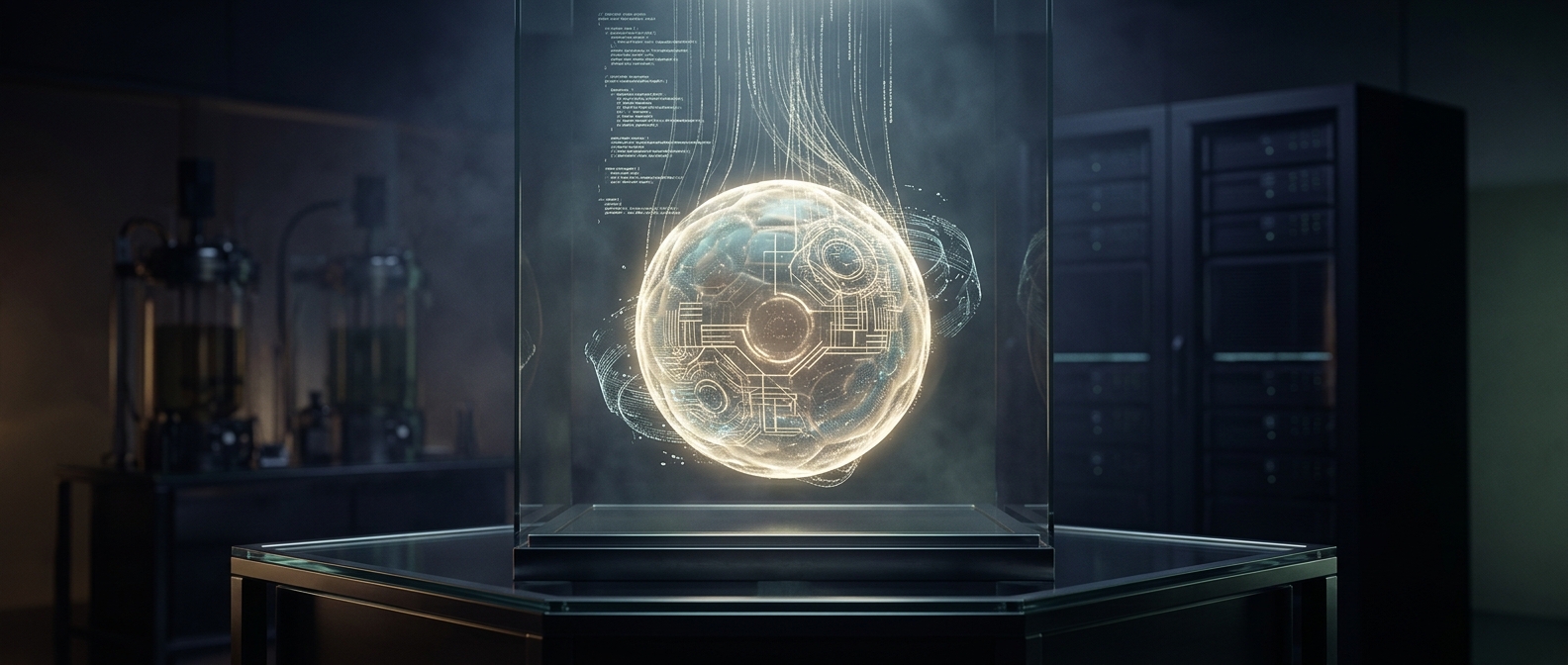
DNA is not a script that acts on its own. It is a long chemical molecule whose sequence of building blocks stores instructions for making proteins and for copying and maintaining the cell. To make a designed genome usable, researchers first had to turn the digital sequence into physical DNA, then place it where a cell’s molecular machinery could read it.
That machinery was already in the recipient cell. Its enzymes could read genes, build proteins, and copy DNA; its membrane and other cellular components provided a working environment. Once the new genome took control of those processes, the cell could make more cells under suitable lab conditions. In effect, the researchers changed the instructions in a functioning biological workshop rather than constructing the workshop itself.
Why the recipient cell mattered
A genome alone cannot start life: it does not supply the machinery needed to read DNA, produce energy, or build a cell. The recipient cell contributed that immediate infrastructure even after its own genome was removed. The new DNA then directed the inherited machinery, including the production of components needed to keep the cell going and reproduce.
This is why the achievement is often described as creating a living organism from computer-designed genetic instructions, but not as creating life from scratch. The crucial feat was making a designed genome work as a cell’s controlling set of instructions. The cell’s first generation depended on machinery already present; its descendants could inherit the new genome and make the next generation themselves.