Why escamoles are hard to harvest
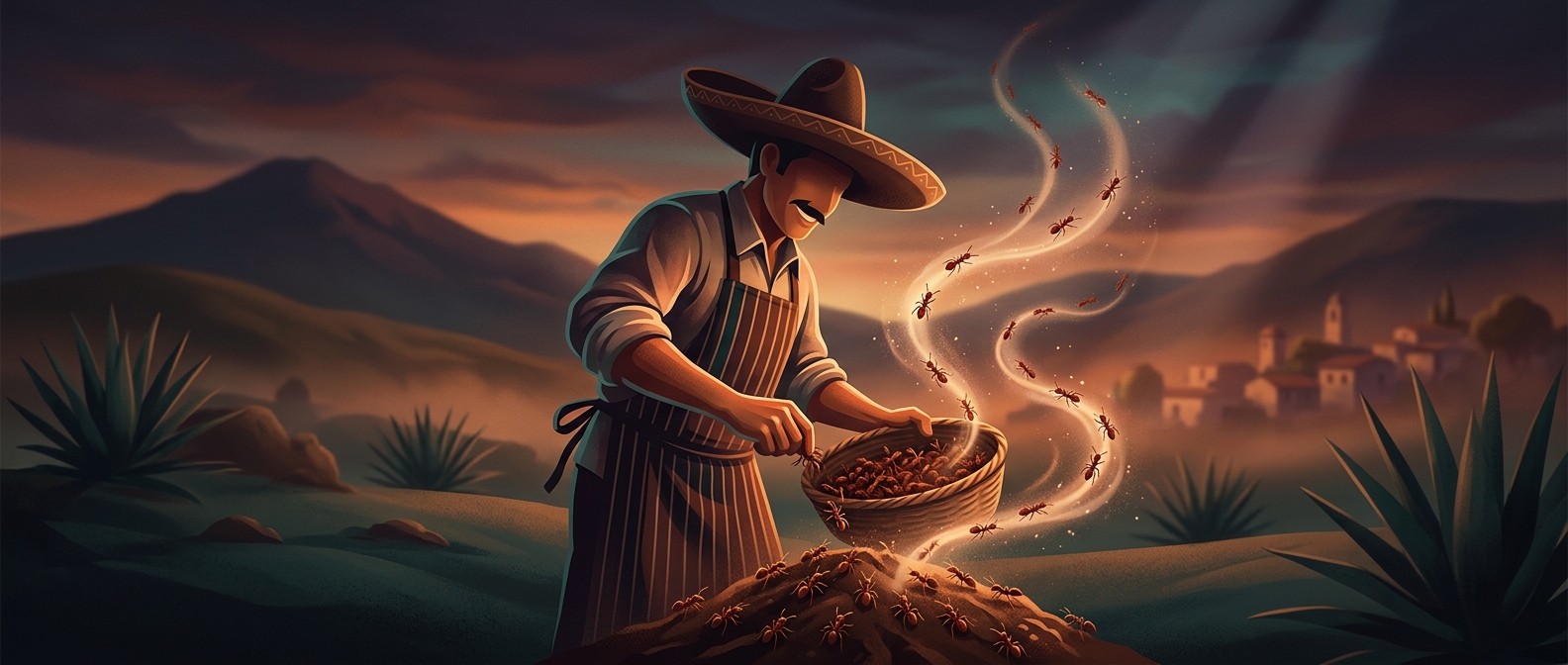
Escamoles are the edible eggs and larvae of ants, collected from underground nests in Mexico. The challenge is built into the nest’s design: worker ants guard the developing young, and they bite when the colony is disturbed. A harvest therefore means working in the ants’ defended nursery, not simply digging up a food source.
The colony’s defense shapes the work
Ant nests are organized around protecting the next generation. Workers respond to disruption near the brood—the eggs and larvae—by trying to drive away intruders. That makes locating and reaching the brood a careful task: the collector must expose the nest and gather the larvae while dealing with the defending ants. The bites are part of the cost of access, not an incidental detail.
A delicacy drawn from a living nest
Because escamoles come from the brood rather than from a plant that can be picked above ground, harvesting depends on finding nests and taking food from a colony’s protected interior. The result is a meal whose preparation begins with a direct encounter between people and the insects raising it. In other words, the ants’ security detail is also what makes escamoles unusual: every serving has been gathered from a guarded nursery.