A Snack Bag Becomes a Makeshift Bowl
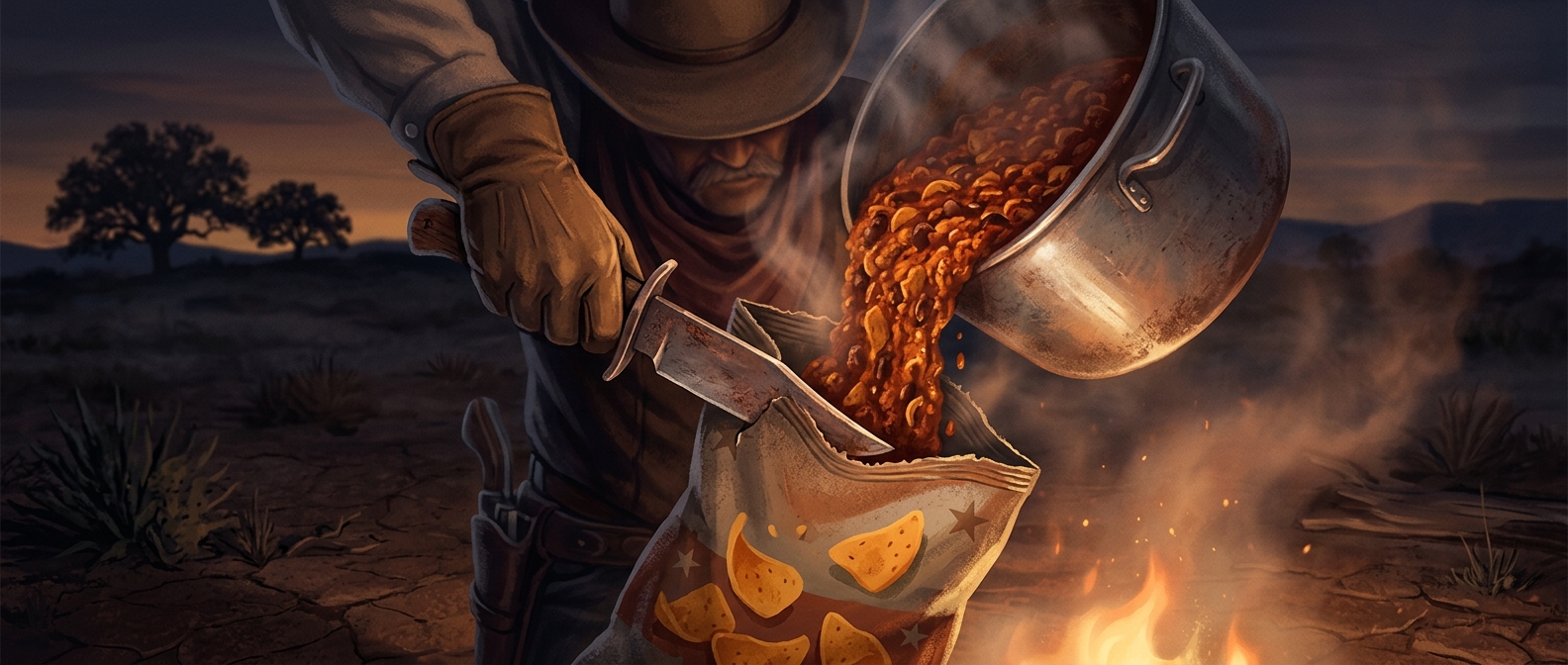
Frito pie works because the bag already holds a sturdy, portion-sized bed of chips. Open the top and the bag’s flexible sides help contain chili and toppings, while the unopened bottom keeps the meal together as it’s carried. There’s no separate dish to fetch, fill, or wash.
The bag is still packaging, not a rigid bowl. It can slump or tip if overfilled, so the practical version leaves room at the top and is eaten upright, often with a fork or spoon. The chips also change as they sit: chili seeps between them, softening some while others remain crisp near the surface. That mix of textures is part of the appeal—and a reason to eat it before the chips lose their crunch.
Convenience Built Into the Serving
A conventional bowl separates the food from its container; here, the chips and their package do double duty. The bag keeps the serving compact and makes the meal easy to carry, especially where a plate would be awkward. It turns a snack package into a short-lived serving vessel, with one tradeoff: once the chili goes in, the bag is harder to handle and the chips begin absorbing moisture.
That’s why the meal is assembled and eaten in the same container rather than treated like a dish meant to sit on a table. The package is part of the serving method, not just something left behind.