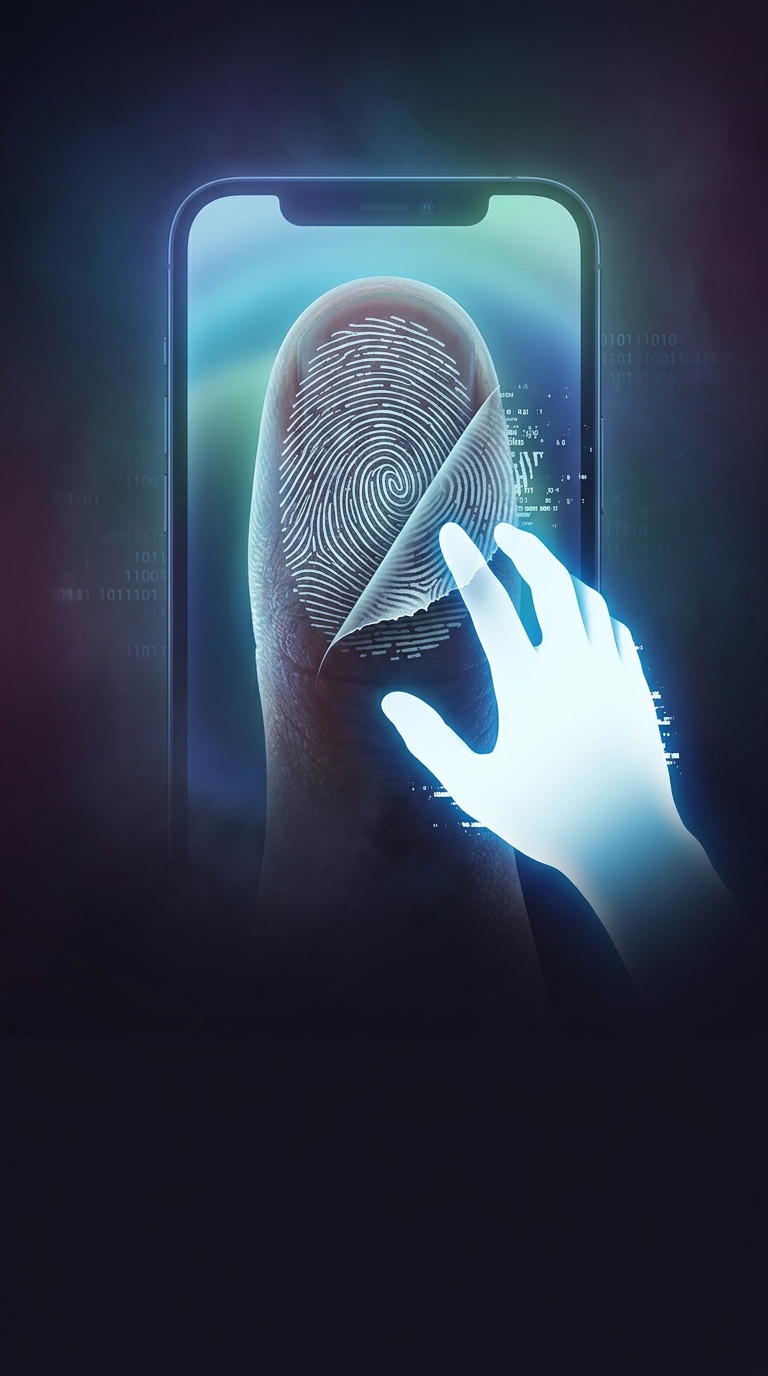
A fingerprint scanner checks a pattern, not a person
Early phone fingerprint readers were impressive at matching the ridges and valleys of a finger, but many were less capable of proving that the finger belonged to a living person. If a scanner treated a sufficiently accurate fingerprint image as valid input, it could be fooled by a replica carrying that pattern.
That gap is the difference between matching a fingerprint and verifying liveness. A sensor may ask, in effect, “Does this look like the enrolled print?” without reliably asking, “Is this a real finger attached to its owner?”
The print was already left behind
The weak link was often not the phone but the traces people leave on everyday surfaces. Fingers deposit oils and sweat, which can preserve ridge patterns on glass. With a clear enough impression, a determined attacker could photograph or otherwise capture the print, make a physical replica, and present it to a reader.
In a widely discussed early demonstration against a smartphone reader, researchers reconstructed a print from an image and made a thin replica that the sensor accepted. The process took skill and preparation; it was not a casual trick that worked on every phone. But it showed why a sophisticated sensor could still fail: accurately copying the pattern was sometimes enough.
Why later systems raised the bar
Manufacturers responded by improving sensors and adding checks intended to distinguish a real finger from a copy. Those defenses can make spoofing harder, though their strength varies by device and design. The broader lesson is that biometric security depends on more than how finely a scanner reads a fingerprint. It also depends on how well the system detects a fake—and what other protections guard the phone if that check fails.